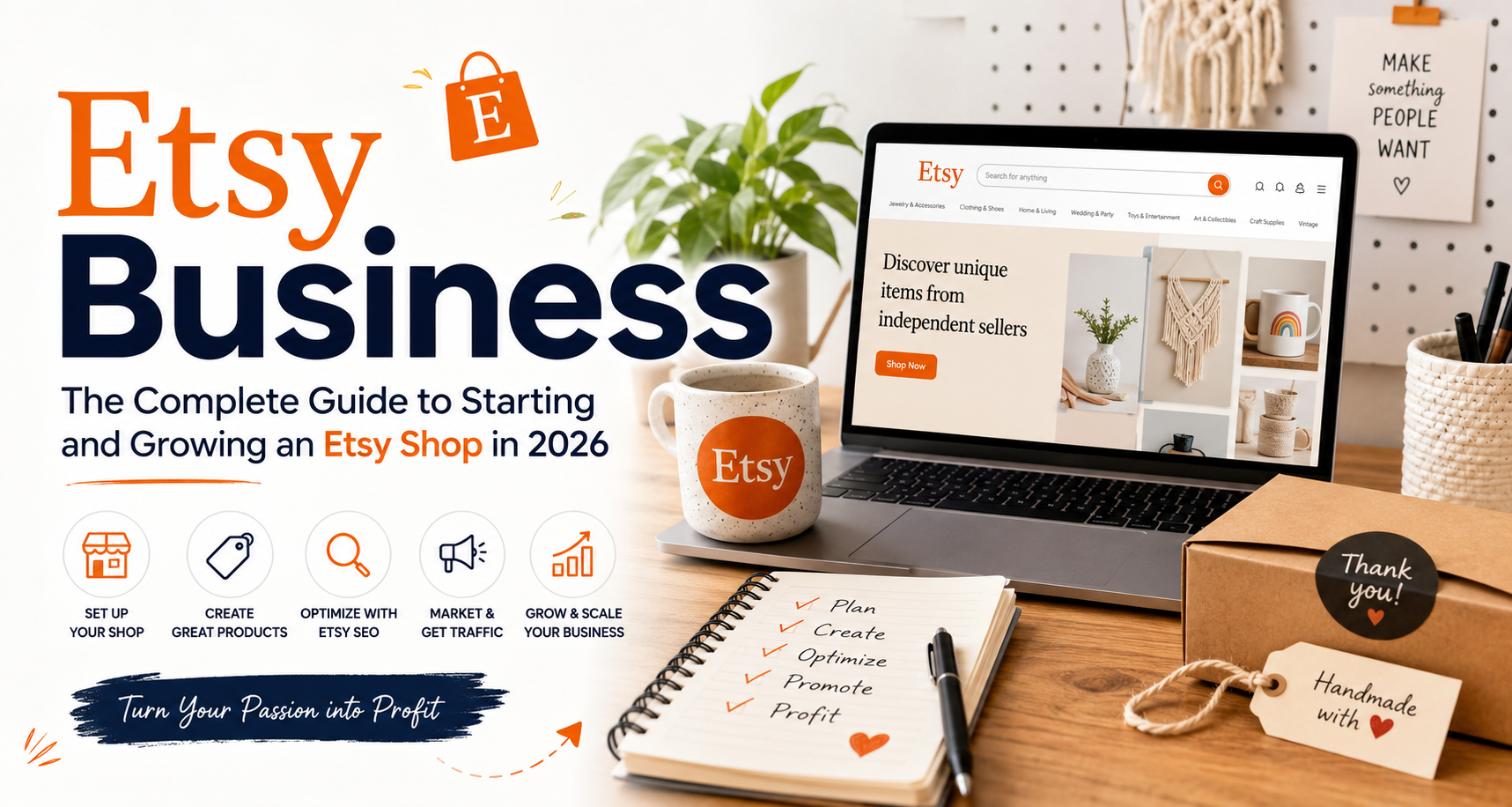
What Is an Etsy Business?
An Etsy Business is an online venture where entrepreneurs sell creative, handmade, personalized, vintage, or digital products through Etsy. In 2026, Etsy remains an attractive marketplace for creators who want to reach shoppers without building a large e-commerce website from scratch.
The biggest advantage is the marketplace’s built-in audience. Instead of spending months trying to generate traffic to a new online store, sellers can list products where customers are already searching for unique items.
Whether you create physical products, downloadable files, or personalized gifts, the right strategy can turn a small Etsy shop into a sustainable online income stream.
Why Start an Etsy Shop in 2026?
Starting an Etsy shop can be appealing because the initial setup is relatively simple. You can begin with a small product collection, test demand, and expand based on customer response.
Popular categories include:
- Personalized gifts
- Home décor
- Jewelry and accessories
- Wedding products
- Printable planners
- Digital templates
- Wall art
- Craft supplies
- Clothing and accessories
- Seasonal products
Digital products are especially attractive because they can be created once and sold repeatedly without packaging or shipping individual orders.
For physical products, print-on-demand services can also help reduce inventory requirements. This allows creators to focus on product design, branding, listings, and customer service.
How to Start an Etsy Business
1. Choose a Profitable Niche
The first step is choosing a specific product category. Avoid trying to sell everything to everyone. A focused niche makes it easier to create a recognizable brand and attract the right shoppers.
Research what customers are searching for and identify products with strong demand but manageable competition. Consider seasonal opportunities as well as products that can sell throughout the year.
2. Create Products People Want
A successful Etsy shop needs products that solve a problem, fulfill a need, or create an emotional connection.
Personalization can be particularly powerful. Names, dates, custom designs, and special messages can make ordinary products feel more valuable.
If you sell digital products, focus on convenience and quality. Templates, planners, invitations, business resources, and artwork can perform well when they are professionally designed and easy to use.
3. Optimize Your Etsy Listings
Etsy SEO should be part of your strategy from day one. Use relevant search terms naturally in your product titles, descriptions, tags, and other listing elements.
For example, instead of using a generic title such as “Beautiful Gift,” use a descriptive phrase that explains exactly what the customer is looking for.
Your product photography also matters. Use clear, attractive images that show the product from multiple angles. For digital products, include previews that demonstrate what buyers receive.
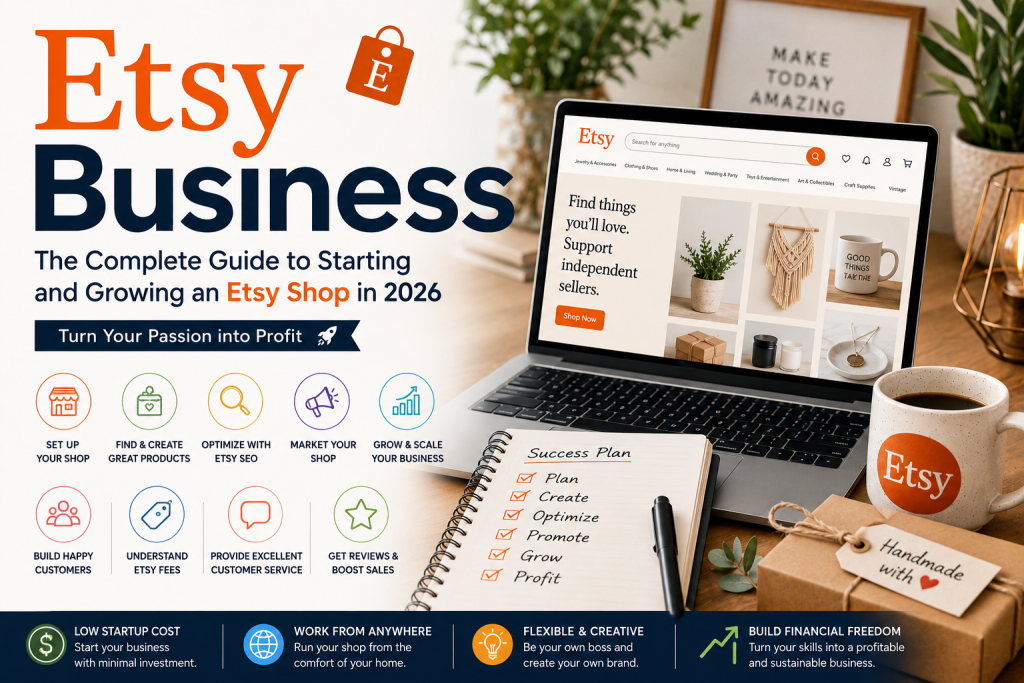
Etsy Marketing Strategies That Work
Creating listings is only the beginning. Etsy marketing can help bring more attention to your products and build long-term brand recognition.
Social media platforms such as Pinterest, Instagram, TikTok, and Facebook can help introduce your products to potential customers. Short videos showing how a product is created, packaged, customized, or used can generate interest.
You can also build an email audience outside the marketplace by encouraging customers and followers to connect with your brand through appropriate channels.
Another effective strategy is seasonal marketing. Prepare listings and promotional content before major shopping periods such as Valentine’s Day, Mother’s Day, Halloween, Thanksgiving, and Christmas.
How to Increase Etsy Sales
Growing sales requires testing rather than guessing. Track which products receive the most views, favorites, and purchases. Then improve your strongest listings.
Consider testing:
- Product titles
- Main images
- Pricing
- Product descriptions
- Variations
- Keywords
- Promotional offers
- New product designs
Customer reviews are another important part of growth. Provide accurate descriptions, communicate professionally, package physical products carefully, and deliver orders on time.
Positive customer experiences can strengthen trust and encourage repeat purchases.
Understanding Etsy Fees and Profit
Before launching an Etsy shop, calculate your complete costs. Depending on your products and selling methods, expenses may include listing fees, transaction fees, payment processing, advertising costs, production expenses, packaging, and shipping.
Do not focus only on revenue. Calculate your actual profit per order.
For example, if a product sells for $30 but costs $15 to produce, $5 to ship, and another portion goes toward marketplace and advertising expenses, your real profit is considerably lower than the sale price.
A clear profit margin helps you determine which products are worth scaling.
Common Etsy Business Mistakes to Avoid
Many new sellers make the mistake of uploading products without researching their market. Another common problem is using poor-quality images or generic product descriptions.
Avoid copying competitors. Instead, study successful shops to understand customer expectations and then develop your own unique designs, branding, and product positioning.
You should also avoid relying on a single product. Once you identify a product that performs well, create related variations and complementary products.
Final Thoughts
Building an Etsy Business in 2026 can be a practical way to enter e-commerce with a focused product strategy. Success does not usually happen overnight. It comes from choosing the right niche, creating valuable products, optimizing listings, understanding Etsy SEO, and consistently improving your store.
Start small, test your ideas, monitor your results, and invest more heavily in products that customers actually want. With strong branding and consistent Etsy marketing, a simple Etsy shop can develop into a profitable and recognizable online business.
Leave a Reply