Starting an online store has never been more accessible. Whether you want to sell clothing, digital products, beauty items, handmade products, or niche products, Shopify provides the tools needed to build and manage an ecommerce business without requiring advanced technical skills.
This Shopify Guide explains how to start a Shopify store, choose products, optimize your website, attract customers, and build a profitable ecommerce business in 2026.
What Is Shopify guide?
Shopify Guide is an ecommerce platform that allows entrepreneurs to create an online store, manage products, process orders, accept payments, and track business performance from one place.
One of its biggest advantages is simplicity. You can choose a professional theme, add products, customize your store, connect payment options, and begin marketing without building an ecommerce website from scratch.
For beginners, Shopify can be a practical option because many important ecommerce features are available within one platform.
How to Start a Shopify Store
The first step in building an online store is choosing a clear niche. Avoid trying to sell everything to everyone. Instead, focus on a specific audience and product category.
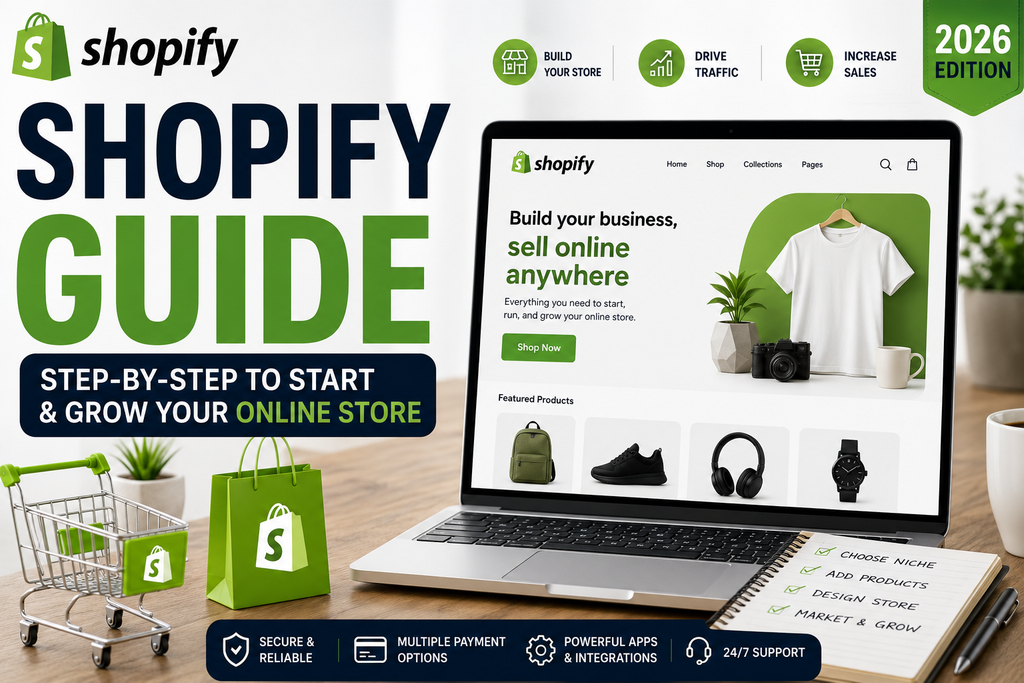
Follow these steps:
- Choose a profitable niche
Research products with consistent demand, reasonable competition, and healthy profit margins. - Create your Shopify account
Set up your store and select a name that is memorable, relevant, and easy to spell. - Choose a professional theme
Your website should look clean, load quickly, and work smoothly on mobile devices. - Add your products
Write unique product descriptions and upload high-quality images. Include important details such as size, materials, features, pricing, and shipping information. - Configure payments and shipping
Provide convenient payment methods and clearly explain shipping costs, delivery times, returns, and refunds. - Launch your store
Test your checkout process, product pages, mobile design, navigation, and contact information before sending visitors to your website.
Choosing Products That Can Sell
Product selection can make or break an ecommerce business. Before adding a product to your store, consider demand, competition, sourcing costs, shipping requirements, customer reviews, and potential profit.
Popular ecommerce categories can include home products, fashion accessories, beauty products, fitness items, pet products, electronics accessories, personalized products, and digital goods.
However, trends change quickly. Instead of choosing products only because they are popular, research whether customers have a genuine problem that your product solves.
Shopify Store Design Tips
A professional store does more than look attractive. It should make purchasing easy.
Use a simple navigation menu with logical categories. Keep your homepage focused on your strongest products and value proposition. Product pages should contain clear images, persuasive descriptions, pricing, available options, and an obvious call-to-action.
Mobile optimization is particularly important because many shoppers browse and purchase from smartphones.
Your checkout should also be straightforward. Unnecessary steps, confusing shipping information, or unexpected costs can cause customers to abandon their carts.
Shopify SEO: How to Get Organic Traffic
Search engine optimization can help your Shopify Guide store attract people who are actively searching for products.
Start by researching relevant keywords for your products. Use your primary keyword naturally in important areas such as product titles, headings, descriptions, URLs, and meta descriptions.
Avoid keyword stuffing. Search engines increasingly prioritize useful content and positive user experiences rather than pages overloaded with repeated phrases.
Create detailed product descriptions that answer common customer questions. You can also publish helpful blog content around product-related topics, comparisons, tutorials, buying guides, and frequently asked questions.
Internal linking is another useful strategy. Link relevant blog posts to product and collection pages so visitors and search engines can discover important sections of your website.
Shopify Marketing Strategies
Building the store is only the beginning. You also need a marketing strategy to bring qualified visitors.
Social Media Marketing
Create useful and entertaining content around your products. Short-form videos, product demonstrations, tutorials, customer stories, and behind-the-scenes content can help increase brand awareness.
Email Marketing
Email marketing can turn one-time visitors into returning customers. Build an email list and send useful updates, product launches, special offers, educational content, and abandoned-cart reminders.
Paid Advertising
Paid advertising can help you reach potential customers faster. Start with a controlled budget, test different audiences and creatives, and measure conversions before increasing spending.
Content Marketing
A blog can support both SEO and customer education. Publish content that addresses real questions related to your niche rather than producing articles solely to insert keywords.
Shopify Apps and Useful Features
One benefit of Shopify Guide is its ecosystem of apps and integrations. Depending on your business, you can use tools for email marketing, reviews, inventory management, analytics, customer support, subscriptions, shipping, and conversion optimization.
However, installing too many apps can make a store slower and more complicated. Choose tools based on an actual business need rather than adding apps simply because they are available.
Common Shopify Mistakes to Avoid
New store owners often make several avoidable mistakes.
One is launching without properly testing the checkout process. Another is using poor-quality product images or generic descriptions copied from suppliers.
Ignoring SEO is another common problem. A beautiful store will not automatically receive organic traffic.
You should also avoid changing your strategy every few days. Give marketing campaigns enough time to produce meaningful data, then optimize based on results.
How to Grow Your Shopify Business
Once your store starts generating sales, focus on improving what already works.
Analyze your conversion rate, average order value, customer acquisition costs, returning customers, and best-selling products. Use this information to make smarter decisions.
You can increase revenue by introducing product bundles, upsells, cross-sells, loyalty programs, subscriptions, or complementary products.
Customer service is equally important. Fast responses, transparent policies, reliable fulfillment, and easy returns can improve customer satisfaction and encourage repeat purchases.
Final Thoughts
This Shopify Guide provides a practical foundation for building an ecommerce business in 2026. Success does not come simply from launching a website. It requires the right products, strong store design, effective SEO, consistent marketing, excellent customer service, and continuous optimization.
Start with a focused niche, build a trustworthy shopping experience, understand your customers, and use data to improve your strategy over time. With the right approach, Shopify can become a powerful foundation for creating and growing a long-term online store.
Leave a Reply