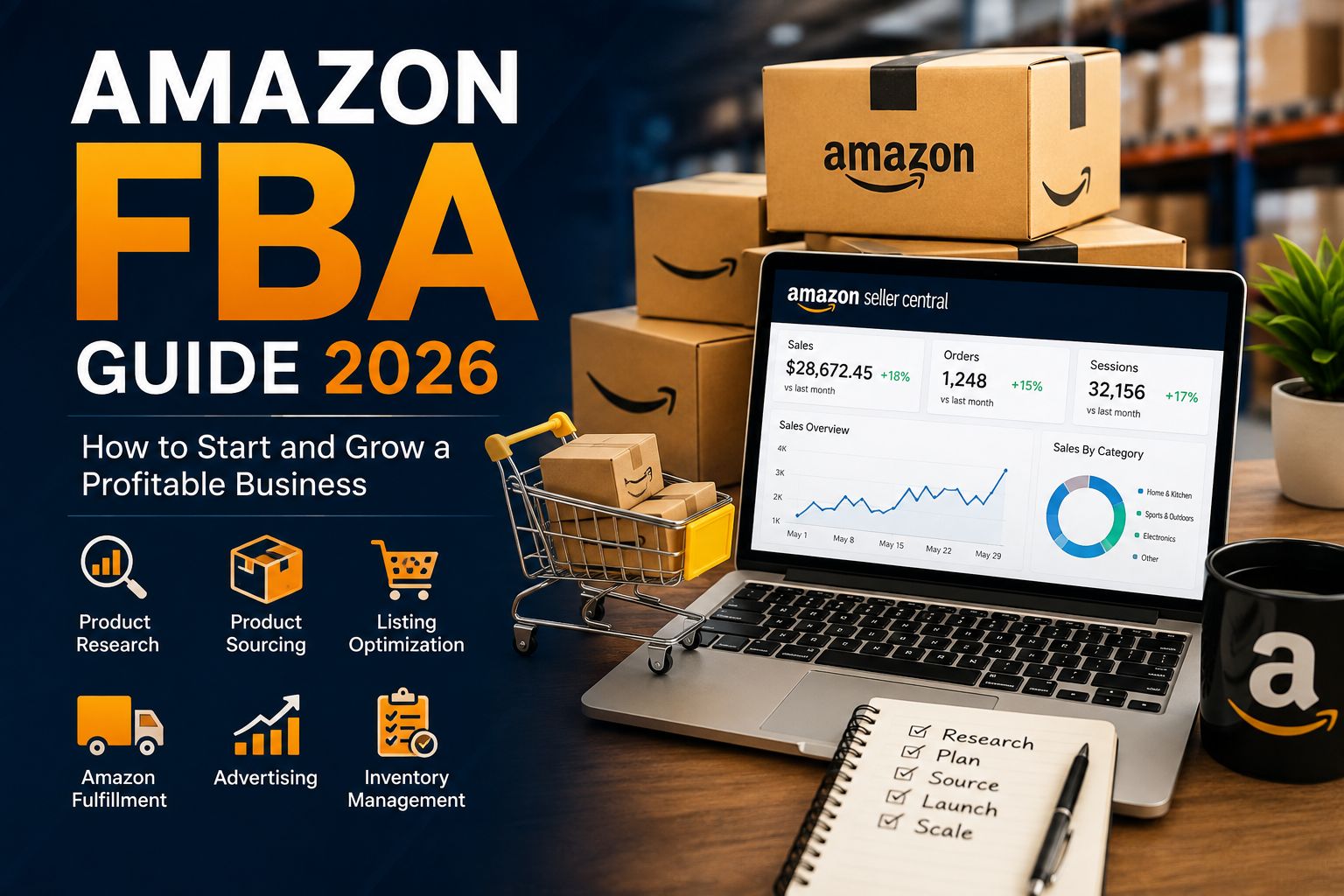
Amazon FBA has become a popular way for entrepreneurs to build an online business without handling every order, package, and customer-service request themselves. With the right product research, pricing strategy, and marketing plan, sellers can build a scalable ecommerce operation in 2026.
Whether you are completely new to ecommerce or looking for a more efficient way to sell products online, understanding how FBA works is an important first step.
What Is Amazon FBA?
Amazon FBA, or Fulfillment by Amazon, is a service that allows sellers to store their products in Amazon fulfillment centers. When a customer places an order, Amazon handles important parts of the fulfillment process, including picking, packing, shipping, and customer service.
Instead of managing a warehouse yourself, you can use Amazon’s logistics network to deliver orders to customers. This can save significant time and make it easier to focus on product selection, branding, advertising, and business growth.
How Does Amazon FBA Work?
The process is relatively straightforward:
- Find a profitable product: Research products with consistent demand and manageable competition.
- Source your inventory: Work with reliable manufacturers or suppliers.
- Create your product listing: Add an optimized title, product description, images, bullet points, and relevant search terms.
- Send inventory to Amazon: Products are shipped to designated fulfillment centers.
- Amazon fulfills orders: When customers purchase your products, Amazon handles storage, packing, and delivery.
- Monitor performance: Track sales, fees, inventory levels, advertising costs, and customer feedback.
This model allows sellers to operate an ecommerce business without personally processing every customer order.
How to Find Profitable Products
Product research is one of the most important parts of building a successful Amazon FBA business. A good product should have sufficient demand while offering realistic opportunities to compete.
Look for products that:
- Solve a clear customer problem
- Have consistent search demand
- Are relatively easy and inexpensive to ship
- Offer room for healthy profit margins
- Are not dominated entirely by major brands
- Can be improved through better design, packaging, or features
Before investing in inventory, calculate your expected revenue against product costs, shipping, Amazon fees, advertising expenses, returns, and other operating costs.
Amazon FBA Fees You Should Know
Understanding your costs before launching a product is essential. Common expenses can include referral fees, fulfillment fees, storage fees, advertising costs, product sourcing, shipping, and returns.
Your profit is not simply your selling price minus the supplier’s price. A complete calculation should account for the entire cost of getting the product into a customer’s hands.
For example, a product that sells for $30 may appear highly profitable until fulfillment, advertising, storage, and other expenses are deducted.
Amazon FBA Product Listing Optimization
A well-optimized listing can help your product become more discoverable and improve conversions.
Focus on your primary keyword naturally in the product title, while using related secondary keywords throughout the description and bullet points. Avoid keyword stuffing because your listing should be written for real shoppers first.
High-quality product photography is equally important. Use clear images that demonstrate the product’s size, features, benefits, and real-world use.
Your listing should quickly answer three questions:
What is the product? Why should I buy it? What makes it better or different?
Amazon FBA Advertising
Advertising can help new products gain visibility and generate initial sales. Sponsored ads can place products in front of shoppers who are already searching for relevant items.
Start with a controlled budget and monitor important metrics such as advertising cost of sales, click-through rate, conversion rate, and keyword performance.
Do not increase spending simply because traffic is increasing. The goal is profitable sales, not traffic alone.
Inventory Management Matters
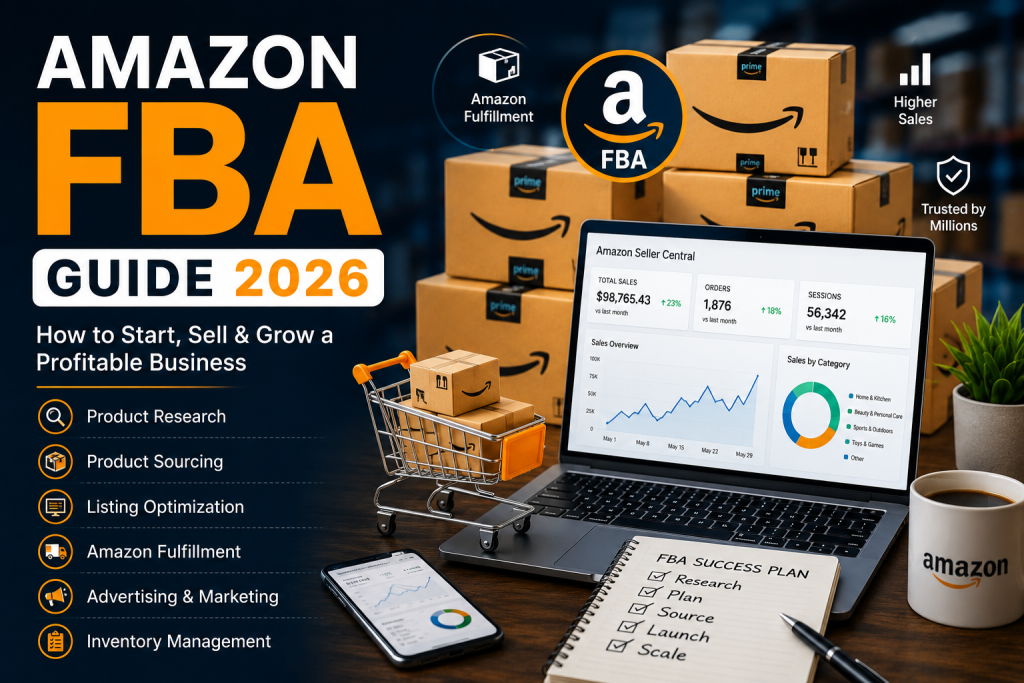
Running out of stock can hurt sales momentum, while ordering too much inventory can increase storage expenses and tie up your cash.
Successful sellers monitor sales velocity, supplier lead times, seasonal demand, and inventory levels. Maintaining an appropriate reorder point can help prevent unnecessary stockouts.
Inventory management becomes especially important during major shopping periods when demand can change quickly.
Common Mistakes New Sellers Make
Many beginners focus heavily on finding a product and overlook the business fundamentals.
Common mistakes include:
- Choosing a product without sufficient research
- Ignoring the complete fee structure
- Ordering too much inventory initially
- Using poor-quality product images
- Copying competitors instead of creating differentiation
- Ignoring customer reviews
- Spending heavily on advertising without tracking profitability
- Failing to calculate cash flow
Avoiding these mistakes can significantly improve your chances of building a sustainable ecommerce business.
Is Amazon FBA Worth It in 2026?
Amazon FBA can still be an attractive business model in 2026, but it is not a guaranteed path to quick profits. Competition, fees, advertising costs, and customer expectations mean sellers need a strategic approach.
The strongest opportunities generally come from combining careful product research with strong branding, optimized listings, competitive pricing, reliable inventory management, and excellent customer experience.
Final Thoughts
Building a successful Amazon FBA business requires more than simply uploading a product and waiting for sales. It involves research, financial planning, sourcing, marketing, optimization, and continuous improvement.
If you choose the right product, understand your costs, create a compelling listing, and manage your inventory carefully, FBA can provide a scalable way to build an ecommerce business. Start small, test your assumptions, track your numbers, and use real customer data to guide your next decisions.
Leave a Reply