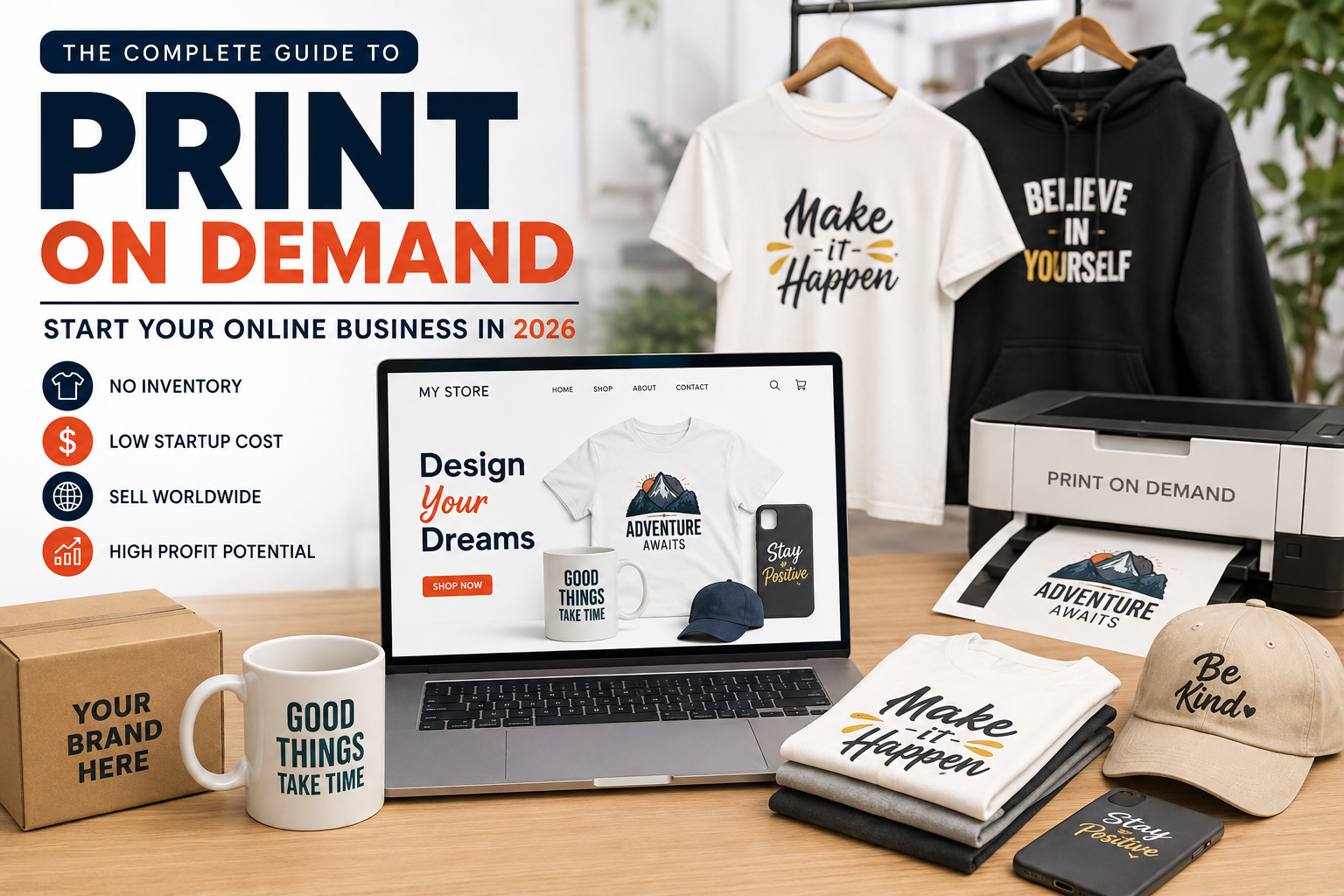
Starting an online business does not always require buying inventory, renting storage space, or investing thousands of dollars upfront. Print on Demand has become a popular business model for entrepreneurs who want to sell custom products without managing physical stock. In 2026, this model offers creators, designers, and aspiring business owners a flexible way to build an online store around unique ideas and designs.
Whether you want to sell custom T-shirts, mugs, hoodies, posters, phone cases, or other personalized products, understanding how this business model works can help you make smarter decisions.
What Is Print on Demand?
Print on Demand is an e-commerce model where products are created only after a customer places an order. Instead of purchasing large quantities of inventory in advance, you upload your designs to products offered by a fulfillment company.
When someone purchases an item from your online store, the provider typically handles printing, packaging, and shipping. You earn the difference between the selling price and the total product and fulfillment costs.
This makes the model particularly attractive for beginners because it reduces the financial risk associated with traditional retail.
How Does Print on Demand Work?
The process is relatively straightforward:
- Choose a niche and identify your target customers.
- Create original designs for your selected products.
- Connect your store with a fulfillment provider.
- Add products, descriptions, prices, and images to your store.
- Promote your products through search engines, social media, or paid advertising.
- A customer places an order.
- The fulfillment company produces and ships the product.
- You receive the remaining profit after expenses.
Because production happens after the sale, you do not need to keep a warehouse full of unsold products.
Best Print on Demand Products to Sell
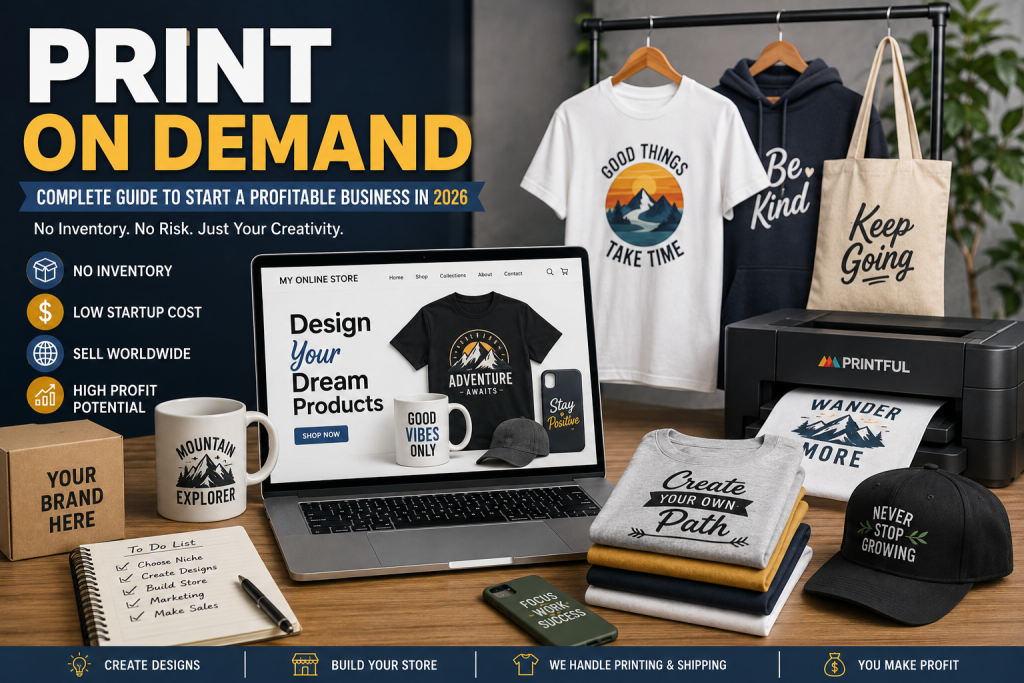
Choosing the right products can have a major impact on your store’s performance. Some products consistently attract attention because they are practical, customizable, or easy to purchase online.
Popular options include:
- Custom T-shirts
- Hoodies and sweatshirts
- Coffee mugs
- Posters and wall art
- Tote bags
- Phone cases
- Stickers
- Hats and accessories
- Notebooks and journals
- Personalized gifts
T-shirts remain a strong starting point because they are easy to customize and can be created for specific interests, hobbies, professions, communities, and occasions.
How to Choose a Profitable Niche
A strong niche is one of the foundations of a successful custom merchandise business. Instead of creating random designs for everyone, focus on a clearly defined audience.
For example, you could build products around fitness enthusiasts, pet owners, travelers, teachers, gamers, book lovers, outdoor enthusiasts, or specific hobbies.
Look for a niche with three characteristics: an identifiable audience, consistent interest, and enough room for creative products. Research search trends, marketplace listings, social media discussions, and competing stores before investing significant time in designs.
How to Create Designs That Sell
You do not necessarily need to be a professional graphic designer to create attractive products. Design tools can help beginners develop typography-based designs, illustrations, patterns, and simple graphics.
However, originality matters. Avoid copying existing artwork, logos, slogans, characters, or protected brand elements. Copyright and trademark violations can result in listings being removed or stores being restricted.
Focus on creating designs that communicate a specific emotion, interest, identity, or message. A simple design aimed at the right audience can outperform a complicated design with no clear purpose.
Choosing a Print on Demand Platform
The fulfillment provider you choose can influence product quality, shipping speed, profit margins, and customer satisfaction.
Before selecting a platform, compare:
- Product variety
- Base prices
- Printing quality
- Shipping options
- Production times
- Store integrations
- Customer support
- Return policies
- Branding options
It is also smart to order samples before promoting products heavily. A sample lets you evaluate print quality, materials, sizing, packaging, and overall customer experience.
Pricing Your Products for Profit
Pricing should cover more than the base product cost. Consider fulfillment, transaction fees, platform fees, advertising expenses, refunds, and other business costs when calculating your profit margin.
For example, if a product costs $15 to produce and fulfill, selling it for $17 may leave very little room for marketing or unexpected expenses. A higher price can work when your design, branding, product quality, or perceived value supports it.
Research competing products, but do not automatically choose the lowest price. Building a recognizable brand can allow you to compete through value rather than discounts.
Marketing Your Online Store
Creating products is only one part of the business. Effective marketing helps potential customers discover them.
Search engine optimization can help product pages appear for relevant searches. Use descriptive product titles, natural keywords, useful descriptions, optimized images, and clear category structures.
Social media can also be valuable for demonstrating products and reaching niche communities. Short-form videos, lifestyle images, customer-generated content, seasonal promotions, and behind-the-scenes design content can help attract attention.
Email marketing is another useful strategy because it gives you a way to reconnect with previous visitors and customers without depending entirely on paid advertising.
Is Print on Demand Worth It in 2026?
For many beginners, this business model can be a practical way to test e-commerce ideas with relatively low upfront inventory risk. However, it is not a guaranteed source of passive income.
Success generally depends on niche selection, design quality, pricing, product quality, marketing, customer service, and consistency. Competition can also be significant, so simply uploading hundreds of generic designs is unlikely to create a sustainable brand.
The strongest approach is to treat the business like a real e-commerce operation. Research your audience, develop a recognizable style, test products, analyze results, and improve your strategy based on customer behavior.
Final Thoughts
Print on Demand provides an accessible path for turning creative ideas into physical products without purchasing inventory upfront. From custom apparel to personalized gifts and home décor, the possibilities are broad.
If you choose a focused niche, create original designs, work with a reliable fulfillment partner, optimize your store for search, and consistently market your products, you can build a strong foundation for an online business in 2026.
The goal should not simply be to upload products. Build a brand that customers recognize, trust, and want to purchase from again.