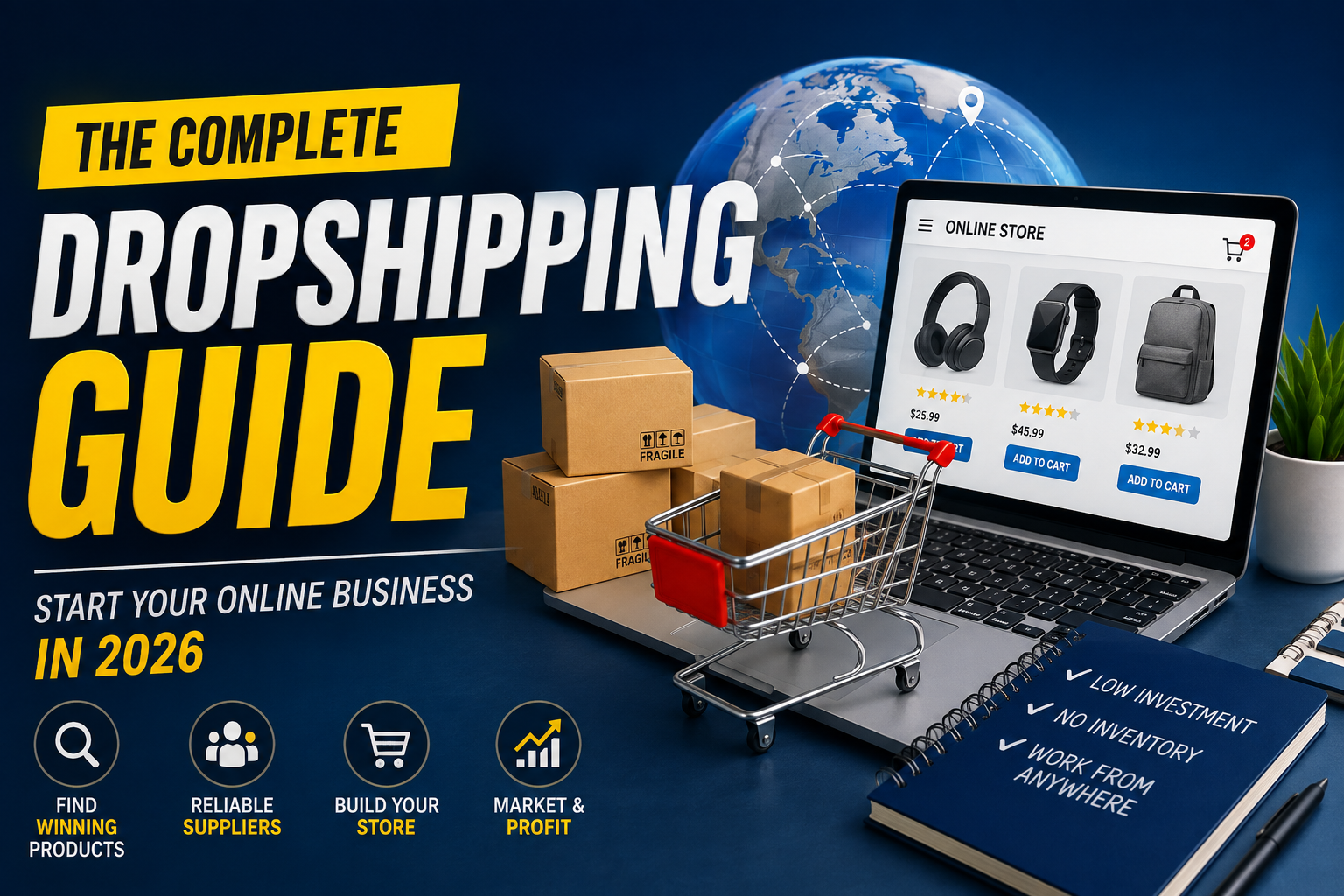
Starting an online store has never been more accessible. You do not need a warehouse, large inventory, or a huge upfront investment to begin selling products online. With the right strategy, Dropshipping Guide allows entrepreneurs to build an ecommerce business while suppliers handle inventory and order fulfillment.
This Dropshipping Guide explains how the business model works, how to choose profitable products, where to find reliable suppliers, and how to build a store that can attract customers and generate sustainable revenue in 2026.
What Is Dropshipping guide?
Dropshipping Guide is an ecommerce business model where you sell products without keeping physical inventory yourself. When a customer places an order, you purchase the product from a supplier, and the supplier ships it directly to the customer.
Your role is primarily focused on product research, marketing, customer service, branding, and store management. This makes dropshipping attractive for beginners who want to start an online business with relatively low startup costs.
However, low entry costs do not mean guaranteed profits. Successful sellers carefully research their market, calculate profit margins, test products, and provide an excellent customer experience.
How Does Dropshipping Work?
The process is straightforward:
- Choose a profitable product niche.
- Find a dependable dropshipping supplier.
- Build an ecommerce store.
- Add products with optimized descriptions and images.
- Promote your products through digital marketing.
- A customer places an order.
- You purchase the item from your supplier.
- The supplier ships the order directly to the customer.
- You keep the difference between your selling price and total costs.
For example, if you sell a product for $40 and your total product, shipping, transaction, and advertising costs are $27, your potential profit is $13 before other business expenses.
How to Choose Profitable Dropshipping Products
Product selection is one of the most important parts of building a successful store. Instead of choosing products simply because they look interesting, look for items that solve a specific problem or provide clear value.
Good product opportunities often have:
- Strong customer demand
- Reasonable competition
- Healthy profit margins
- Lightweight shipping requirements
- Attractive visual appeal
- A clear target audience
- Potential for repeat purchases
- Opportunities for social media marketing
Avoid products that are extremely fragile, difficult to ship, heavily regulated, or dominated by established brands unless you have a strong competitive advantage.
Using Google Trends, marketplace research, social media trends, and competitor analysis can help identify promising opportunities before investing heavily in advertising.
Finding Reliable Dropshipping Suppliers
A reliable supplier can make or break your ecommerce business. Customers expect their orders to arrive accurately and on time, so supplier research should never be rushed.
Before working with a supplier, check:
- Product quality
- Shipping times
- Customer reviews
- Return policies
- Communication speed
- Tracking availability
- Minimum order requirements
- Pricing and shipping costs
Order samples whenever possible. Testing the product yourself gives you a better understanding of quality, packaging, delivery speed, and the overall customer experience.
Building Your Online Store
Your store should look professional, trustworthy, and easy to navigate. Customers should be able to understand what you sell within seconds.
A strong ecommerce website should include:
- A clear homepage
- Simple navigation
- High-quality product images
- Detailed product descriptions
- Transparent pricing
- Secure checkout
- Shipping information
- Return and refund policies
- Contact information
- Customer reviews
Mobile optimization is especially important because many shoppers browse and purchase products using smartphones.
Your product pages should focus on benefits rather than simply listing technical specifications. Explain how the product solves a problem, saves time, improves convenience, or delivers another meaningful benefit.
Marketing Strategies for 2026
Marketing is where many new ecommerce businesses either succeed or fail. Building a store alone will not automatically bring customers.
Consider combining several channels, including:
Search Engine Optimization
SEO can help your product pages and informational content appear in search results. Use relevant keywords naturally in titles, headings, descriptions, image alt text, and supporting articles.
Social Media Marketing
Short-form videos can demonstrate products, answer common questions, and create interest. Platforms such as TikTok, Instagram, YouTube, and Facebook can be useful depending on your target audience.
Paid Advertising
Advertising can generate traffic quickly, but beginners should start with controlled budgets. Test different products, creatives, audiences, and landing pages before scaling campaigns.
Email Marketing
Email remains valuable for recovering abandoned carts, announcing promotions, introducing products, and building long-term customer relationships.
How Much Does It Cost to Start?
One advantage of dropshipping is that you can start without purchasing large quantities of inventory. However, you should still budget for your ecommerce platform, domain, product samples, applications or software, advertising, payment processing, and business operations.
A realistic starting budget depends heavily on your strategy. Organic marketing can reduce advertising expenses, while paid campaigns require more capital for testing.
The goal should not simply be to start cheaply. The goal is to build a business where revenue, margins, customer acquisition costs, and operating expenses work together profitably.
Common Mistakes Beginners Should Avoid
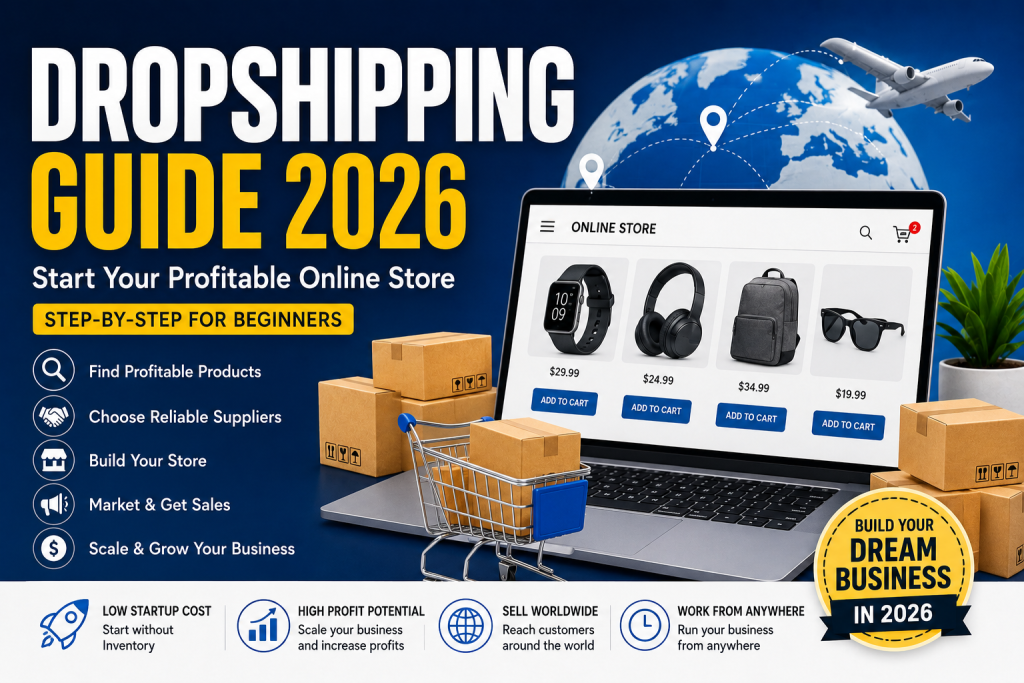
Many new entrepreneurs make the same mistakes. Avoid choosing products based only on viral popularity, relying on one supplier, ignoring shipping times, copying competitors, or launching advertisements without testing.
Another major mistake is focusing entirely on sales while neglecting customer service. Fast communication, accurate product information, transparent policies, and reliable fulfillment can significantly improve customer trust.
Do not expect overnight success. Ecommerce businesses usually require testing, optimization, and patience.
Final Thoughts
This Dropshipping Guide shows that building an online store in 2026 can be accessible, but success requires more than uploading products and waiting for orders. Product research, supplier quality, SEO, marketing, pricing, customer service, and continuous testing all matter.
Start with a focused niche, test a small selection of products, understand your customers, and track your numbers carefully. With a professional store and a consistent marketing strategy, dropshipping can become a scalable ecommerce business rather than simply a short-term online experiment.
Leave a Reply