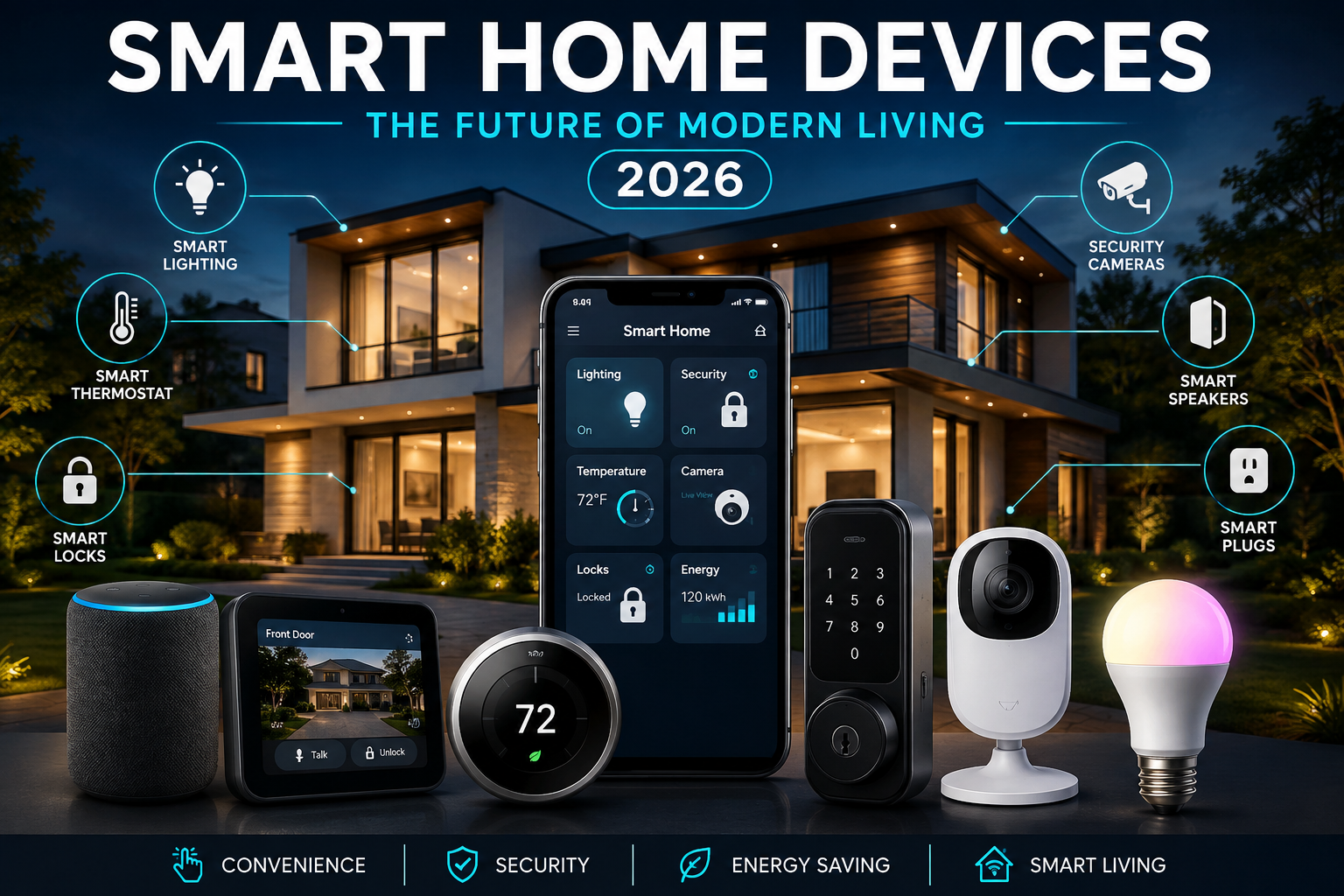
Technology continues to transform everyday living, and modern homes are becoming more connected than ever before. From voice-controlled lighting to intelligent security systems, Smart Home Devices make daily tasks easier, improve energy efficiency, and increase home security.
Whether you’re upgrading a single room or building a fully connected home, choosing the right products can save time, reduce utility bills, and create a more convenient lifestyle. This guide explains how smart home technology works, its benefits, and which devices deserve your attention in 2026.
What Are Smart Home Devices?
Smart Home Devices are internet-connected products that can be controlled remotely using a smartphone, tablet, voice assistant, or automation system. These devices communicate with each other to automate daily routines and improve the way a home operates.
Examples include:
- Smart speakers
- Smart thermostats
- Smart security cameras
- Smart doorbells
- Smart lighting
- Smart locks
- Smart plugs
- Smart appliances
Many of these products can also work together through automation platforms, allowing homeowners to create personalized routines.
Why More Homeowners Are Choosing Smart Technology
Connected technology has evolved beyond convenience. Today’s systems offer practical solutions for safety, energy savings, and home management.
Some major advantages include for Smart Home Devices
Improved Home Security
Security cameras, video doorbells, and smart locks allow homeowners to monitor their property from anywhere. Instant alerts help identify unexpected activity in real time.
Lower Energy Costs
Smart thermostats automatically adjust temperatures based on occupancy and daily schedules. Smart lighting also turns off automatically when rooms are empty, helping reduce electricity usage.
Greater Convenience
Voice assistants allow users to control lights, music, thermostats, and appliances without touching a switch.
Remote Access
Whether traveling or at work, homeowners can control connected products directly from a mobile app.
Better Home Automation
Scheduling routines allows multiple devices to work together automatically. For example:
- Lights turn on at sunset.
- Doors lock every night.
- Thermostat adjusts before bedtime.
- Coffee starts brewing every morning.
Essential Smart Home Devices for 2026
1. Smart Speakers
Smart speakers act as the central hub for many connected homes.
Popular features include:
- Voice commands
- Music streaming
- Weather updates
- Calendar reminders
- Home automation control
Many homeowners begin their Smart Home Devices journey with a voice assistant.
2. Smart Thermostats
Heating and cooling account for a significant portion of household energy use.
Modern thermostats learn your routine and automatically optimize indoor temperatures, helping reduce monthly utility costs while improving comfort.
3. Smart Lighting
Smart bulbs and switches allow users to:
- Change brightness
- Schedule lighting
- Control lights remotely
- Create custom lighting scenes
LED smart bulbs also consume less electricity than traditional bulbs.
4. Smart Security Cameras
Outdoor and indoor cameras provide:
- Live video
- Motion detection
- Night vision
- Two-way communication
- Cloud recording
Smart Home Devices features help homeowners monitor deliveries, visitors, and unusual activity.
5. Smart Video Doorbells
Video doorbells let homeowners answer the front door from virtually anywhere.
Benefits include:
- Live video
- Motion alerts
- Visitor recording
- Package monitoring
This technology has become one of the most popular home security upgrades.
6. Smart Locks
Forget worrying about lost keys.
Smart locks offer:
- Keyless entry
- Temporary guest access
- Auto-lock features
- Activity history
They also integrate with many security systems for enhanced protection.
7. Smart Plugs
Smart plugs instantly upgrade ordinary appliances.
Users can remotely control:
- Coffee makers
- Lamps
- Fans
- Holiday decorations
- Small kitchen appliances
They are affordable and easy to install.
8. Smart Home Sensors
Sensors detect:
- Water leaks
- Smoke
- Carbon monoxide
- Open doors
- Open windows
- Motion
Early alerts help reduce property damage and improve household safety.
How to Choose the Right Smart Home System
Not every product works with every ecosystem.
Before buying, consider:
Compatibility
Ensure devices support the same automation platform.
Ease of Installation
Many products are designed for DIY installation without professional assistance.
Security Features
Look for products offering:
- Two-factor authentication
- Data encryption
- Automatic software updates
Expandability
Choose products that allow future upgrades as your smart home grows.
Common Mistakes to Avoid
Many first-time buyers purchase devices without planning their ecosystem.
Avoid these mistakes:
- Mixing incompatible products
- Ignoring privacy settings
- Skipping firmware updates
- Buying unnecessary gadgets
- Overcomplicating automations
A simple setup often provides the best experience.
Future Trends in Smart Homes
Home automation continues to evolve rapidly.
Emerging trends include:
- AI-powered home assistants
- Predictive automation
- Better energy management
- Advanced home health monitoring
- Improved interoperability between brands
- Faster local processing for enhanced privacy
These innovations will make connected homes even more efficient over the next several years.
Are Smart Homes Worth It?
For most homeowners, the answer is yes.
Modern connected technology offers measurable benefits including:
- Better home security
- Reduced energy bills
- Increased convenience
- Greater accessibility
- Improved comfort
- Enhanced property value
Starting with just a few carefully selected products allows homeowners to experience these advantages without a major investment.
Final Thoughts
Smart Home Devices continue to reshape modern living by combining convenience, efficiency, and security into one connected experience. Whether you’re installing a smart thermostat, upgrading home security, or automating everyday routines, the right technology can simplify life while helping reduce long-term costs.
The key is to build gradually, choose compatible products, and prioritize security and reliability. As technology advances throughout 2026, connected homes will become even more intelligent, making today an excellent time to begin your smart home journey.
Leave a Reply