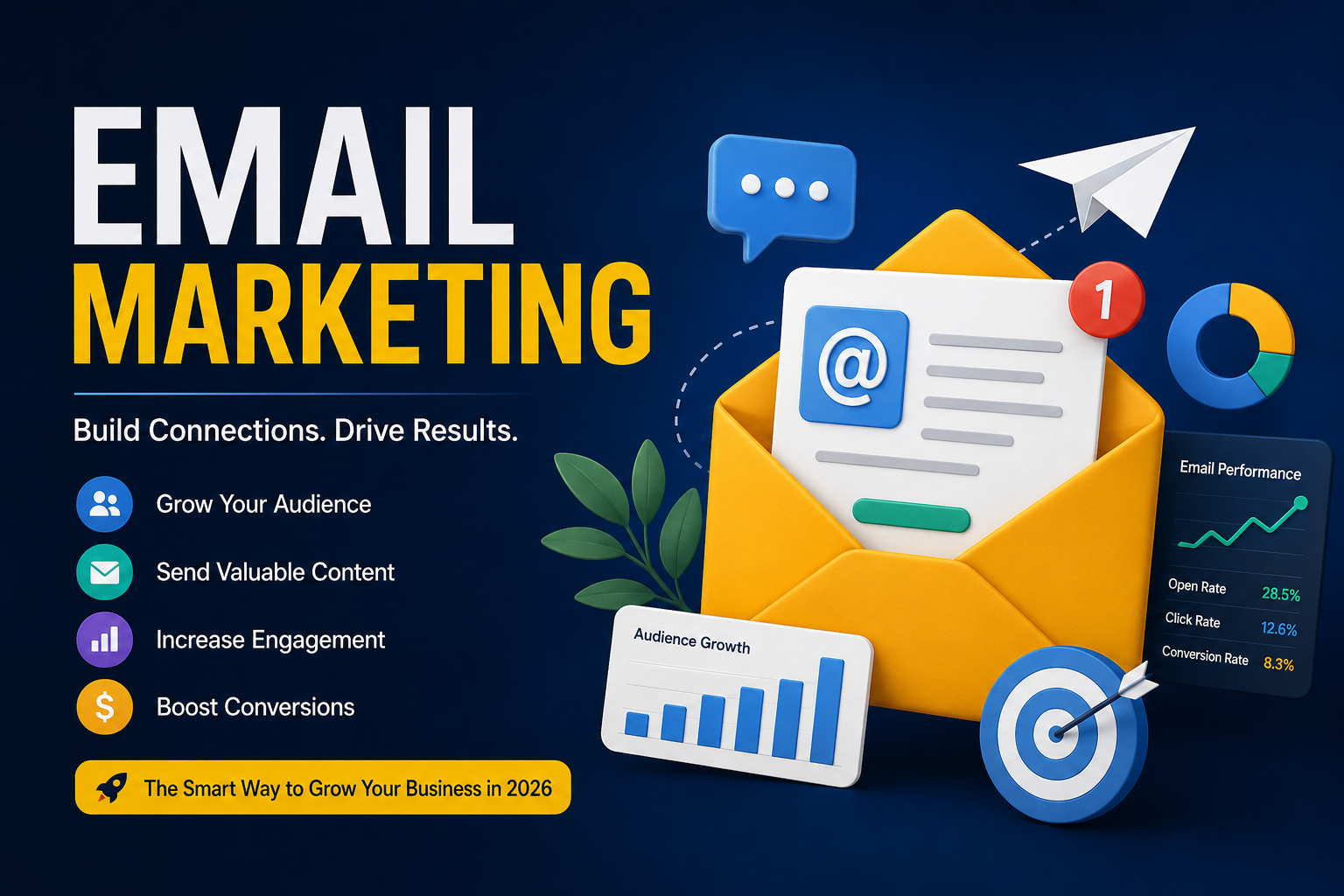
Email marketing remains one of the most effective ways for businesses, creators, ecommerce brands, and service providers to connect directly with customers. Unlike social media, where algorithms can determine who sees your content, email gives you a direct communication channel with people who have chosen to hear from you.
In 2026, successful businesses are using personalized messages, automation, segmentation, and valuable content to build stronger customer relationships and generate consistent sales.
What Is Email Marketing?
Email marketing is the practice of sending targeted messages to subscribers through email. These messages can include promotional offers, educational content, product announcements, company updates, newsletters, or personalized recommendations.
A strong strategy is not simply about sending as many emails as possible. It is about delivering the right message to the right person at the right time.
For example, an online store might send a welcome email after someone joins its list, followed by product recommendations and a special offer. A consulting business may use an email newsletter to share useful insights and encourage potential clients to schedule a consultation.
Why Is Email Marketing Important in 2026?
Digital competition continues to increase, making direct customer communication more valuable than ever. A well-managed email list can become a long-term business asset.
There are several reasons companies continue to invest in this channel:
- Direct communication: Messages reach subscribers in their inboxes.
- Customer relationships: Consistent, useful content can increase trust.
- Personalization: Businesses can customize messages based on customer behavior.
- Automation: Repetitive communication can happen automatically.
- Measurable results: Marketers can track opens, clicks, conversions, and revenue.
- Cost efficiency: Businesses can communicate with large audiences without relying entirely on paid advertising.
The key is to focus on providing genuine value rather than overwhelming subscribers with promotional messages.
How to Build an Email List
Successful email campaigns begin with a quality subscriber list. Instead of purchasing random email addresses, businesses should encourage interested visitors to voluntarily subscribe.
Effective email list building methods include:
1. Offer a Valuable Incentive
Give visitors a useful reason to subscribe. This could be a discount, checklist, guide, template, free resource, or exclusive content.
2. Use Website Signup Forms
Place signup forms on relevant pages of your website. A simple headline and clear benefit can make the subscription process more effective.
3. Create Dedicated Landing Pages
A focused landing page can encourage visitors to exchange their email address for something valuable.
4. Make the Benefit Clear
Tell people exactly what they will receive after subscribing. For example, you might promise weekly tips, exclusive deals, or helpful industry insights.
Always use permission-based collection practices and provide an easy way for subscribers to unsubscribe.
Creating Effective Email Marketing Campaigns
A successful campaign begins with a clear objective. Before writing an email, determine what you want the reader to do.
Possible goals include:
- Purchasing a product
- Booking a service
- Reading an article
- Downloading a resource
- Registering for an event
- Returning to an abandoned cart
Your subject line should create interest without misleading the reader. The body should be easy to scan, with short paragraphs, useful information, and a clear call to action.
Avoid trying to accomplish too many things in one message. A focused email usually makes the desired action easier to understand.
Email Marketing Automation
Email marketing automation allows businesses to send timely messages based on specific actions or events.
Common automated workflows include:
- Welcome sequences
- Abandoned cart reminders
- Post-purchase follow-ups
- Re-engagement campaigns
- Birthday or anniversary messages
- Product recommendation emails
- Lead nurturing sequences
For example, when someone subscribes to a newsletter, an automated sequence can introduce the business, provide educational content, and eventually present a relevant product or service.
This approach saves time while creating a more consistent customer experience.
Personalization and Segmentation
Sending the same message to everyone is rarely the best approach. Segmentation allows marketers to divide subscribers into groups based on characteristics or behavior.
You could segment subscribers by:
- Purchase history
- Location
- Interests
- Website activity
- Engagement level
- Customer type
- Previous interactions
Personalized communication can make messages more relevant and help businesses avoid sending unnecessary promotions to people who are not interested.
Best Email Marketing Tools
The right email marketing tools can simplify list management, automation, analytics, segmentation, and campaign creation.
When choosing a platform, look for features such as:
- Drag-and-drop email creation
- Automation workflows
- Subscriber segmentation
- Analytics and reporting
- Mobile-friendly templates
- A/B testing
- Signup forms
- Integration with your website or ecommerce platform
The best platform depends on your business size, audience, budget, and technical requirements.
Email Marketing Best Practices
Following proven email marketing best practices can improve engagement and protect the quality of your subscriber list.
First, send useful content consistently instead of contacting subscribers only when you want to make a sale. Second, optimize emails for mobile devices because many people read messages on smartphones.
You should also test different subject lines, calls to action, layouts, and sending times. Monitor important metrics such as click-through rate, conversion rate, unsubscribe rate, and revenue generated from campaigns.
Most importantly, respect subscriber preferences and applicable email communication laws. Make it easy for recipients to understand who is contacting them and how they can stop receiving messages.
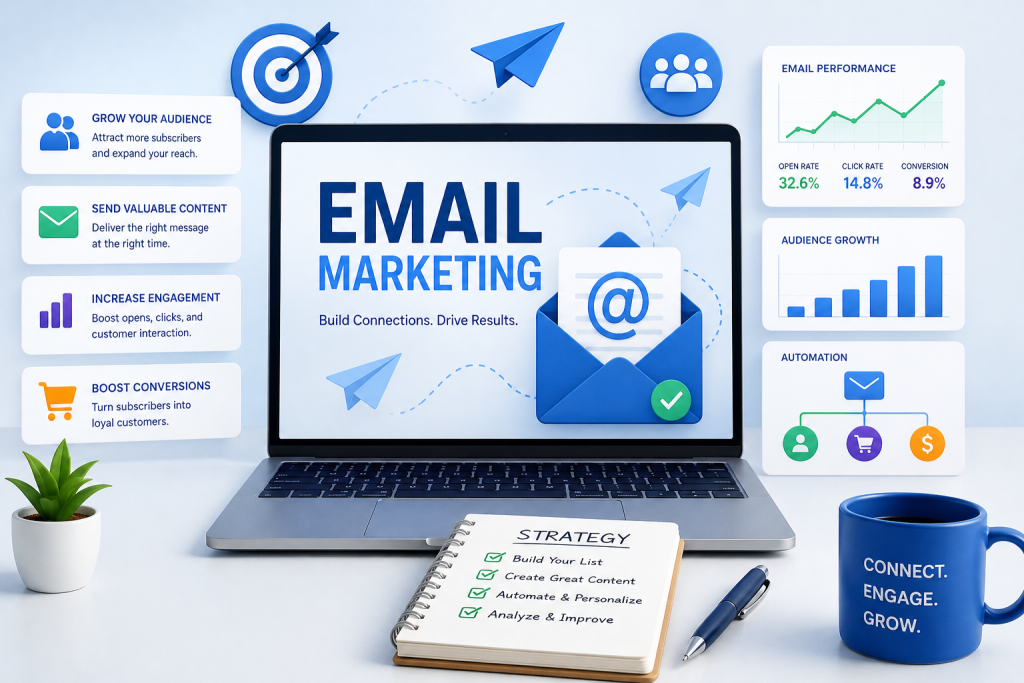
Common Mistakes to Avoid
Even a well-designed campaign can fail because of simple mistakes.
Avoid buying email lists, sending excessive promotional messages, using misleading subject lines, ignoring mobile users, and failing to remove consistently inactive subscribers.
Another common mistake is focusing only on open rates. Opens can provide useful directional information, but clicks, conversions, customer actions, and revenue are often more meaningful indicators of business performance.
Final Thoughts
Email marketing is still a powerful digital marketing channel in 2026 because it combines direct communication, personalization, automation, and measurable performance.
The strongest approach is not to send more emails—it is to send more relevant emails. Build a permission-based list, understand your audience, create valuable content, automate repetitive journeys, and continuously improve campaigns using real performance data.
Whether you run an ecommerce store, professional service, startup, personal brand, or established company, a thoughtful email marketing strategy can help turn subscribers into engaged customers and long-term supporters.
Leave a Reply