Category: Uncategorized

  • Affiliate Marketing in 2026: A Complete Guide to Earning Online

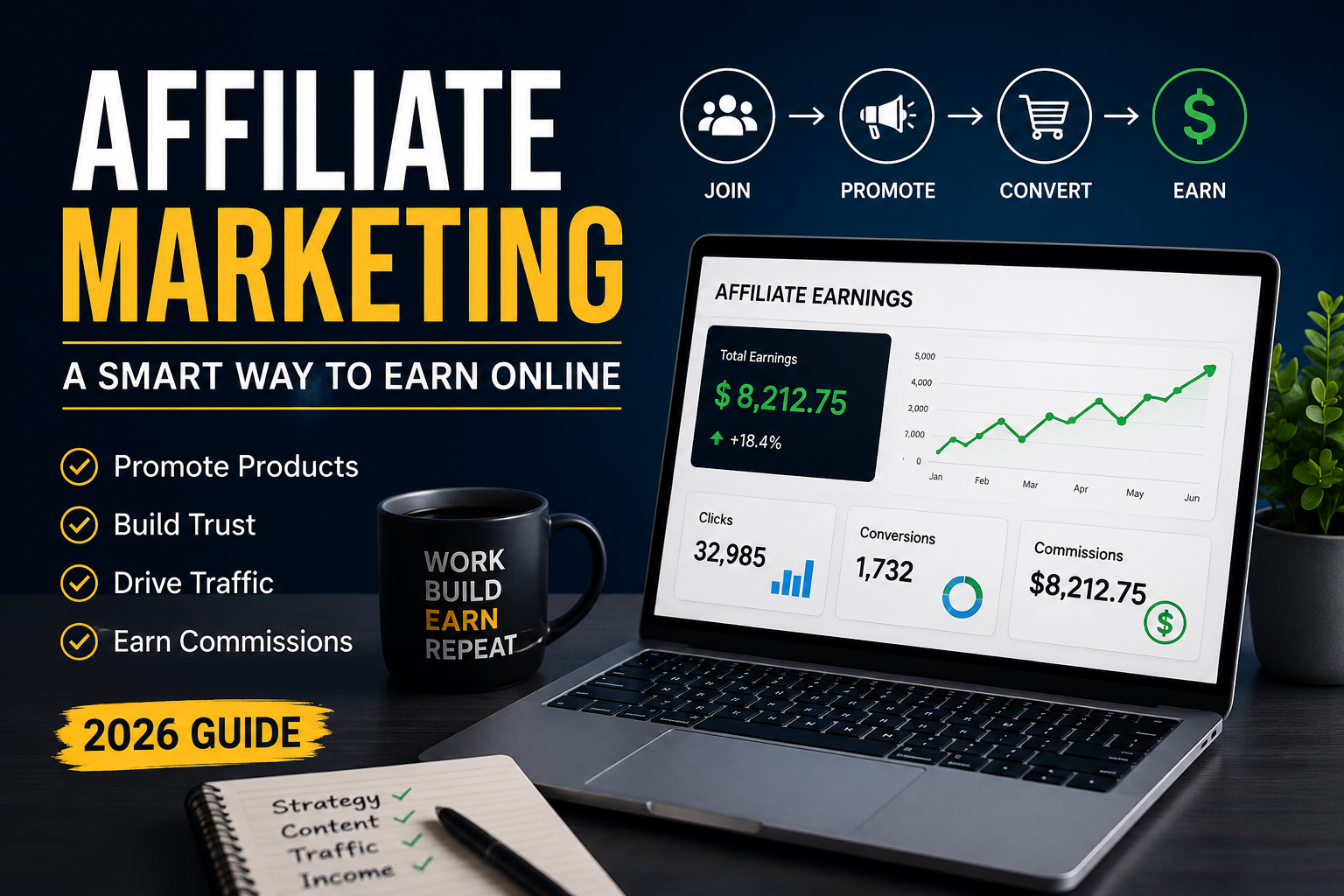
    Affiliate Marketing in 2026: A Complete Guide to Earning Online

    Affiliate marketing has become one of the most accessible ways to build an online income stream without creating your own products. From bloggers and YouTubers to social media creators and niche website owners, thousands of people use this business model to recommend products and earn commissions from successful referrals.

    In 2026, the opportunity is bigger than simply placing product links on a website. Successful creators are combining helpful content, search engine optimization, email marketing, social media, and artificial intelligence to reach people who are already looking for solutions.

    If you want to understand how this business model works, how to get started, and what strategies can help you build sustainable income, this guide covers the essential steps.

    What Is Affiliate Marketing?

    Affiliate marketing is a performance-based business model where you promote another company’s products or services and receive a commission when someone completes a qualifying action through your unique referral link.

    The process is simple:

    1. Join an affiliate program.
    2. Choose products or services relevant to your audience.
    3. Receive a unique affiliate link.
    4. Create useful content around the product.
    5. Promote your content through search, social media, email, or other channels.
    6. Earn a commission when someone makes a qualifying purchase or completes an approved action.

    You don’t normally need to handle inventory, shipping, customer service, or product development. Your primary responsibility is attracting the right audience and helping them make informed purchasing decisions.

    How Does Affiliate Marketing Work?

    There are usually four major participants in an affiliate marketing system:

    The Merchant: The company that sells the product or service.

    The Affiliate: The person or business that promotes the product.

    The Consumer: The customer who clicks the referral link and takes an action.

    The Affiliate Network: A platform that may connect merchants with affiliates, track referrals, and process commissions.

    For example, imagine you operate a website about home technology. You publish an article comparing several wireless routers. Within the article, you include properly disclosed referral links. A reader clicks one of those links and purchases a router. If the transaction qualifies under the program’s terms, you receive a commission.

    Best Affiliate Marketing Strategies for 2026

    Competition has increased, so simply publishing hundreds of product links is unlikely to produce consistent results. The strongest approach is to create content that solves real problems.

    1. Focus on a Specific Niche

    Choose a focused topic instead of trying to promote everything. Popular niches include:

    • Personal finance
    • Software and technology
    • Fitness and wellness
    • Home improvement
    • Travel
    • Beauty and skincare
    • Online education
    • Productivity
    • Consumer electronics

    A focused niche makes it easier to establish topical authority and attract people with specific interests.

    2. Create Product-Focused Content

    Some of the most useful content formats include:

    • Product reviews
    • Comparison articles
    • “Best” product guides
    • Tutorials
    • Buying guides
    • Alternatives articles
    • Product roundups
    • How-to guides

    For example, instead of writing a generic article about laptops, you could create content such as “Best Laptops for Remote Work in 2026.” This targets people who may already have buying intent.

    3. Use SEO to Capture Search Traffic

    Search engine optimization remains an important traffic strategy for affiliate websites. Research relevant keywords before creating content and build articles around genuine search intent.

    Use your primary keyword naturally in the title, introduction, headings, URL, and relevant sections. Include related phrases and entities rather than repeatedly forcing the same keyword into every paragraph.

    Strong internal linking can also help search engines understand the relationship between your content.

    4. Build Trust Before Selling

    People are more likely to purchase through recommendations they trust. Avoid making exaggerated claims simply to increase conversions.

    Explain the advantages, disadvantages, features, pricing considerations, and ideal use cases of products. When appropriate, share first-hand experience, original photographs, demonstrations, or meaningful comparisons.

    Your goal should be to help readers make a better decision—not simply convince them to click.
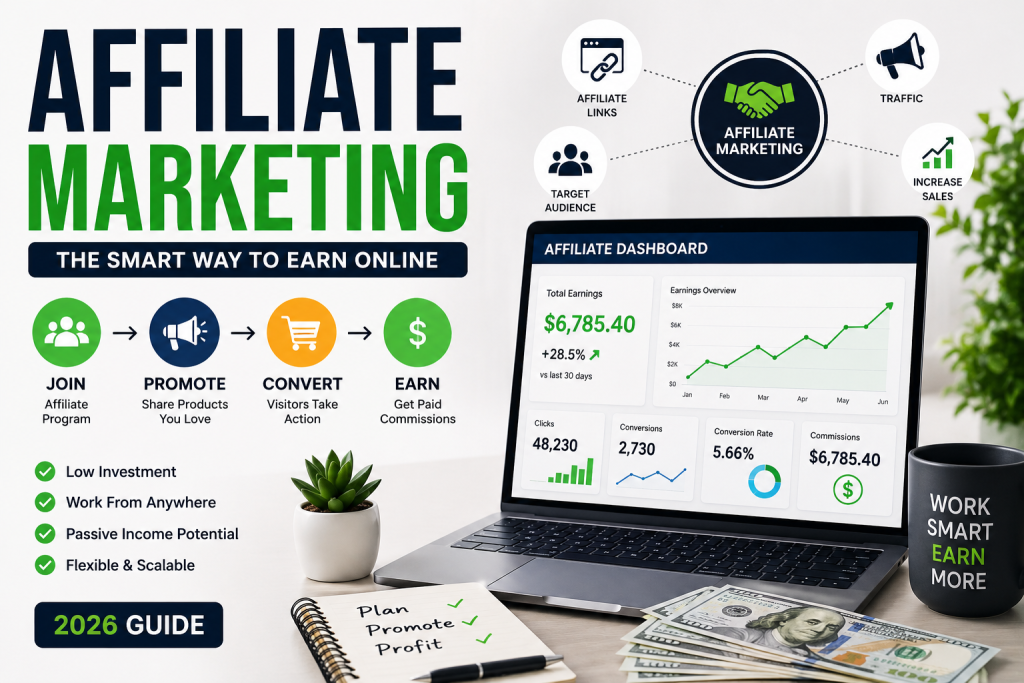
    Affiliate Marketing 2026 guide showing affiliate links, traffic, conversions, online earnings, and affiliate dashboard on a laptop.

    How to Start Affiliate Marketing

    Getting started doesn’t require a complicated setup.

    First, choose a niche you understand or are willing to research deeply. Next, create a professional website or content platform where you can publish useful information.

    Then research reputable affiliate programs related to your niche. Read each program’s commission structure, payment requirements, cookie duration, promotional rules, and prohibited marketing methods.

    After joining suitable programs, create high-quality content around topics that potential customers search for.

    Finally, track your results. Monitor clicks, conversions, conversion rates, and earnings to determine which pages and products are performing best.

    Affiliate Disclosure and Compliance

    Transparency is essential. If you receive compensation when someone purchases through your links, clearly disclose that relationship to your audience.

    Your disclosure should be easy to understand and placed where readers can reasonably notice it. Follow the applicable advertising and consumer-protection requirements as well as the individual rules of each affiliate program.

    Never disguise commercial relationships or make claims about a product that you cannot support.

    Common Mistakes to Avoid

    Many beginners expect immediate income and become discouraged when their first few articles generate little traffic.

    Other common mistakes include choosing an overly broad niche, publishing low-quality AI-generated content, ignoring search intent, promoting irrelevant products, stuffing keywords, and failing to build an email or audience relationship.

    Another major mistake is focusing entirely on commissions instead of creating genuinely useful resources.

    How Much Can You Make?

    There is no fixed income level. Earnings depend on your niche, traffic, commission rates, conversion rate, content quality, audience trust, and promotional strategy.

    A website with highly targeted traffic can sometimes outperform a much larger website with visitors who have little purchasing intent.

    Rather than focusing on unrealistic income promises, concentrate on building valuable content, increasing qualified traffic, improving conversion rates, and developing multiple reliable revenue opportunities.

    Final Thoughts

    Affiliate marketing in 2026 is not simply about adding referral links to articles. It is about building an online resource that people trust.

    Choose a specific niche, understand what your audience is searching for, publish genuinely helpful content, optimize it for search engines, and recommend products that actually fit your readers’ needs.

    With consistency, transparency, and a long-term SEO strategy, affiliate marketing can become a valuable component of a broader online business.
  • Blogging Tips for Beginners: How to Start and Grow a Successful Blog in 2026

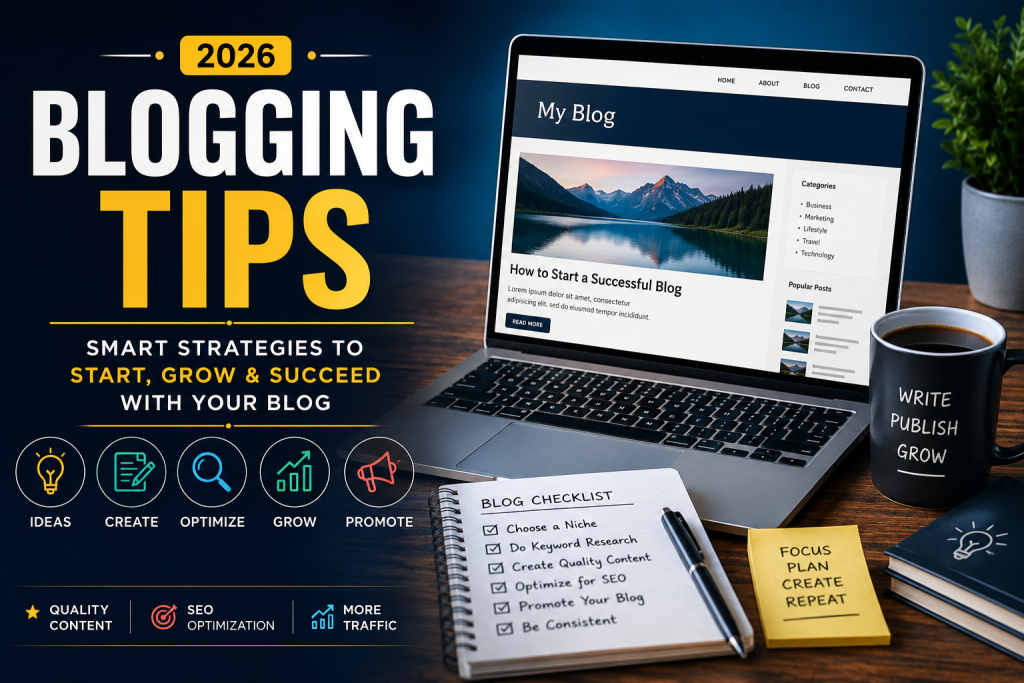
    Blogging Tips for Beginners: How to Start and Grow a Successful Blog in 2026

    Starting a blog can be one of the most effective ways to share knowledge, build an online presence, attract customers, or create a long-term digital income stream. However, publishing random articles is not enough. Successful bloggers combine useful content, search engine optimization, consistency, and a clear understanding of their readers.

    Whether you are starting from scratch or trying to improve an existing website, these blogging tips can help you create a stronger strategy in 2026.

    1. Choose a Clear Blogging Niche

    In blogging tips the first step is deciding what your blog will be about. A focused niche makes it easier to build authority and attract the right audience.

    Instead of covering everything, choose a specific area where you can consistently provide useful information. Popular categories include personal finance, technology, health and wellness, travel, business, education, food, careers, home improvement, and digital marketing.

    Your niche should ideally combine three things: your knowledge, audience demand, and enough topics to support long-term content creation.

    2. Understand What Your Audience Searches For

    One of the most important blogging tips is to create content based on real search intent.

    Before writing an article, think about what readers actually want to know. Are they looking for a beginner’s guide, product comparison, step-by-step instructions, solutions to a problem, or expert advice?

    Keyword research tools can help you discover popular searches and related questions. However, do not focus only on search volume. Look for keywords that match your topic and have a clear purpose.

    For example, someone searching for “how to start a blog” needs a different article from someone searching for “best blogging platform.”

    3. Create Helpful, Original Content

    Quality should be the foundation of your blogging strategy.

    Your articles should provide information that genuinely helps readers solve a problem or make a decision. Avoid rewriting information from other websites without adding anything valuable.

    Strong blog content usually includes this blogging tips

    • Clear explanations
    • Practical examples
    • Original insights
    • Relevant statistics when available
    • Actionable recommendations
    • Easy-to-scan formatting
    • Accurate and updated information

    A useful article should leave readers feeling that they found the answer they were looking for.

    4. Write SEO-Friendly Headlines

    Your headline is one of the first things both readers and search engines see.

    A good title should clearly communicate the benefit of the article while naturally including the primary topic. Avoid exaggerated headlines that promise something the article does not deliver.

    For example, instead of writing:

    “Everything You Need to Know About Blogging”

    try:

    “ Blogging tips for Beginners: 10 Ways to Grow Your Blog”

    The second headline is more specific and communicates exactly what the reader can expect.

    5. Use SEO Naturally

    SEO blogging tips is not about repeating the same keyword throughout an article. Modern search optimization focuses on relevance, helpfulness, structure, and satisfying search intent.

    Use your primary keyword naturally in important locations such as the title, introduction, selected headings, URL, meta description, and conclusion.

    Also include related terms and concepts. For a blogging article, relevant phrases may include blog SEO, blog traffic, content creation, keyword research, and blog writing tips.

    This creates stronger topical relevance without making your writing sound unnatural.

    6. Make Your Articles Easy to Read

    Even excellent information can perform poorly if it is difficult to read.

    Use short paragraphs, descriptive headings, bullet points, numbered lists, and simple sentences. Break complicated subjects into smaller sections so readers can quickly find the information they need.

    Formatting also matters for mobile visitors. Make sure your website loads quickly and your content remains easy to read on smaller screens.

    7. Publish Consistently

    You do not need to publish every day to build a successful blog.

    A realistic publishing schedule is better than creating dozens of articles and then stopping. Depending on your resources, publishing one high-quality article each week can provide a strong foundation.

    Consistency also helps you build a content library over time. As your website grows, individual articles can attract visitors from many different search queries.

    8. Promote Your Content

    Publishing an article is only half the job.

    Use social media, email newsletters, online communities, partnerships, and other legitimate promotional channels to introduce your content to new readers.

    Internal linking is also extremely important. Connect related articles so visitors can discover more information while search engines can better understand your website structure.

    If you want to increase blog traffic, focus on both search visibility and content promotion rather than relying on a single traffic source.

    9. Update Older Articles

    One of the most overlooked blogging tips is regularly improving existing content.

    Information changes, statistics become outdated, and search intent can evolve. Review your older articles periodically and update outdated sections, improve explanations, add useful examples, replace broken links, and strengthen internal linking.

    Refreshing valuable content can often be more efficient than constantly creating new pages.

    10. Track Your Results

    Successful blogging tips requires measurement.

    Monitor important performance indicators such as organic traffic, search impressions, clicks, rankings, engagement, and conversions. These insights can show which topics are attracting readers and which pages need improvement.

    Do not judge an article only by its traffic. A smaller article that generates leads, email subscribers, or customers can be more valuable than a page receiving thousands of visitors with no meaningful results.

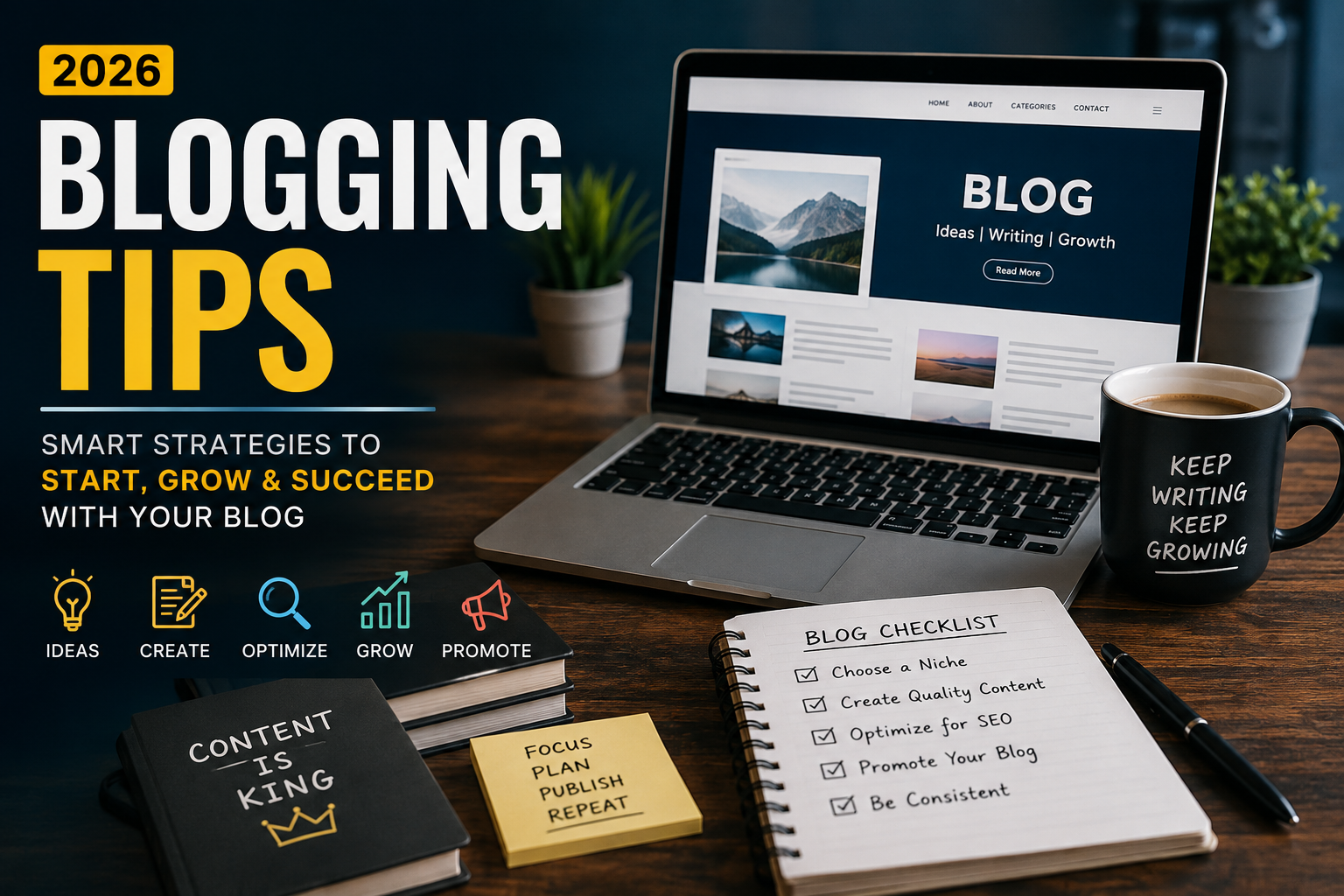
    Alt Text: Blogging tips 2026 for starting, growing, and optimizing a successful blog

    Final Thoughts

    Building a successful blog takes time, patience, and continuous improvement. The best approach is to understand your audience, choose relevant topics, create genuinely helpful content, optimize pages for search, and consistently promote and update your work.

    These blogging tips provide a practical foundation for beginners and experienced creators alike. In 2026, the blogs most likely to stand out will be those that prioritize usefulness, originality, trust, and a great reader experience over keyword stuffing.

    Start with one strong topic, create the best resource you can, measure the results, and keep improving. Consistent progress can turn a simple blog into a valuable long-term online asset.

  • Google Analytics Guide 2026: How to Track Website Traffic, Users, and Conversions

    Google Analytics Guide 2026: How to Track Website Traffic, Users, and Conversions

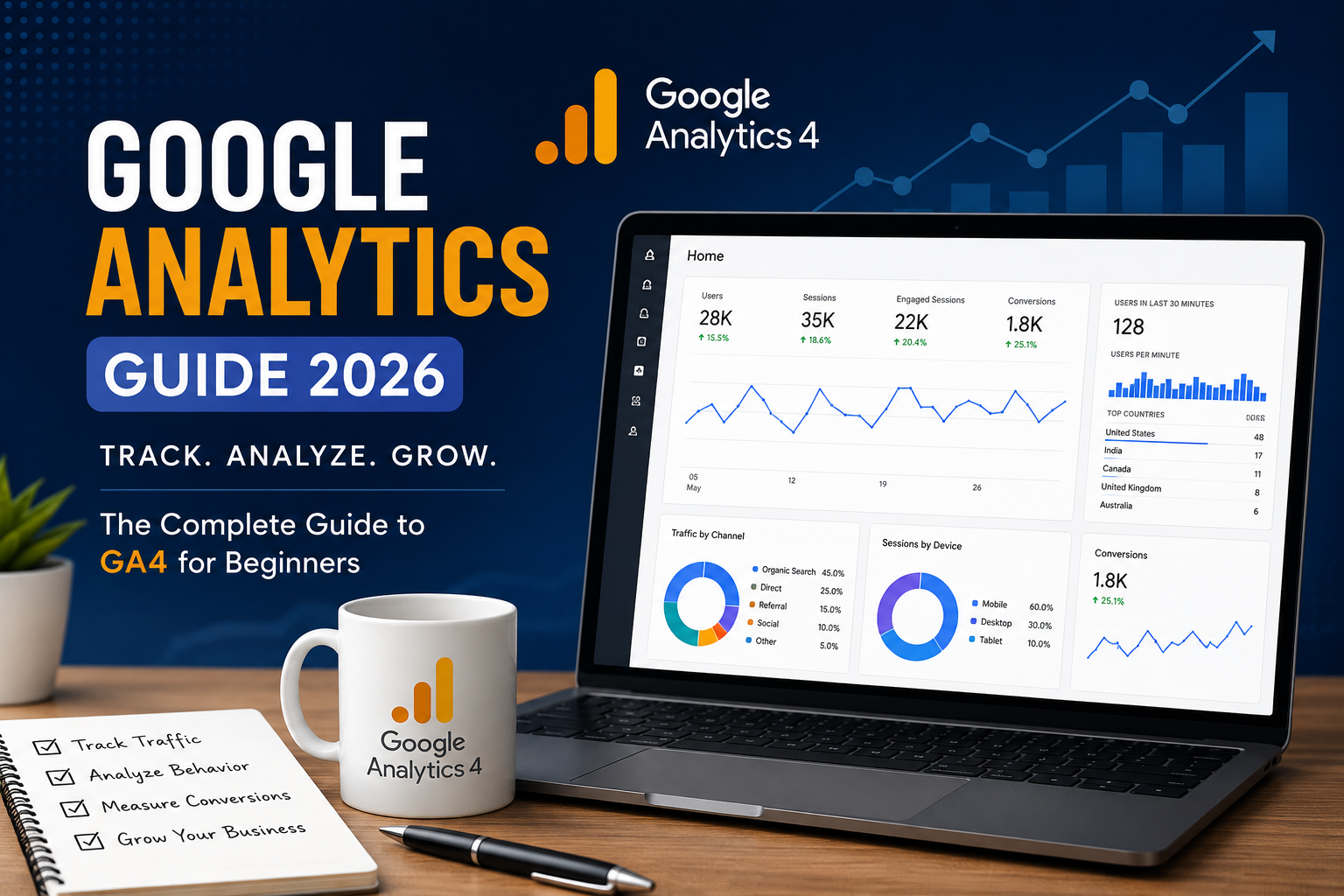
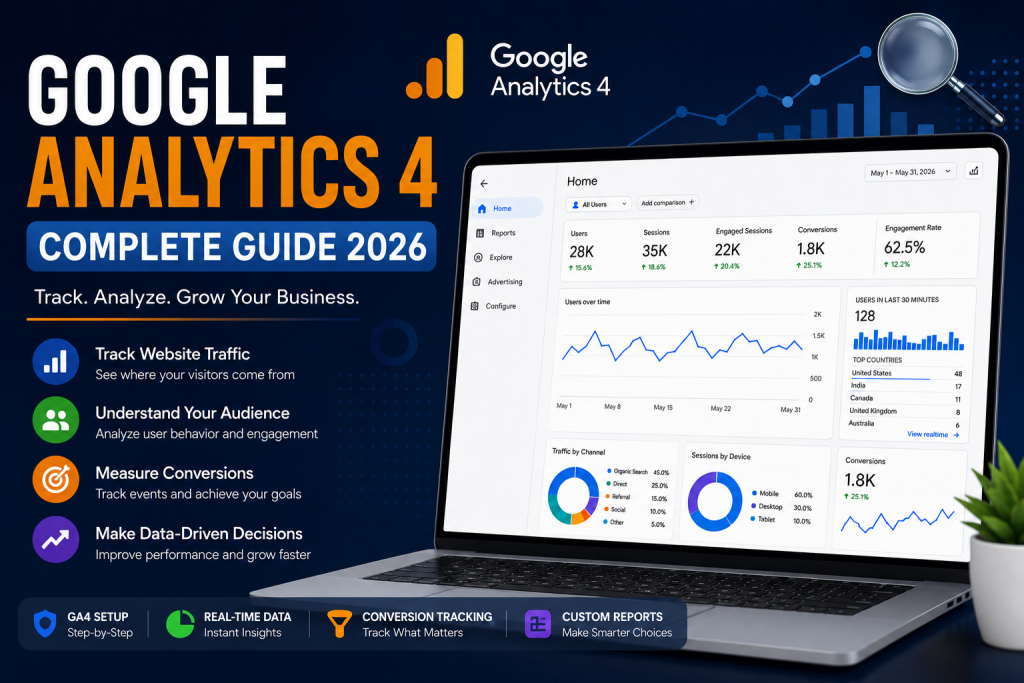
    Understanding what visitors do on your website is essential for making smarter marketing decisions. A Google Analytics Guide can help beginners and business owners learn how to measure website traffic, understand user behavior, and identify which pages or campaigns generate the best results.

    In 2026, website analytics is more important than ever. Search engines, social platforms, email campaigns, paid advertising, and other digital channels can send visitors to your website, but analytics helps you understand what happens after they arrive.

    This guide explains the basics of Google Analytics Guide, how to set it up, and which metrics you should monitor.

    What Is Google Analytics Guide ?

    Google Analytics Guide is a web analytics platform that helps website owners collect and analyze information about visitors. It can show where your traffic comes from, what pages people view, how long they interact with your website, and whether they complete important actions.

    The current standard is Google Analytics Guide 4 (GA4), which uses an event-based measurement model. Instead of focusing only on pageviews and sessions, GA4 can track interactions such as clicks, purchases, form submissions, video engagement, and other events.

    For businesses, this data can help improve website performance and marketing strategies.

    Why Google Analytics Matters in 2026

    A successful website should not rely on guesswork. Analytics data can reveal which marketing channels are generating valuable visitors and which areas need improvement.

    Some important benefits include:

    • Measuring website traffic
    • Understanding visitor behavior
    • Tracking conversions and important actions
    • Identifying high-performing content
    • Measuring marketing campaigns
    • Finding pages that need improvement
    • Understanding audience engagement
    • Making data-driven business decisions

    For example, if thousands of visitors reach a landing page but very few complete a form, the data may indicate that the page needs better messaging, design, or calls to action.

    How to Set Up Google Analytics

    Setting up Google Analytics Guide 4 is relatively straightforward.

    1. Create an Analytics Property

    Start by signing in to your Google account and creating an Analytics property for your website. Enter your business information and select the appropriate reporting settings.

    2. Add Your Website

    After creating the property, add your website as a data stream. GA4 provides a measurement ID that connects your website with your analytics property.

    3. Install the Tracking Code

    You can install the tracking code directly on your website or use a platform such as Google Tag Manager. Many popular website platforms also provide integrations that simplify installation.

    4. Verify Data Collection

    After installation, visit your website and check the real-time reports. If your visit appears in the reports, the tracking setup is working.

    Always verify your configuration before relying on the data for business decisions.

    Important Google Analytics Metrics

    One of the most important parts of learning website Google Analytics Guide is understanding the right metrics.

    Users

    Users represent visitors interacting with your website. This metric can help you understand the overall size of your audience.

    Sessions

    A session represents a period of interaction with your website. Sessions can help you evaluate how frequently visitors access your site.

    Engagement Rate

    Engagement rate helps measure how actively visitors interact with your website. A higher engagement rate can indicate that your content is relevant and useful.

    Events

    Events track specific interactions. Examples include button clicks, downloads, video plays, purchases, and form submissions.

    Conversions

    Conversions are important actions that support your business goals. Depending on your website, a conversion could be a purchase, lead submission, signup, phone call, or another valuable action.

    Understanding Website Traffic Sources

    Another major benefit of Google Analytics Guide is understanding where visitors originate.

    Common traffic sources include:

    • Organic search
    • Direct traffic
    • Referral websites
    • Social media
    • Email campaigns
    • Paid advertising

    Analyzing traffic sources helps you identify which channels deserve more attention. For example, if organic search consistently generates engaged visitors, improving your SEO strategy could produce additional long-term traffic.

    Google Analytics and SEO

    Google Analytics Guide can support an effective SEO strategy by showing what happens after visitors arrive from search engines.

    You can analyze landing pages, engagement, conversions, and other user interactions to determine whether your organic traffic is producing meaningful results.

    However, analytics and Google Search Console serve different purposes. Search Console provides valuable information about search performance, queries, impressions, clicks, and indexing, while Analytics focuses more heavily on what visitors do after reaching your website.

    Using both platforms together provides a more complete view of search performance.

    Google Analytics 4 complete guide 2026 showing website traffic, user behavior, conversions, and analytics dashboard

    How to Use Analytics Data to Improve Your Website

    Collecting data is only the first step. The real value comes from turning that information into action.

    Start by identifying your most important business goals. Then determine which events and conversions represent those goals.

    Next, examine your highest-traffic pages. Check whether those pages generate engagement, leads, sales, or other valuable actions.

    You should also investigate pages with high traffic but weak conversion performance. Improving headlines, content quality, page speed, navigation, trust signals, and calls to action may improve results.

    Common Analytics Mistakes to Avoid

    Beginners often make several mistakes when working with website analytics.

    One common problem is focusing on vanity metrics instead of meaningful business outcomes. A large number of visitors is useful, but traffic alone does not guarantee revenue or leads.

    Another mistake is failing to configure important events and conversions. Without proper tracking, it becomes difficult to measure whether your marketing efforts are actually working.

    You should also avoid making decisions based on a single metric. Look at multiple data points and consider trends over time before changing your strategy.

    Final Thoughts

    This Google Analytics Guide provides a practical starting point for understanding website measurement in 2026. GA4 can help you discover where visitors come from, how they interact with your content, and which actions contribute to your business goals.

    The most effective approach is to focus on meaningful data rather than simply collecting numbers. Configure important events, monitor conversions, analyze traffic sources, and regularly review your highest-performing pages.

    When analytics data is combined with SEO, quality content, and a strong website experience, it becomes a powerful tool for making better digital marketing decisions.

  • Google Search Console Guide: How to Improve Your Website SEO in 2026

    Google Search Console Guide: How to Improve Your Website SEO in 2026

    If you want to understand how your website performs in Google Search and find opportunities to increase organic traffic, Google Search Console is one of the most valuable free tools available. It helps website owners, bloggers, marketers, and SEO professionals monitor search visibility, identify technical problems, analyze keywords, and understand how visitors discover their content.

    This Google Search Console Guide explains how the platform works, which reports matter most, and how to use its data to build a stronger SEO strategy in 2026.

    What Is Google Search Console?

    Google Search Console Guide is a free service from Google that helps website owners monitor and troubleshoot their presence in Google Search results.

    Unlike traditional analytics platforms that mainly show what visitors do after reaching your website, Search Console provides information about how your pages perform before and during the search journey.

    You can use it to discover:

    • Which search queries generate impressions
    • Which pages receive organic clicks
    • Your average position in search results
    • Your click-through rate (CTR)
    • Indexing problems
    • Mobile usability issues
    • Core Web Vitals performance
    • Sitemap and crawling information
    • Security and manual-action problems

    For anyone serious about search engine optimization, this information can help turn SEO decisions from guesses into data-driven actions.

    Why Google Search Console Matters for SEO

    Google Search Console Guide gives you direct insight into how Google understands and displays your website.

    For example, you may discover that a page receives thousands of impressions but very few clicks. This could indicate that your title or meta description needs improvement.

    You may also find pages ranking on the second page for valuable search terms. Improving their content, internal links, structure, and search intent alignment could help move them closer to the top results.

    The platform is especially useful for:

    • Keyword research
    • Organic traffic optimization
    • Content optimization
    • Technical SEO
    • Indexing management
    • Finding ranking opportunities
    • Monitoring website performance

    How to Set Up Google Search Console

    Getting started is relatively simple.

    First, visit Google Search Console Guide and add your website as a property. You can generally choose between a Domain property and a URL-prefix property.

    A Domain property provides broader coverage across your domain, while a URL-prefix property focuses on a specific URL structure.

    After adding your property, Google requires verification. Depending on your setup, verification can be completed through methods such as DNS records, an HTML file, an HTML tag, or supported verification services.

    Once verification is complete, give Google time to collect performance data.

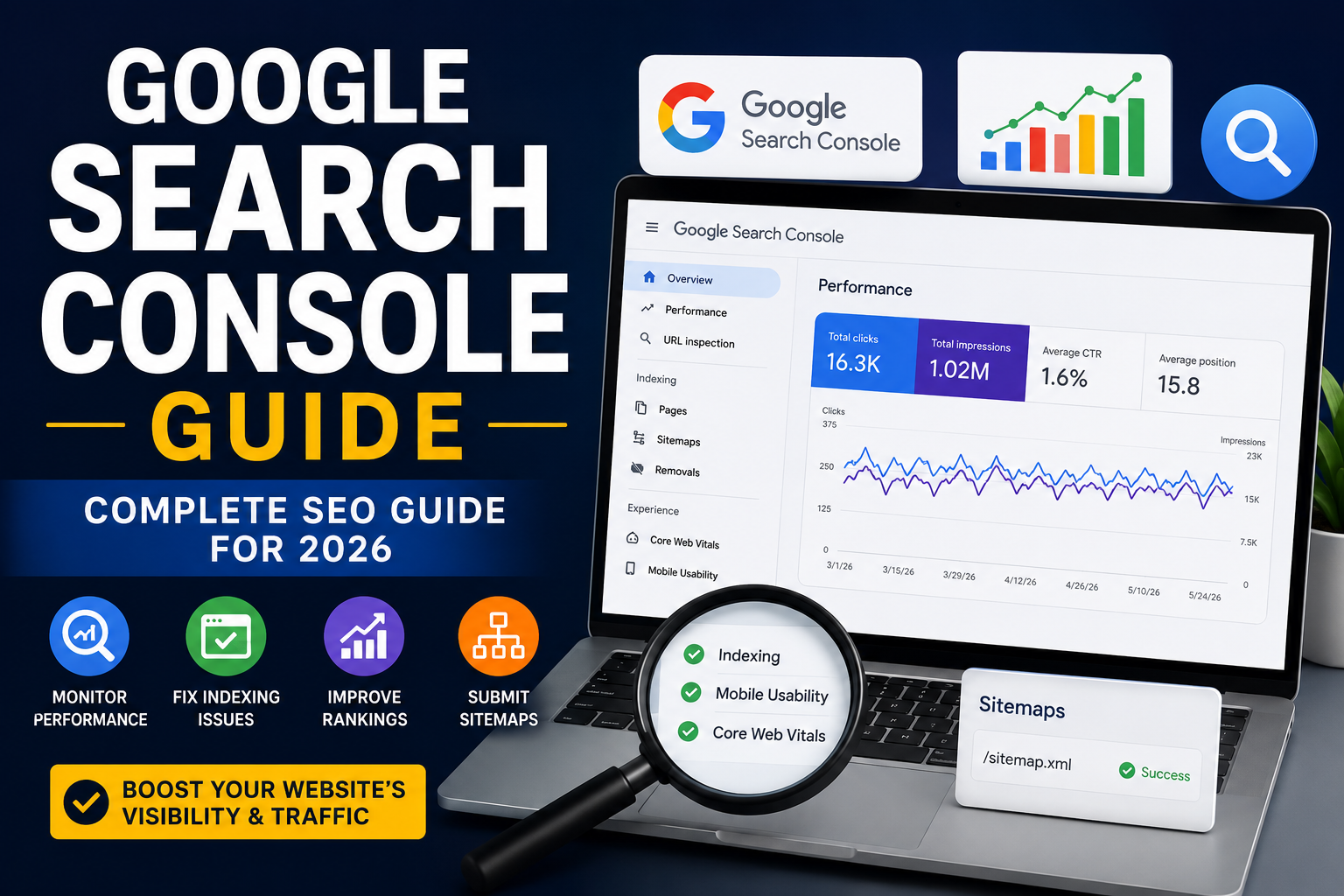
    Google Search Console Guide 2026 showing SEO performance, keyword opportunities, indexing, mobile usability, sitemap submission, and organic traffic growth

    Understanding the Performance Report

    The Performance report is one of the most useful sections for SEO analysis.

    It provides four important metrics:

    1. Total Clicks

    Clicks show how many times users selected your website from Google Search Console Guide

    2. Total Impressions

    Impressions represent how often your website appeared in search results.

    3. Average CTR

    Click-through rate measures the percentage of impressions that resulted in clicks.

    4. Average Position

    Average position gives you an estimate of where your website appeared for tracked searches.

    You can also analyze performance by queries, pages, countries, devices, and search appearance.

    This makes the report extremely useful for finding content that has potential but is not receiving enough traffic.

    How to Find New Keyword Opportunities

    One of the smartest ways Google Search Console Guide to use this platform is to analyze queries for which your pages already appear.

    Look for keywords where your page has:

    • High impressions
    • A relatively low CTR
    • Positions around the first or second page
    • Strong relevance to the page topic

    These terms can reveal opportunities that traditional keyword research tools may overlook.

    For example, a page ranking around positions 8–20 may already have enough relevance to compete for more visibility. You can improve the page by answering related questions, expanding useful sections, improving headings, strengthening internal links, and better matching search intent.

    The Indexing Report

    The Pages or Indexing report helps you understand which URLs Google has indexed and which ones have problems.

    Common indexing issues include:

    • Crawled but currently not indexed
    • Discovered but currently not indexed
    • Server errors
    • Redirect errors
    • Duplicate pages
    • Pages blocked by robots.txt
    • Incorrect canonical URLs

    Not every excluded page is a problem. Some URLs should intentionally remain outside Google’s index.

    The important task is identifying exclusions that affect valuable pages.

    Using URL Inspection

    The URL Inspection tool allows you to check an individual page and see whether Google Search Console Guide can access and index it.

    It can help you determine whether a URL:

    • Is indexed
    • Can be indexed
    • Has a canonical URL
    • Has crawling issues
    • Has structured-data information
    • Was recently crawled

    After publishing or significantly updating an important page, you can use URL Inspection to request indexing.

    However, requesting indexing does not guarantee immediate inclusion or a particular ranking.

    Improve Core Web Vitals

    Website experience remains an important part of modern SEO.

    Google Search Console Guide provides Core Web Vitals information based on real-world user experience data where sufficient data is available.

    The main metrics include:

    • LCP: Measures loading performance
    • INP: Measures interaction responsiveness
    • CLS: Measures visual stability

    Improving these areas can create a better experience for visitors and support overall website quality.

    Compressing large images, reducing unnecessary scripts, improving server response times, and using efficient web development practices can help improve performance.

    Submit an XML Sitemap

    An XML sitemap helps search engines discover important URLs on your website.

    If your website has many pages, frequently publishes new content, or contains complex navigation, maintaining a clean sitemap can be particularly helpful.

    Submit your sitemap through the Sitemaps section and monitor whether Google can successfully process it.

    Remember that a sitemap helps discovery; it does not guarantee that every submitted URL will be indexed.

    Common SEO Mistakes to Avoid

    When using Google Search Console Guide, avoid focusing exclusively on rankings.

    A page ranking at position three may generate more traffic than a page ranking at position one for another keyword because search volume, intent, CTR, and competition can vary significantly.

    Also avoid:

    • Obsessing over daily ranking changes
    • Trying to index every URL
    • Ignoring technical errors
    • Stuffing keywords into content
    • Removing pages solely because they have low traffic
    • Making major SEO changes without analyzing data

    SEO is a long-term process, and Search Console becomes more valuable when you compare trends over time.

    Best Way to Use Google Search Console in 2026

    The most effective approach is to combine Google Search Console Guide data with high-quality content and a strong technical SEO foundation.

    Start by reviewing your top pages and queries every month. Identify pages with high impressions but low CTR, keywords where you are close to page one, and URLs experiencing indexing or performance problems.

    Then prioritize improvements based on business value rather than simply chasing the highest search volume.

    Final Thoughts

    A well-managed website needs more than good content. You also need to understand how search engines discover, index, and display your pages.

    This Google Search Console Guide provides a practical starting point for monitoring search performance, discovering keyword opportunities, fixing indexing problems, improving technical SEO, and making smarter content decisions.

    When you consistently analyze your data and improve pages based on real search behavior, Search Console can become an essential part of your SEO workflow throughout 2026 and beyond.

  • Link Building: The Complete Beginner’s Guide for 2026

    Link Building: The Complete Beginner’s Guide for 2026

    Link Building remains one of the strongest ranking factors in SEO, even in 2026. Search engines use backlinks as trust signals to determine whether a website deserves higher visibility in search results. The more high-quality and relevant websites that link to your content, the greater your chances of improving rankings, increasing organic traffic, and building long-term authority.

    However, successful SEO is no longer about collecting as many links as possible. Today, quality, relevance, and authority matter far more than quantity. This guide explains everything beginners need to know about link building, including proven strategies, common mistakes, and best practices that continue to work.


    What Is Link Building?

    Link Building is the process of earning hyperlinks from other websites that point to your own website. These hyperlinks, commonly called backlinks, help search engines discover new pages and evaluate the credibility of a website.

    When reputable websites reference your content, search engines interpret those links as recommendations. As a result, your pages have a better chance of ranking for competitive search terms.


    Why Link Building Matters in 2026

    SEO has become more competitive every year, making backlinks more valuable than ever. Strong backlinks can help your website:

    • Increase organic search visibility
    • Improve keyword rankings
    • Build domain authority
    • Generate referral traffic
    • Increase brand credibility
    • Help new pages get indexed faster
    • Support long-term SEO growth

    High-quality backlinks are one of the few ranking factors that competitors cannot easily copy, making them a valuable long-term investment.


    Types of Backlinks

    Understanding backlink quality is essential before starting any campaign.

    Editorial Backlinks

    These are naturally earned when another website references your content because it provides value. Editorial links are considered the highest-quality backlinks.

    Guest Post Links

    Writing informative articles for relevant websites allows you to earn backlinks while expanding your audience.

    Resource Page Links

    Many websites maintain helpful resource pages. If your content genuinely helps readers, website owners may include your page as a recommended resource.

    Business Directory Links

    Trusted industry directories can provide useful backlinks, especially for local businesses. Avoid low-quality directories created only for SEO manipulation.

    Digital PR Links

    Publishing original research, industry reports, or unique data often attracts journalists and bloggers looking for reliable sources.


    Best Link Building Strategies

    Create High-Quality Content

    Content remains the foundation of every successful backlink campaign. Helpful guides, original research, tutorials, statistics, and case studies naturally attract backlinks over time.

    Publishing content that solves real problems encourages other websites to reference your work.


    Guest Blogging

    Guest posting continues to be an effective strategy when done correctly.

    Focus on:

    • Relevant websites
    • High-quality content
    • Real audience value
    • Natural contextual backlinks

    Avoid mass guest posting solely for SEO purposes.


    Broken Link Building

    Many websites contain outdated or broken links.

    Identify broken pages, create better replacement content, and politely suggest your article as an alternative. This approach provides value to website owners while earning quality backlinks.


    Digital PR Campaigns

    Journalists constantly look for fresh stories and expert insights.

    Publishing:

    • Industry surveys
    • Original statistics
    • Research reports
    • Trend analyses

    can naturally attract high-authority backlinks from news websites.


    Resource Outreach

    Find websites that maintain useful resource pages related to your industry.

    If your guide genuinely improves their resource collection, politely recommend adding your article.

    Personalized outreach consistently performs better than generic email templates.

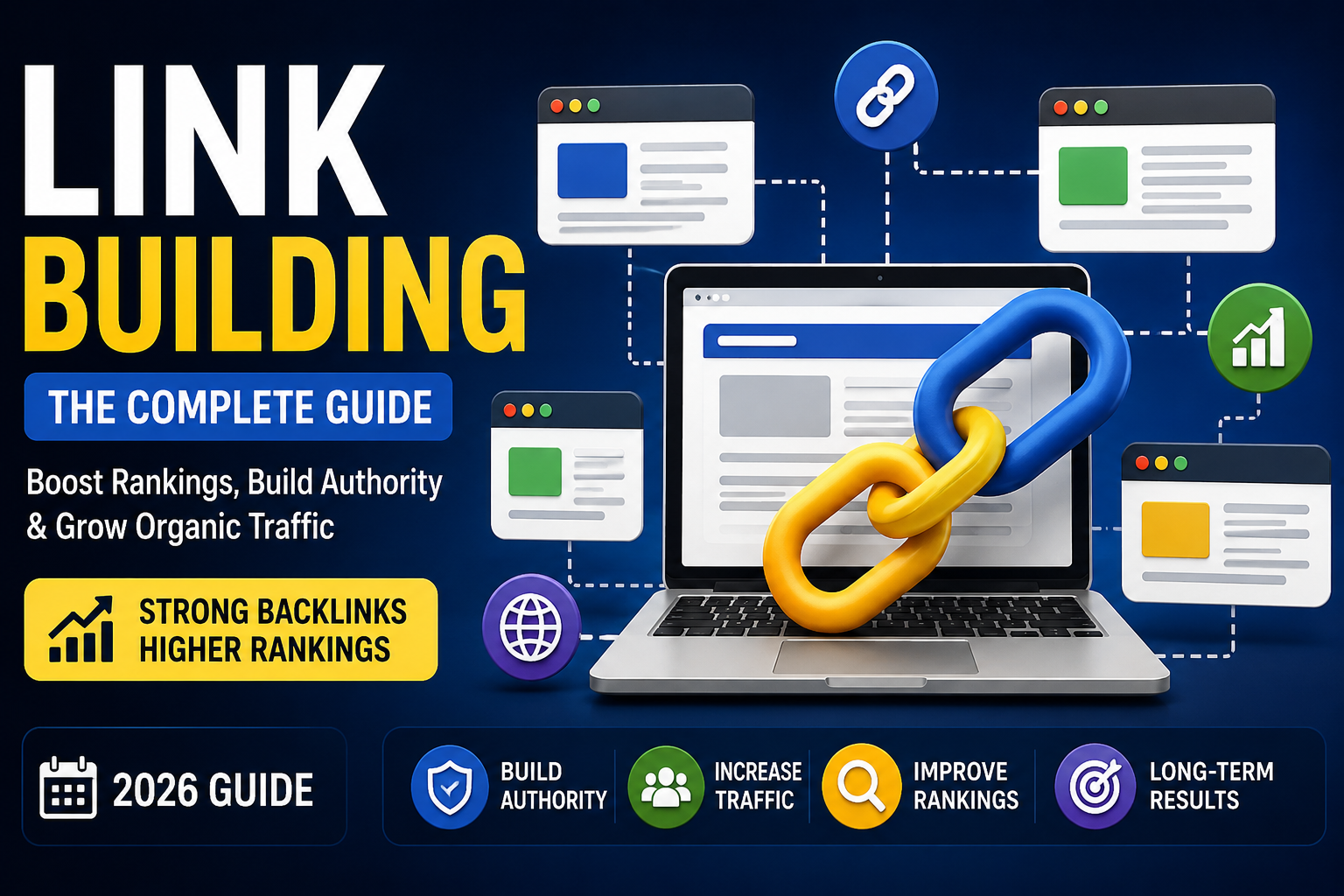
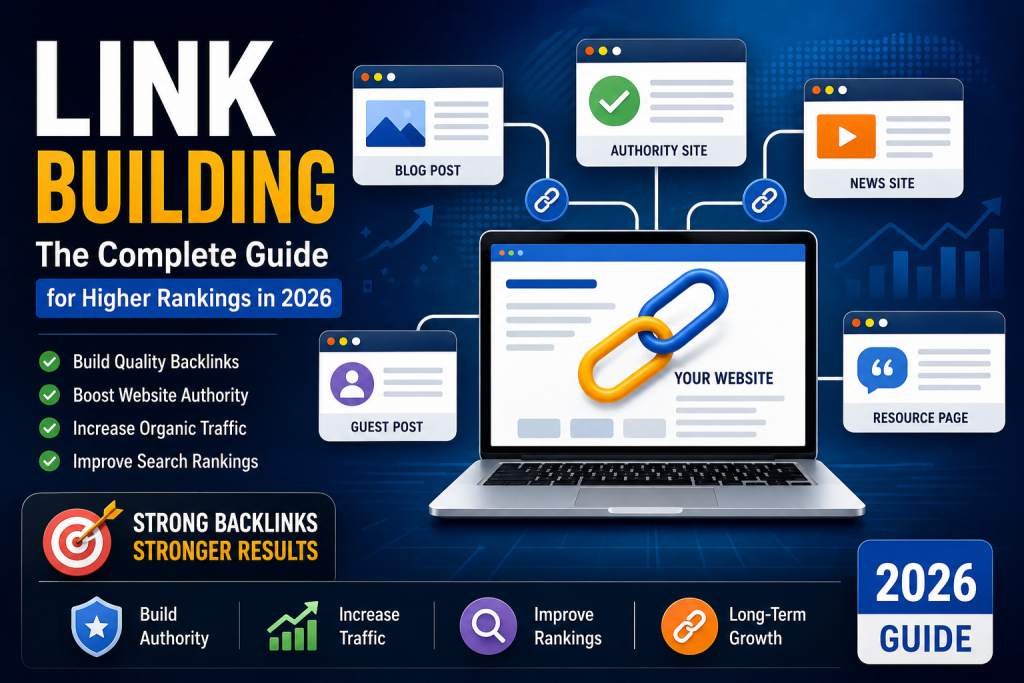
    Link Building guide showing quality backlinks, website authority, SEO strategy, and organic traffic growth for higher search rankings in 2026

    Link Building Mistakes to Avoid

    Many websites lose rankings because they follow outdated tactics.

    Avoid these mistakes:

    • Buying backlinks
    • Participating in private blog networks
    • Using automated link software
    • Building irrelevant backlinks
    • Excessive link exchanges
    • Over-optimized anchor text
    • Spam directory submissions

    Search engines have become highly effective at detecting manipulative link practices.


    How to Evaluate a Good Backlink

    Not every backlink provides equal SEO value.

    A quality backlink usually comes from:

    • Relevant websites
    • Trusted domains
    • Pages receiving organic traffic
    • Editorial content
    • Natural anchor text
    • Indexed pages
    • Websites with genuine audiences

    One authoritative backlink can outperform hundreds of low-quality links.


    Essential Link Building Tools

    Several SEO tools make backlink analysis much easier.

    Popular options include:

    • Google Search Console
    • Ahrefs
    • SEMrush
    • Moz Pro
    • Majestic
    • Screaming Frog SEO Spider

    These tools help analyze backlinks, monitor competitors, discover opportunities, and identify toxic links.


    Future of Link Building

    Artificial intelligence is transforming SEO, but backlinks remain an important trust signal.

    In 2026, successful SEO focuses on:

    • Helpful content
    • Topical authority
    • Digital PR
    • Brand mentions
    • User experience
    • Expert-written content
    • Natural editorial backlinks

    Rather than chasing thousands of links, successful websites invest in earning fewer but significantly stronger backlinks.


    Final Thoughts

    Link Building continues to be one of the most valuable SEO strategies for sustainable search growth. Building high-quality backlinks through helpful content, guest posting, digital PR, and relationship-building creates lasting authority that search engines reward.

    Avoid shortcuts that promise quick rankings. Instead, focus on creating exceptional content people genuinely want to reference. Over time, these natural backlinks strengthen your website’s credibility, improve rankings, and generate consistent organic traffic.

    A smart link building strategy is not about collecting the most backlinks—it’s about earning the right backlinks from trustworthy, relevant websites. When combined with excellent content and technical SEO, link building remains one of the most effective ways to achieve long-term search visibility in 2026.

  • Keyword Research in 2026: The Complete Guide to Finding High-Value Keywords That Drive Organic Traffic

    Keyword Research in 2026: The Complete Guide to Finding High-Value Keywords That Drive Organic Traffic

    If you want higher rankings, consistent organic traffic, and better conversions, Keyword Research is the first step you should never skip. Every successful website starts with understanding what people are searching for and creating content that answers those searches better than competitors.

    Search engines have become smarter in 2026. They no longer rank pages based only on keyword repetition. Instead, they reward websites that understand user intent, provide comprehensive information, and naturally include relevant search terms.

    This guide explains everything you need to know about Keyword Research, from selecting profitable keywords to building a complete SEO strategy that helps your content rank.


    What Is Keyword Research?

    Keyword Research is the process of discovering the words and phrases people type into search engines when looking for information, products, or services.

    These search terms help website owners understand:

    • What users want
    • Which topics are popular
    • How difficult it is to rank
    • Which keywords bring qualified visitors
    • What content should be created next

    Good keyword selection increases visibility and helps attract visitors who are actually interested in your content.


    Why Keyword Research Matters in 2026

    Search engines now focus heavily on relevance, expertise, and user satisfaction. Choosing the wrong keywords can waste months of content creation.

    Benefits include:

    • Higher search rankings
    • Increased organic traffic
    • Better conversion opportunities
    • Improved content planning
    • Stronger topical authority
    • More qualified website visitors
    • Long-term SEO growth

    Without proper research, even excellent content may struggle to appear in search results.


    Understanding Search Intent

    One of the biggest ranking factors today is search intent.

    Every search falls into one of four categories:

    Informational

    Users want answers.

    Examples:

    • What is SEO?
    • How does keyword analysis work?

    Navigational

    Users want a specific website.

    Example:

    • Google Search Console

    Commercial

    Users compare options before buying.

    Examples:

    • Best SEO software
    • Best keyword research tools

    Transactional

    Users are ready to purchase.

    Examples:

    • Buy SEO course
    • Hire SEO consultant

    Matching your content to user intent greatly improves ranking potential.


    Types of Keywords You Should Target

    A successful SEO strategy includes different keyword categories.

    Short-Tail Keywords

    Broad search terms with high competition.

    Example:

    • SEO

    These generate high search volume but are difficult to rank.


    Long-Tail Keywords

    Longer and more specific phrases.

    Examples:

    • best keyword research tools for beginners
    • how to find low competition SEO keywords

    These often bring more qualified visitors and higher conversion rates.


    Local Keywords

    Useful for businesses targeting nearby customers.

    Examples:

    • SEO agency near me
    • local digital marketing services

    Question Keywords

    People frequently search using questions.

    Examples:

    • What is keyword difficulty?
    • How do I find search volume?

    These are excellent for blog posts and featured snippets.


    How to Perform Keyword Research Step by Step

    1. Identify Your Main Topic

    Start with your website’s core niche.

    Examples:

    Then build supporting topics around it.


    2. Find Related Search Terms

    Look for phrases closely related to your main topic.

    Examples include:

    • SEO keywords
    • keyword analysis
    • keyword difficulty
    • search volume
    • long-tail keywords
    • content optimization

    These secondary keywords strengthen topical relevance.


    3. Analyze Search Volume

    Search volume estimates how often people search for a keyword each month.

    Choose keywords with:

    • Consistent searches
    • Relevant audience
    • Real business value

    Avoid selecting keywords based solely on high search volume.


    4. Check Keyword Difficulty

    Keyword difficulty estimates how competitive a search term is.

    For newer websites, targeting lower-competition keywords often provides faster ranking opportunities.

    A balanced mix of easy and competitive keywords creates sustainable growth.


    5. Study Search Results

    Analyze the first page before creating content.

    Look at:

    • Article length
    • Headings
    • Search intent
    • Frequently asked questions
    • Content quality
    • Internal linking

    This process is known as SERP analysis.


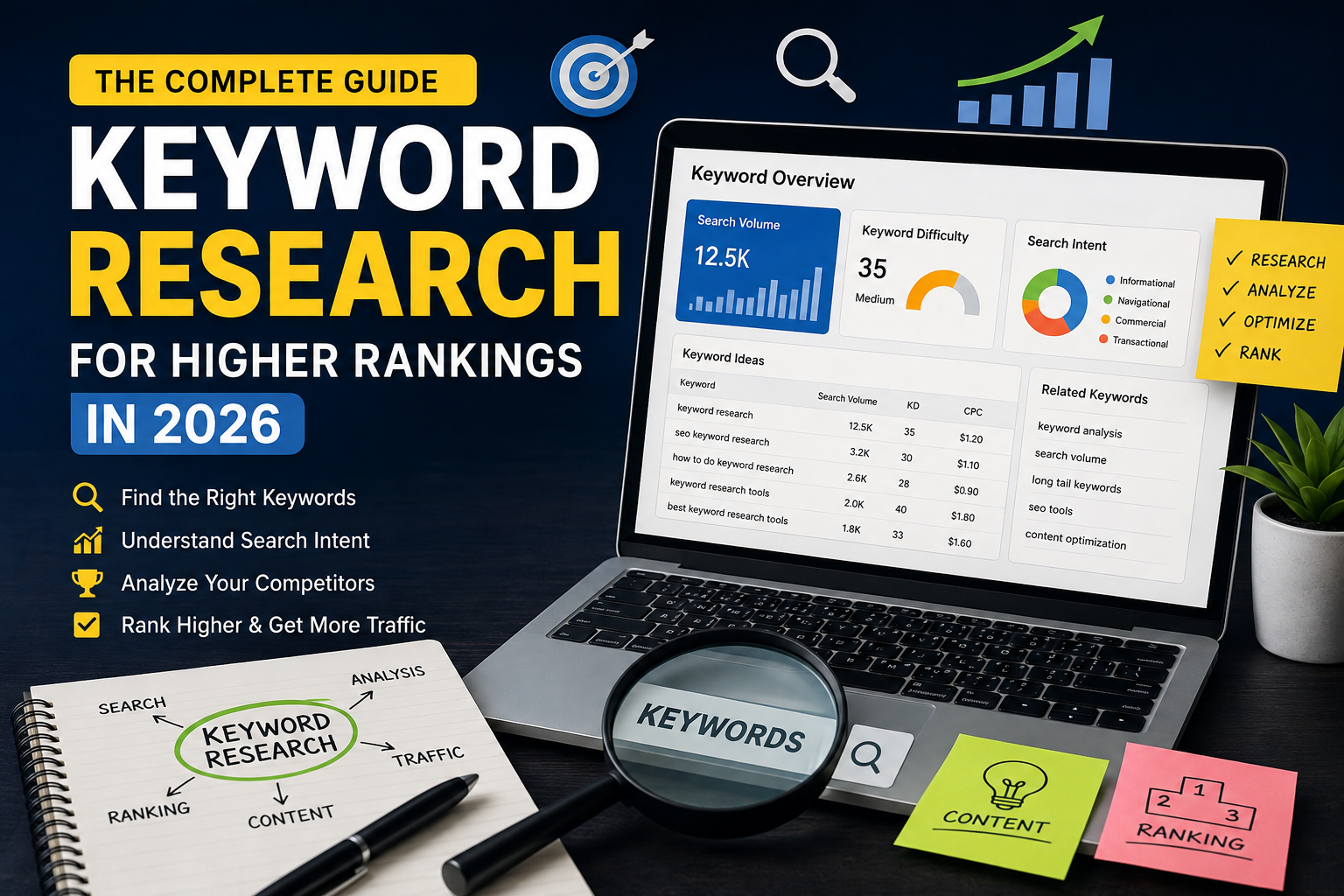
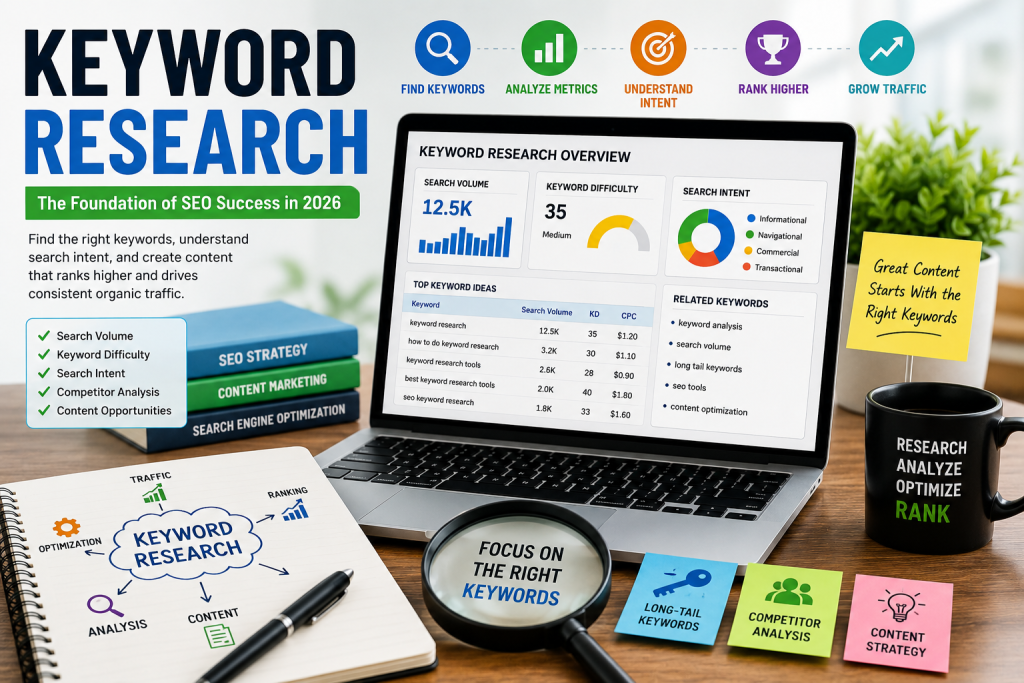
    Keyword Research infographic showing search volume, keyword difficulty, search intent, competitor analysis, long-tail keywords, and SEO content strategy for higher search engine rankings in 2026.

    Best Practices for Keyword Optimization

    Modern SEO focuses on natural writing.

    Instead of repeating the same phrase, include related terms throughout the article.

    Good optimization includes:

    • Keyword in the title
    • Keyword in the introduction
    • H2 and H3 headings
    • Meta description
    • URL slug
    • Image alt text
    • Conclusion

    Natural placement performs better than excessive repetition.


    Common Keyword Research Mistakes

    Many websites fail because they make avoidable mistakes.

    Avoid these errors:

    • Targeting only high-competition keywords
    • Ignoring search intent
    • Stuffing keywords unnaturally
    • Publishing thin content
    • Skipping competitor analysis
    • Ignoring long-tail opportunities
    • Not updating older articles

    High-quality content consistently outperforms keyword stuffing.


    Essential Metrics to Evaluate

    When selecting keywords, pay attention to these important metrics:

    MetricWhy It Matters
    Search VolumeMeasures demand
    Keyword DifficultyShows competition
    Search IntentMatches user expectations
    CPCIndicates commercial value
    Organic CompetitionEstimates ranking difficulty
    TrendShows popularity over time

    Using multiple metrics leads to better SEO decisions.


    Building a Long-Term Keyword Strategy

    Successful websites don’t publish random articles.

    Instead, they build topic clusters.

    Example:

    Main Topic

    • Keyword Research

    Supporting articles:

    • Long-tail keywords
    • Keyword difficulty explained
    • Search intent guide
    • SEO content optimization
    • SERP analysis
    • Keyword clustering
    • Competitor keyword analysis

    This structure improves authority and internal linking.


    Keyword Research Trends in 2026

    SEO continues to evolve with advances in AI and search behavior.

    Current trends include:

    • Greater emphasis on semantic search
    • AI-assisted keyword discovery
    • Topic clusters replacing isolated keywords
    • Increased importance of user experience
    • Voice search optimization
    • Entity-based SEO
    • Helpful, experience-driven content

    Creating comprehensive content around a topic is more effective than targeting isolated phrases.


    Conclusion

    Keyword Research remains the backbone of successful SEO in 2026. Understanding search intent, selecting relevant keywords, analyzing competition, and creating valuable content help websites earn sustainable rankings and long-term organic traffic.

    Rather than chasing every popular search term, focus on keywords that align with your expertise and audience needs. Combine thoughtful keyword analysis with high-quality content, logical site structure, and regular updates to build lasting visibility in search results.

    When done correctly, keyword research becomes more than an SEO task—it becomes the roadmap for every piece of content you publish.

  • Local SEO in 2026: The Complete Guide to Ranking Higher and Getting More Customers

    Local SEO in 2026: The Complete Guide to Ranking Higher and Getting More Customers

    If your business depends on customers from a specific city, neighborhood, or service area, Local SEO should be one of your top digital marketing priorities. As search engines continue improving their algorithms in 2026, businesses that optimize for location-based searches gain more visibility, qualified traffic, and higher conversion rates.

    Whether you operate a restaurant, dental clinic, law office, plumbing company, HVAC service, or retail store, appearing in local search results can significantly increase leads and revenue. This guide explains how Local SEO works, why it matters, and the proven strategies that help businesses achieve better rankings.


    What Is Local SEO?

    Local SEO is the process of optimizing your online presence so your business appears in search results when people look for nearby products or services.

    Unlike traditional SEO, which targets a broad audience, local optimization focuses on connecting businesses with nearby customers who are actively searching for solutions.

    For example, people frequently search using phrases like:

    • Best coffee shop near me
    • Emergency plumber
    • Family dentist
    • Roofing company
    • Auto repair service

    Search engines analyze relevance, distance, reputation, and authority before displaying local businesses.


    Why Local SEO Matters in 2026

    Consumer behavior continues shifting toward location-based searches across mobile devices, voice assistants, and map applications. Businesses with optimized local profiles receive more visibility than competitors that ignore local optimization.

    Major benefits include:

    • Higher visibility in search results
    • More website traffic
    • Increased phone calls
    • More appointment bookings
    • Better customer trust
    • Higher conversion rates
    • Long-term organic growth

    Even businesses with limited marketing budgets can compete effectively through consistent optimization.


    Optimize Your Google Business Profile

    Your Google Business Profile remains the foundation of successful local search marketing.

    Complete every available section, including:

    • Business name
    • Primary category
    • Business description
    • Operating hours
    • Contact information
    • Website URL
    • Products and services
    • High-quality photos
    • Service areas

    Regular updates signal that your business is active and trustworthy.

    Publishing weekly posts, promotions, announcements, and photos can further improve visibility.


    Perform Smart Local Keyword Research

    Finding the right local keywords helps search engines understand which searches your business should appear for.

    Look for keywords with strong purchase intent instead of broad informational phrases.

    Examples include:

    • HVAC repair
    • Personal injury lawyer
    • Roofing contractor
    • Emergency electrician
    • Pediatric dentist
    • Kitchen remodeling

    Use keyword variations naturally throughout:

    • Headlines
    • Page titles
    • Meta descriptions
    • URLs
    • Image alt text
    • Service pages

    Avoid keyword stuffing because search engines prioritize natural, helpful content.


    Build Location-Specific Service Pages

    Businesses serving multiple cities should create unique pages for each location.

    Each page should include:

    • Original content
    • Local landmarks
    • Nearby communities
    • Area-specific services
    • Customer testimonials
    • Unique FAQs
    • Contact details

    Avoid duplicating content across different city pages because duplicate pages rarely perform well.


    Keep Business Information Consistent

    Search engines compare your business information across multiple websites.

    Your business name, address, and phone number should remain identical everywhere, including:

    • Business directories
    • Social platforms
    • Industry listings
    • Chamber of Commerce websites
    • Review platforms

    Consistent local citations improve trust and strengthen ranking signals.


    Earn High-Quality Customer Reviews

    Online reviews influence both search rankings and customer decisions.

    Encourage satisfied customers to leave honest reviews after completing a service.

    Respond professionally to every review, including negative ones.

    Good review management demonstrates reliability while improving customer confidence.

    Quality matters more than quantity, so focus on genuine customer experiences instead of fake reviews.


    Create Helpful Local Content

    Publishing useful content establishes authority within your market.

    Content ideas include:

    • Seasonal maintenance tips
    • Community event guides
    • Local industry updates
    • Safety checklists
    • Frequently asked questions
    • Neighborhood service information

    Helpful content naturally attracts backlinks, social shares, and returning visitors.


    Improve Website Speed and Mobile Experience

    Most local searches happen on smartphones.

    Your website should:

    • Load quickly
    • Use responsive design
    • Display readable fonts
    • Include clickable phone numbers
    • Feature simple navigation
    • Offer fast contact forms

    A smooth mobile experience improves both user satisfaction and search visibility.


    Build Quality Local Backlinks

    Backlinks remain one of the strongest ranking factors.

    Earn links from:

    • Local newspapers
    • Community organizations
    • Business associations
    • Educational institutions
    • Local blogs
    • Event sponsorships
    • Industry directories

    Relevant local backlinks strengthen authority and improve organic rankings.


    Use Schema Markup

    Structured data helps search engines better understand your business.

    Implement Local Business Schema that includes:

    • Business name
    • Address
    • Phone number
    • Opening hours
    • Reviews
    • Coordinates
    • Website
    • Service area

    Schema can improve search visibility and increase click-through rates.


    Track Performance Regularly

    SEO requires continuous monitoring.

    Measure performance using:

    • Organic traffic
    • Phone calls
    • Form submissions
    • Keyword rankings
    • Website conversions
    • Google Business Profile insights
    • Customer reviews

    Monthly reporting helps identify opportunities for improvement.

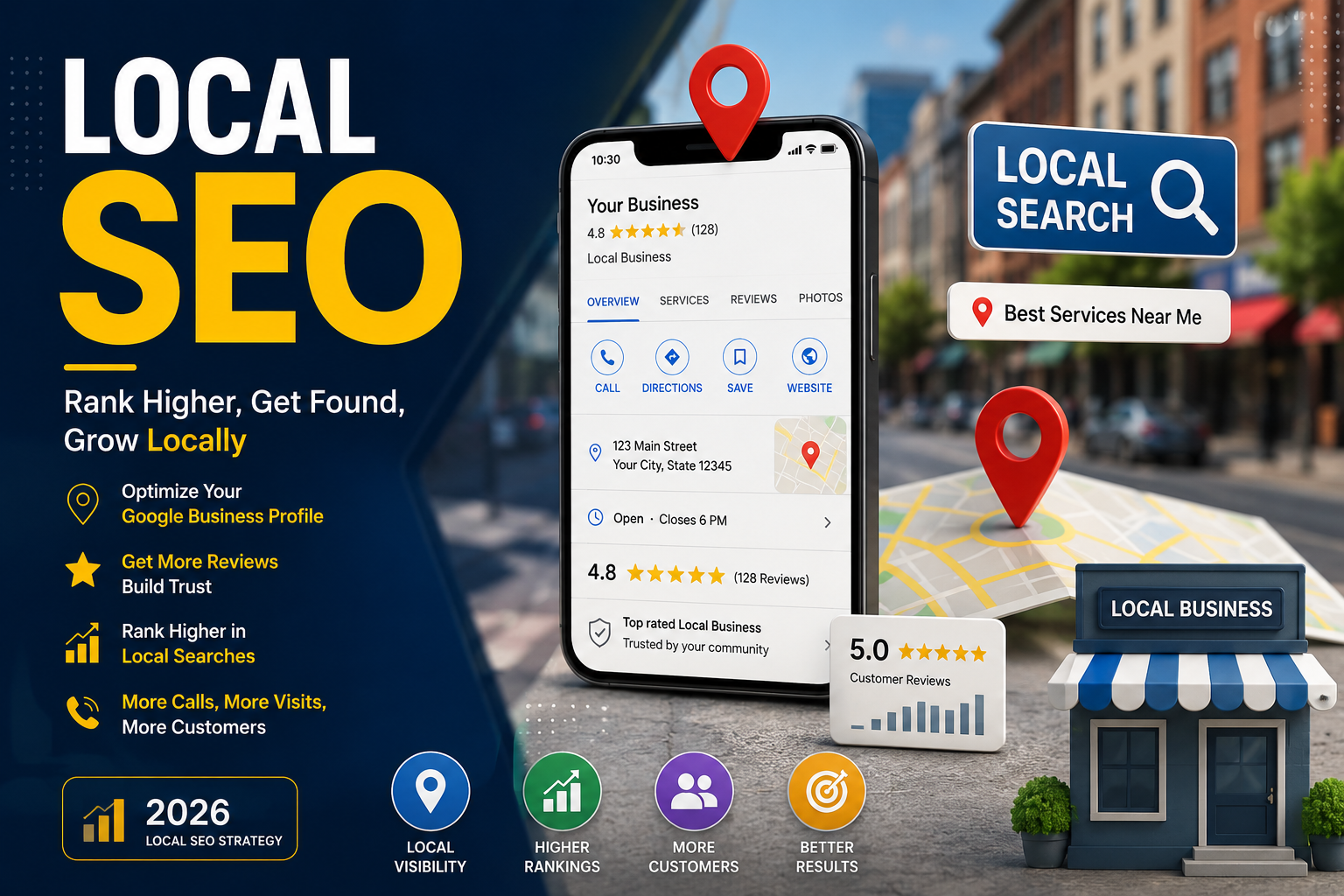
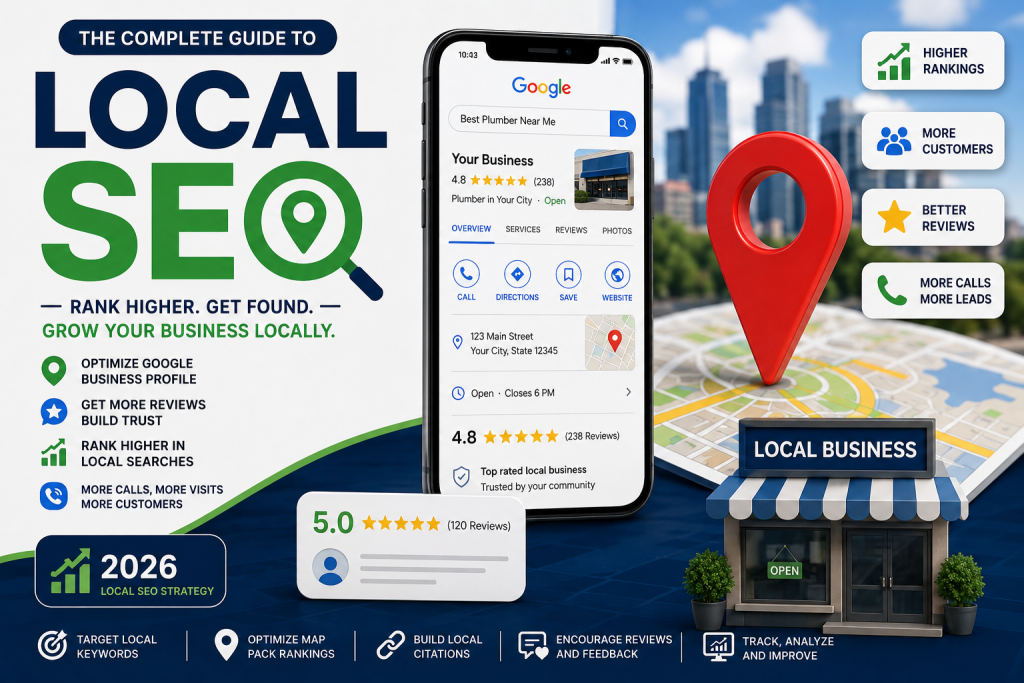
    Local SEO guide 2026 featuring Google Business Profile optimization, Google Maps rankings, customer reviews, local keyword targeting, and business growth strategies.

    Common Local SEO Mistakes to Avoid

    Many businesses lose rankings because of avoidable mistakes.

    Avoid:

    • Duplicate location pages
    • Inconsistent business information
    • Keyword stuffing
    • Ignoring customer reviews
    • Slow website speed
    • Poor mobile usability
    • Outdated business hours
    • Low-quality backlinks
    • Missing business categories

    Fixing these issues can produce noticeable ranking improvements.


    Future of Local Search

    Artificial intelligence, voice search, personalized search results, and visual search continue changing how customers discover businesses.

    Businesses that consistently publish valuable content, maintain accurate profiles, collect authentic reviews, and improve user experience will remain competitive as search algorithms evolve.

    The emphasis is shifting toward trust, expertise, and customer satisfaction rather than simply inserting keywords into pages.


    Final Thoughts

    Building a strong online presence takes time, but the long-term rewards are significant. A well-executed Local SEO strategy helps businesses appear in front of customers at the exact moment they need products or services. By optimizing your Google Business Profile, creating valuable location-specific content, earning authentic reviews, maintaining accurate business information, and improving website performance, you can increase visibility, attract qualified leads, and grow consistently throughout 2026 and beyond.

  • Technical SEO Guide (2026): The Complete Strategy to Improve Rankings, Speed, and Search Visibility

    Technical SEO Guide (2026): The Complete Strategy to Improve Rankings, Speed, and Search Visibility

    Technical SEO is the foundation of every successful website. Even the best content cannot achieve strong rankings if search engines struggle to crawl, index, or understand your pages. In 2026, search algorithms continue to reward websites that provide excellent user experiences, fast loading speeds, mobile-friendly layouts, and well-structured architecture.

    Whether you manage a business website, blog, online store, or portfolio, optimizing the technical side of your site helps improve visibility, increase organic traffic, and create a better experience for visitors. This guide explains everything you need to know about Technical SEO using practical strategies that are easy to understand and implement.


    What Is Technical SEO?

    Technical SEO refers to optimizing a website’s infrastructure so search engines can efficiently crawl, index, and rank its pages. Unlike content optimization or link building, it focuses on improving the backend elements that directly affect search performance.

    A technically optimized website allows search engines to understand your content while providing users with a fast, secure, and seamless browsing experience.


    Why Technical SEO Matters in 2026

    Search engines increasingly prioritize websites that deliver exceptional performance. A technically healthy website offers several benefits:

    • Faster page loading times
    • Better crawl efficiency
    • Improved indexing
    • Higher search rankings
    • Stronger Core Web Vitals
    • Better mobile usability
    • Enhanced user experience
    • Increased organic traffic
    • Lower bounce rates
    • Higher conversion potential

    Without a solid technical foundation, even high-quality content may struggle to reach its full ranking potential.


    Core Elements of Technical SEO

    1. Website Speed Optimization

    Page speed remains one of the most important ranking factors.

    Improve loading speed by:

    • Compressing images
    • Using next-generation image formats
    • Enabling browser caching
    • Minifying CSS and JavaScript
    • Reducing unnecessary plugins
    • Choosing high-performance hosting
    • Using a Content Delivery Network (CDN)

    Fast websites improve both rankings and user satisfaction.


    2. Mobile-Friendly Website Design

    Most searches now happen on mobile devices.

    A mobile-optimized website should include:

    • Responsive design
    • Readable typography
    • Fast mobile loading
    • Proper button spacing
    • Mobile-friendly navigation
    • No horizontal scrolling

    A responsive experience ensures visitors can easily browse your website regardless of screen size.


    3. Improve Crawlability

    Search engines use crawlers to discover pages.

    Improve crawl efficiency by:

    • Creating a clean site structure
    • Using internal linking
    • Removing broken links
    • Eliminating redirect chains
    • Updating XML sitemaps
    • Blocking unnecessary pages with robots.txt

    Efficient crawling helps new content appear in search results faster.


    4. Optimize Website Indexing

    Not every page should appear in search results.

    Review pages for:

    • Duplicate content
    • Thin pages
    • Noindex directives
    • Canonical tags
    • Crawl errors
    • Orphan pages

    Keeping only valuable pages indexed improves overall website quality.


    5. HTTPS Security

    Website security builds trust.

    Install an SSL certificate to:

    • Encrypt user data
    • Improve credibility
    • Display the secure lock icon
    • Meet modern browser requirements

    Secure websites perform better both for users and search engines.


    Core Web Vitals

    Core Web Vitals continue to influence search performance.

    Focus on improving:

    Largest Contentful Paint (LCP)

    Measures loading performance.

    Target:

    • Under 2.5 seconds

    Interaction to Next Paint (INP)

    Measures responsiveness.

    Aim for:

    • Fast interactions with minimal delay

    Cumulative Layout Shift (CLS)

    Measures visual stability.

    Target:

    • Less than 0.1

    Improving these metrics creates a smoother browsing experience.


    XML Sitemap Optimization

    An XML sitemap helps search engines discover important pages.

    Best practices include:

    • Include only indexable pages
    • Update automatically
    • Remove redirected URLs
    • Submit through Search Console
    • Keep the sitemap clean

    A well-maintained sitemap supports efficient crawling.


    Robots.txt Best Practices

    The robots.txt file controls crawler access.

    Use it carefully to:

    • Block duplicate folders
    • Prevent crawling of admin pages
    • Allow important resources
    • Reference your sitemap

    Avoid blocking critical pages by mistake.


    Structured Data (Schema Markup)

    Schema helps search engines better understand your content.

    Useful schema types include:

    • Article
    • FAQ
    • Product
    • Local Business
    • Organization
    • Breadcrumb
    • Review
    • Event

    Proper structured data can increase eligibility for rich search results.


    URL Structure Optimization

    Create clean URLs that are easy to read.

    Example:

    Good:
    example.com/technical-seo-guide

    Avoid:

    example.com/page?id=2548&cat=seo

    Simple URLs improve usability and crawling.


    Internal Linking Strategy

    Internal links help distribute authority throughout your website.

    Best practices:

    • Link related articles naturally
    • Use descriptive anchor text
    • Keep important pages close to the homepage
    • Fix broken internal links
    • Avoid excessive linking

    Strong internal linking improves navigation and indexing.


    Common Technical SEO Mistakes

    Many websites lose rankings because of avoidable issues.

    Common mistakes include:

    • Slow loading pages
    • Broken links
    • Duplicate content
    • Missing canonical tags
    • Poor mobile experience
    • Large image files
    • Incorrect redirects
    • Crawl errors
    • Missing structured data
    • Unoptimized JavaScript
    • Weak internal linking
    • Indexing unnecessary pages

    Regular technical audits help identify and resolve these issues before they impact performance.


    Recommended Technical SEO Tools

    Several trusted tools make optimization easier:

    • Google Search Console
    • Google PageSpeed Insights
    • Lighthouse
    • Screaming Frog SEO Spider
    • Ahrefs Site Audit
    • Semrush Site Audit
    • GTmetrix
    • Bing Webmaster Tools
    • Rich Results Test

    Using multiple tools provides a complete picture of your website’s health.


    Future of Technical SEO

    As search engines become more advanced, websites should prioritize:

    • AI-friendly website architecture
    • Faster server response
    • Better accessibility
    • Enhanced structured data
    • Improved user experience
    • Efficient crawling
    • Optimized JavaScript rendering
    • Continuous Core Web Vitals monitoring

    Future-ready websites focus on performance as much as content quality.

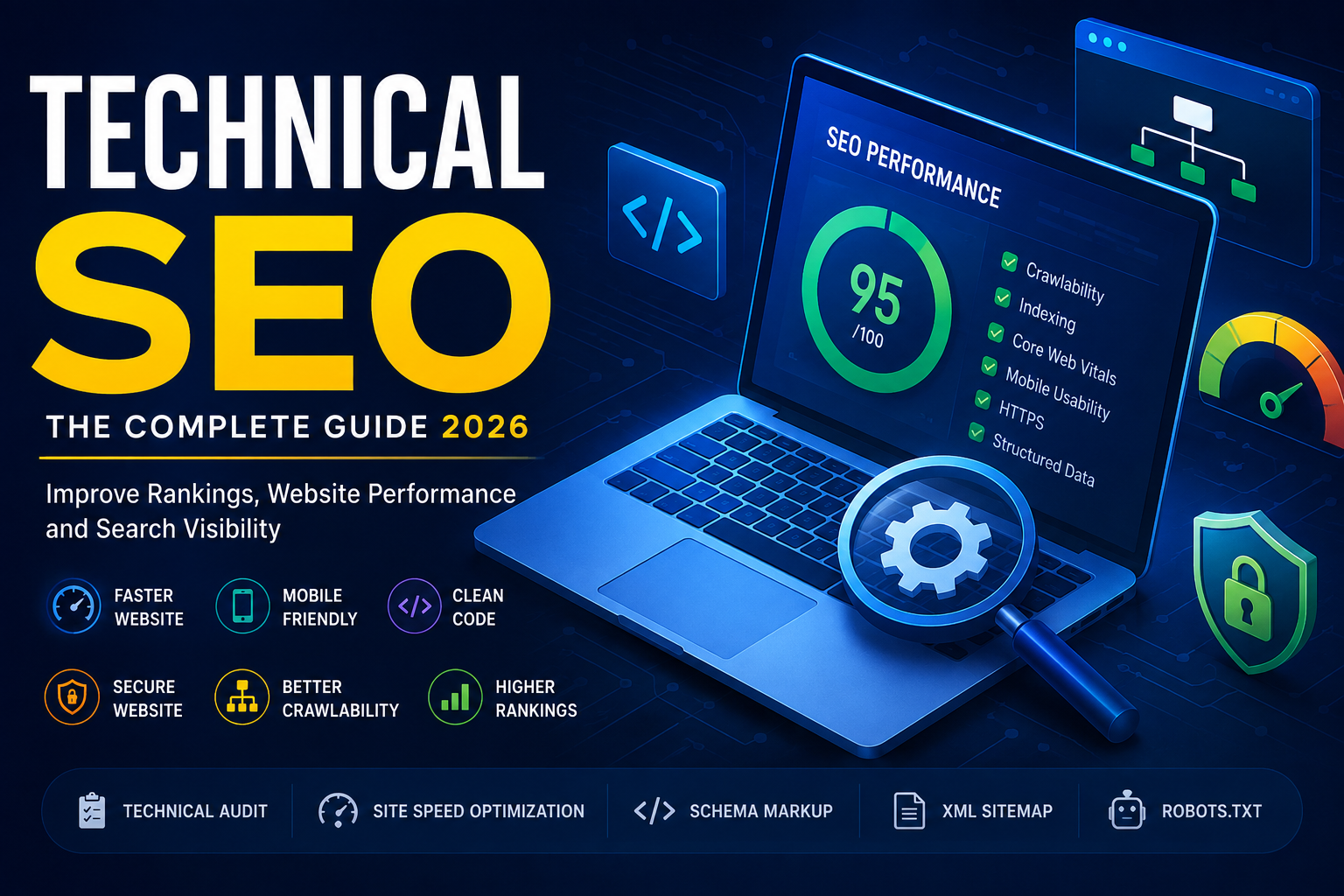
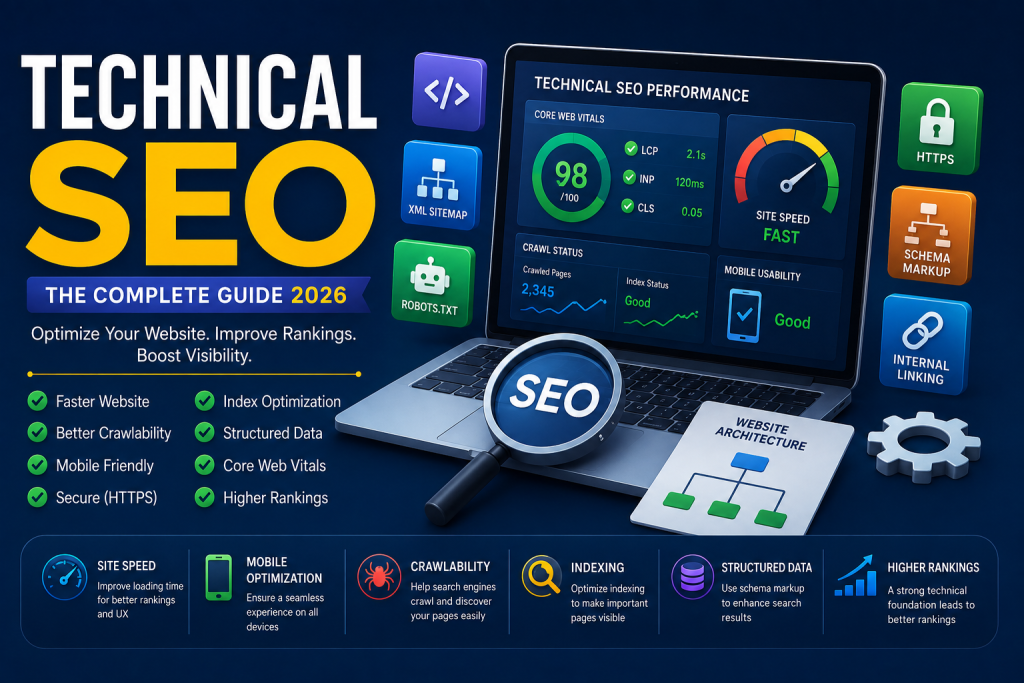
    Technical SEO Guide 2026 infographic featuring Core Web Vitals, website speed optimization, XML sitemap, robots.txt, schema markup, crawlability, indexing, mobile SEO, HTTPS security, and higher search rankings.

    Final Thoughts

    Building a successful website starts with a strong technical foundation. By improving speed, mobile usability, crawlability, indexing, structured data, security, and Core Web Vitals, you make it easier for search engines to understand your content and for visitors to enjoy a seamless experience.

    Instead of chasing quick ranking tricks, invest in long-term improvements that strengthen your site’s health. A technically optimized website is more likely to earn sustainable organic visibility, adapt to future algorithm changes, and support every other SEO effort—from content creation to link building. Consistent audits and ongoing maintenance will help keep your website competitive well beyond 2026.

  • Off-Page SEO in 2026: The Complete Guide to Building Authority and Higher Rankings

    Off-Page SEO in 2026: The Complete Guide to Building Authority and Higher Rankings

    Search engine optimization continues to evolve, but one factor remains critical for long-term success: Off-Page SEO. While on-page optimization helps search engines understand your content, off-page strategies help establish trust, authority, and credibility across the web.

    In 2026, search engines are placing greater emphasis on brand authority, quality backlinks, online reputation, and user engagement signals. Businesses that invest in effective Off-Page SEO strategies can improve search visibility, attract qualified traffic, and outperform competitors in crowded markets.

    This guide explains everything you need to know about Off-Page SEO, including the most effective techniques, best practices, and trends that can help improve rankings and organic growth.

    What Is Off-Page SEO?

    Off-Page SEO refers to all optimization activities performed outside your website to improve its authority and search engine rankings. These activities signal to search engines that your website is trustworthy, valuable, and relevant.

    Unlike on-page optimization, which focuses on content, keywords, and technical elements, off-page efforts build credibility through external signals such as backlinks, brand mentions, reviews, and social engagement.

    Why Off-Page SEO Matters in 2026

    Search engines aim to deliver the most reliable results to users. Websites with strong authority and positive reputation signals are more likely to rank higher.

    Key benefits include:

    • Increased organic traffic
    • Higher domain authority
    • Better search rankings
    • Stronger brand recognition
    • Improved trust among visitors
    • Greater competitive advantage

    A strong Off-Page SEO strategy can significantly impact how search engines evaluate your website’s credibility.

    Top Off-Page SEO Strategies for 2026

    1. Build High-Quality Backlinks

    Backlinks remain one of the most important ranking factors.

    Focus on earning links from:

    • Industry publications
    • Trusted news websites
    • Relevant blogs
    • Educational resources
    • Authority websites

    Quality matters far more than quantity. A few links from reputable sources often provide more value than hundreds of low-quality links.

    2. Guest Posting on Relevant Websites

    Guest posting continues to be an effective method for earning authority and visibility.

    When creating guest content:

    • Publish on reputable websites
    • Provide original insights
    • Include valuable information
    • Avoid spammy anchor text
    • Focus on audience value

    Guest posting can help build both backlinks and brand awareness simultaneously.

    3. Digital PR and Brand Mentions

    Digital PR is becoming a major component of Off-Page SEO.

    Effective methods include:

    • Publishing research reports
    • Sharing industry data
    • Creating unique studies
    • Offering expert commentary
    • Participating in interviews

    Even unlinked brand mentions contribute to online authority and trust signals.

    4. Leverage Social Media Presence

    Although social signals are not direct ranking factors, social media can amplify content visibility and attract backlinks naturally.

    Best practices include:

    • Sharing content consistently
    • Engaging with audiences
    • Participating in industry discussions
    • Promoting new content
    • Building community relationships

    A strong social presence often leads to increased exposure and link opportunities.

    5. Online Reviews and Reputation Management

    Reviews play an important role in local and national search visibility.

    Encourage satisfied customers to leave reviews on relevant platforms. Positive reviews can improve credibility and influence purchasing decisions.

    Important review factors include:

    • Review quantity
    • Review quality
    • Review consistency
    • Business responsiveness

    Maintaining a positive reputation supports broader SEO efforts.

    6. Content Marketing for Link Attraction

    Exceptional content naturally earns backlinks over time.

    Content formats that attract links include:

    • Ultimate guides
    • Original research
    • Infographics
    • Industry statistics
    • Case studies
    • Interactive tools

    Creating link-worthy content remains one of the safest and most sustainable SEO strategies.

    7. Influencer and Industry Partnerships

    Collaborating with respected industry experts can expand reach and generate valuable references across multiple channels.

    Partnership opportunities include:

    • Expert roundups
    • Podcast appearances
    • Webinars
    • Collaborative research
    • Joint content campaigns

    These relationships can contribute to stronger authority signals and increased exposure.

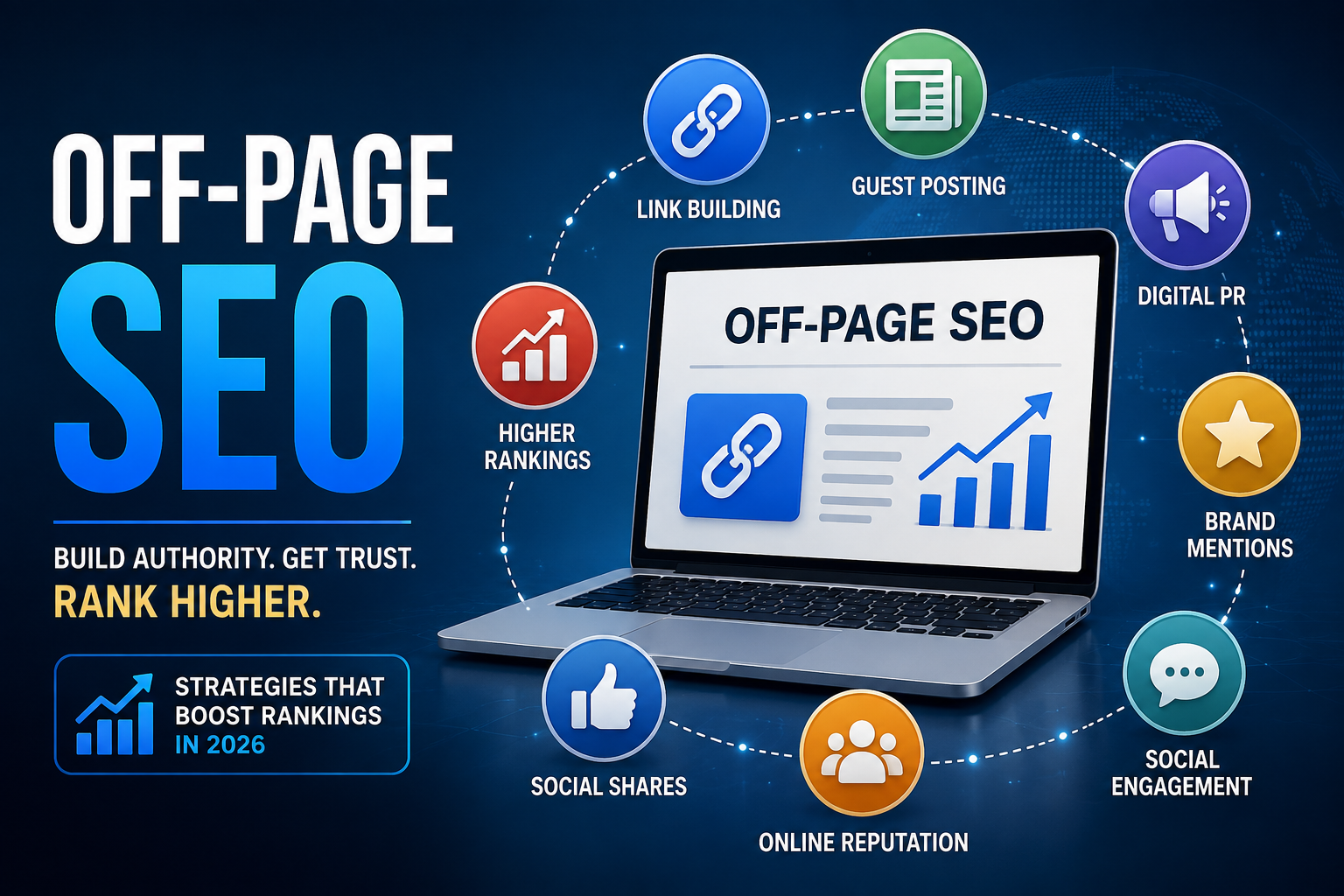
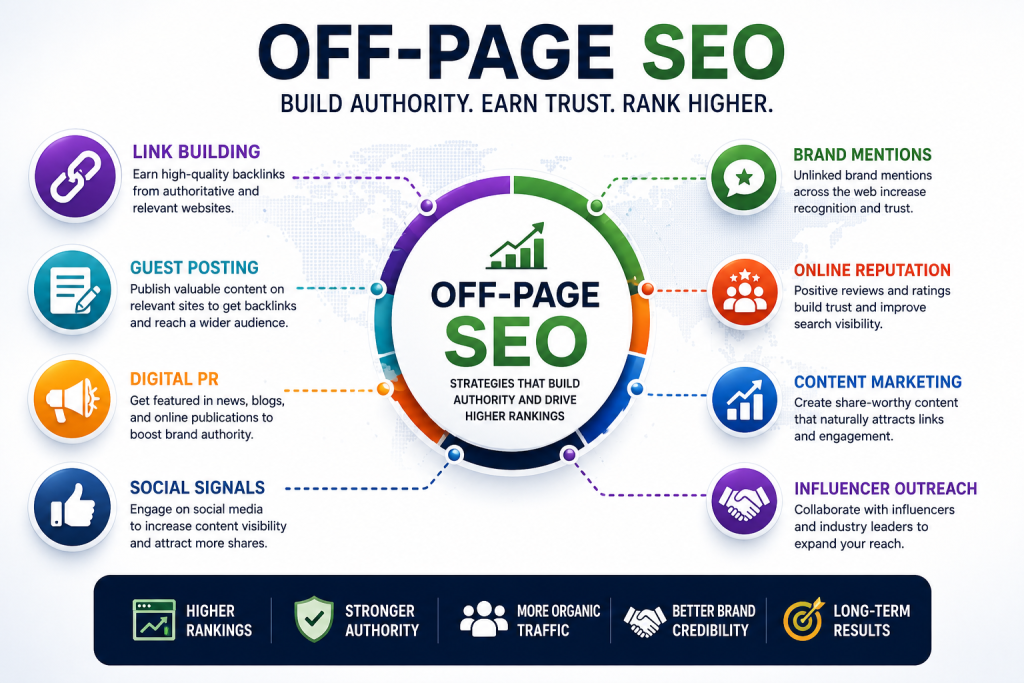
    Off-Page SEO infographic illustrating link building, guest posting, digital PR, brand mentions, content marketing, online reputation, influencer outreach, and social signals to improve search rankings in 2026.

    Common Off-Page SEO Mistakes to Avoid

    Many websites struggle because they use outdated tactics.

    Avoid:

    • Buying backlinks
    • Using private blog networks
    • Excessive link exchanges
    • Spam comments
    • Low-quality directory submissions
    • Automated link building

    Search engines continue to improve at detecting manipulative practices. Sustainable growth comes from genuine authority building.

    Important Metrics to Track

    To measure success, monitor:

    Backlink Profile

    Track:

    • Referring domains
    • Link quality
    • Anchor text diversity
    • New backlinks acquired

    Domain Authority

    Authority metrics provide insight into overall website strength compared to competitors.

    Organic Traffic

    Analyze traffic growth from search engines and identify which pages benefit most from external authority signals.

    Brand Mentions

    Monitor how frequently your brand appears across websites, forums, and media publications.

    Referral Traffic

    Referral traffic reveals which external sources are sending visitors to your website.

    Off-Page SEO Trends for 2026

    Several trends are shaping the future of search optimization:

    AI-Driven Search Evaluation

    Search engines increasingly use artificial intelligence to assess content quality, relevance, and authority.

    Entity-Based SEO

    Brands, authors, and organizations are becoming stronger ranking signals.

    Experience and Trust Signals

    Websites demonstrating expertise, trustworthiness, and credibility are gaining competitive advantages.

    Digital PR Growth

    Digital PR campaigns are replacing many traditional link-building methods because they generate authority naturally.

    Final Thoughts

    Off-Page SEO remains one of the most powerful methods for improving search visibility in 2026. Building authority through quality backlinks, digital PR, content marketing, reviews, and brand recognition helps create sustainable ranking improvements.

    Instead of chasing shortcuts, focus on earning trust, creating valuable content, and building genuine relationships within your industry. Search engines reward websites that demonstrate authority and provide real value to users. By implementing the strategies outlined in this guide, businesses can strengthen their online presence and achieve long-term organic growth.

  • On-Page SEO Guide 2026: The Complete Checklist to Rank Higher on Google

    On-Page SEO Guide 2026: The Complete Checklist to Rank Higher on Google

    Search engine optimization continues to evolve every year, but one thing remains constant: websites with strong On-Page SEO consistently outperform competitors. If your goal is to improve visibility, increase organic traffic, and create content that ranks for valuable keywords, optimizing every page correctly is essential.

    This guide explains the latest strategies for 2026, including content optimization, keyword placement, technical improvements, and user experience best practices that help search engines understand and rank your pages.


    What Is On-Page SEO?

    On-Page SEO refers to the process of optimizing individual web pages so they rank higher in search engine results while providing a better experience for visitors. Unlike off-page strategies such as backlinks, on-page optimization focuses entirely on elements you control.

    These include:

    • High-quality content
    • Proper keyword placement
    • Meta title optimization
    • Meta descriptions
    • Header tags
    • Internal linking
    • URL structure
    • Image optimization
    • Page speed
    • Mobile responsiveness

    When these elements work together, search engines can better understand your content and determine when it should appear in relevant search results.


    Why On-Page SEO Matters in 2026

    Search engines have become much smarter. They now evaluate search intent, page quality, user experience, loading speed, and helpful content rather than simply counting keywords.

    Effective On-Page SEO helps your website:

    • Improve Google rankings
    • Increase organic traffic
    • Reduce bounce rates
    • Enhance user experience
    • Build credibility and authority
    • Generate more leads and conversions

    A well-optimized page serves both search engines and real people, making it more likely to earn long-term rankings.

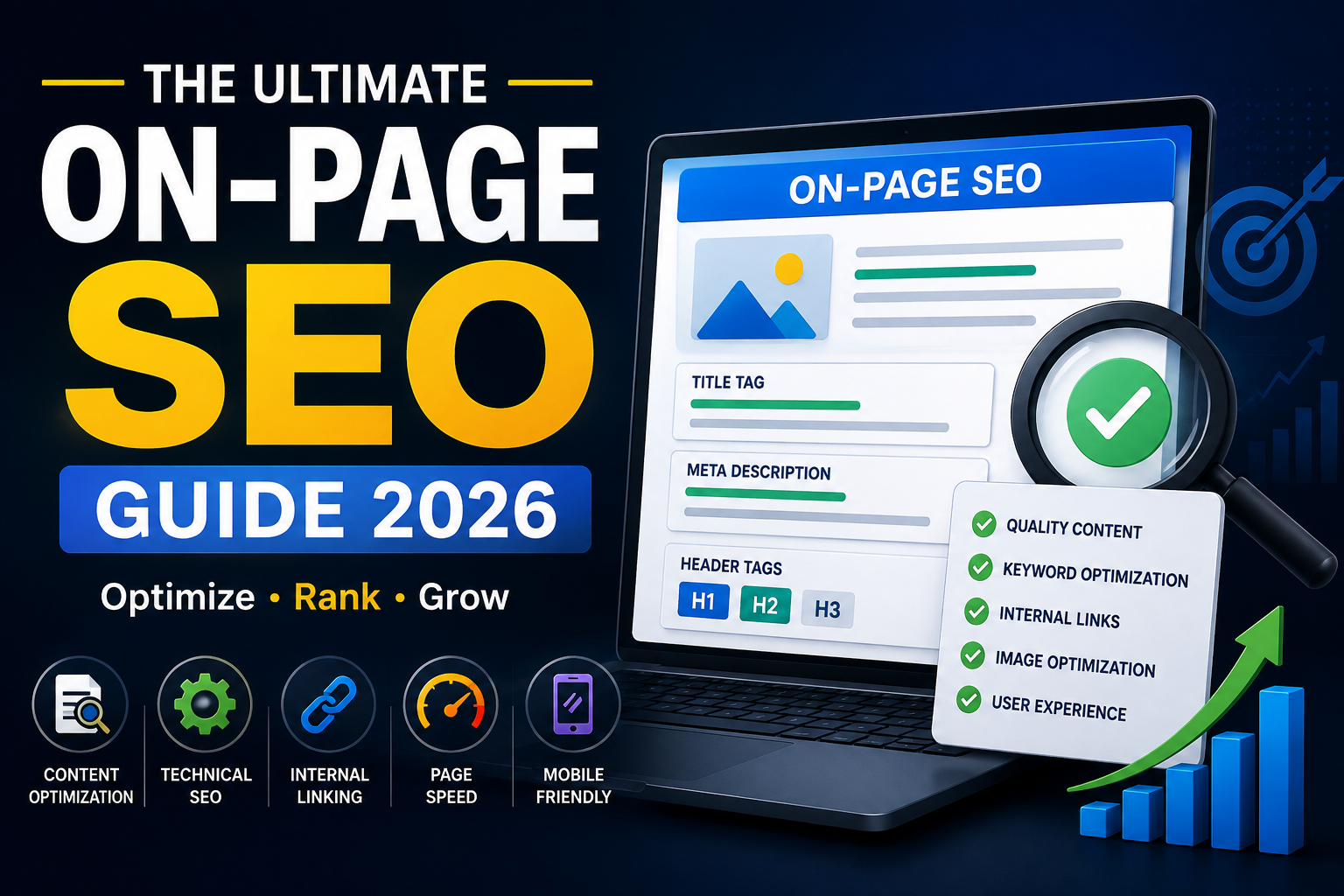
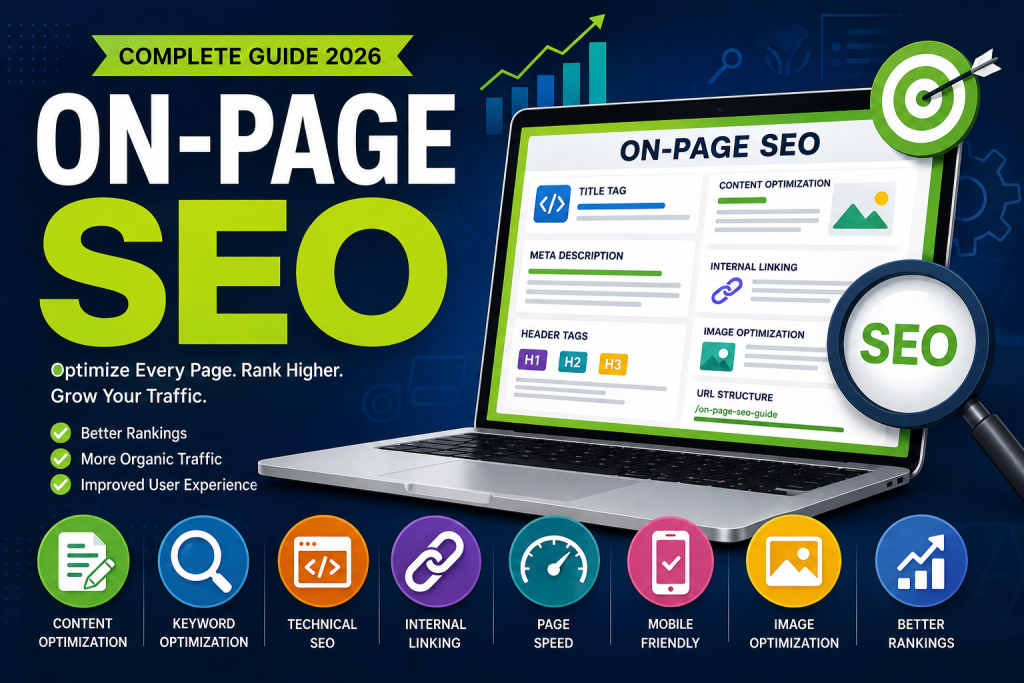
    On-Page SEO Guide 2026 infographic featuring content optimization, keyword optimization, technical SEO, internal linking, page speed, image optimization, and Google ranking strategies

    Start with Keyword Research

    Every successful SEO campaign begins with proper keyword research.

    Choose a primary keyword with reasonable search volume and manageable competition. Then identify secondary keywords and related search phrases that naturally support your topic.

    Helpful keyword research tools include:

    • Google Keyword Planner
    • Ahrefs
    • Semrush
    • Ubersuggest
    • Google Search Console

    Always focus on matching search intent instead of selecting keywords based only on search volume.


    Create High-Quality Content

    Content remains the foundation of On-Page SEO.

    Instead of writing for algorithms, create valuable content that answers readers’ questions completely.

    High-performing content should:

    • Solve real problems
    • Be easy to read
    • Include original insights
    • Use clear headings
    • Include examples
    • Stay up to date
    • Cover the topic comprehensively

    Helpful content naturally performs better because visitors stay longer and engage more with your pages.


    Optimize Your Title Tag and Meta Description

    Your title tag is often the first thing users see in search results.

    Best practices include:

    • Keep titles between 50–60 characters.
    • Place the primary keyword near the beginning.
    • Make the title compelling enough to earn clicks.

    Your meta description should:

    • Stay between 140–160 characters.
    • Summarize the page clearly.
    • Include the primary keyword naturally.
    • Encourage users to visit the page.

    A strong title and meta description improve click-through rates even when rankings remain the same.


    Use Proper Heading Structure

    Search engines use headings to understand page organization.

    A good structure includes:

    • One H1 heading
    • Multiple H2 headings
    • Supporting H3 headings where necessary

    A logical heading hierarchy improves readability while strengthening On-Page SEO.


    Optimize URLs

    Simple URLs perform better than long, complicated ones.

    Example:

    Good:
    yourwebsite.com/on-page-seo-guide

    Avoid:

    yourwebsite.com/post?id=2468&category=seo

    Short, descriptive URLs improve usability and make content easier to understand.


    Internal Linking Improves SEO

    Internal linking helps search engines discover important pages while guiding visitors to additional helpful content.

    Link naturally to:

    • Related blog posts
    • Category pages
    • Service pages
    • Cornerstone content

    Strong internal linking distributes authority throughout your website and improves navigation.


    Optimize Images

    Large images can slow down websites.

    Improve image performance by:

    • Compressing images
    • Using descriptive filenames
    • Adding keyword-rich alt text
    • Choosing modern image formats
    • Enabling lazy loading

    Image optimization improves page speed and accessibility while supporting search visibility.


    Improve Core Web Vitals

    Google continues to prioritize fast, user-friendly websites.

    Focus on:

    • Faster loading times
    • Stable page layouts
    • Responsive interactions
    • Mobile optimization

    Core Web Vitals directly affect user experience and can influence rankings.


    Match Search Intent

    One of the biggest ranking factors today is understanding what users actually want.

    Before writing content, ask:

    • Are they looking for information?
    • Do they want to compare products?
    • Are they ready to buy?
    • Are they searching for a tutorial?

    Content that satisfies search intent consistently outperforms pages that simply repeat keywords.


    Write Naturally for Readers

    Avoid keyword stuffing.

    Instead:

    • Use related terms
    • Add semantic keywords
    • Include natural language
    • Answer common questions
    • Improve readability

    Modern search engines understand context, making natural writing more effective than excessive repetition.


    Keep Content Updated

    Fresh content signals relevance.

    Regularly update:

    • Statistics
    • Examples
    • Screenshots
    • Recommendations
    • Broken links

    Refreshing existing articles often produces better results than publishing new content every week.


    Common On-Page SEO Mistakes

    Avoid these common issues:

    • Thin or duplicate content
    • Missing meta descriptions
    • Broken internal links
    • Slow-loading pages
    • Poor mobile experience
    • Overusing keywords
    • Ignoring search intent
    • Unoptimized images
    • Weak heading structure
    • Outdated information

    Fixing these mistakes can significantly improve your website’s performance.


    Quick On-Page SEO Checklist

    Before publishing any page, verify that you have:

    • Included the primary keyword naturally
    • Written a compelling meta title
    • Added a descriptive meta description
    • Used one H1 heading
    • Organized content with H2 and H3 headings
    • Optimized images with alt text
    • Added internal links
    • Created a clean URL
    • Improved page speed
    • Checked mobile responsiveness
    • Matched search intent
    • Reviewed grammar and readability

    Final Thoughts

    Mastering On-Page SEO is one of the smartest long-term investments for any website. By combining quality content, strategic keyword research, technical improvements, optimized metadata, and excellent user experience, you create pages that satisfy both search engines and visitors.

    SEO is not about shortcuts—it is about consistently publishing valuable, optimized content. Apply the strategies in this guide, monitor performance through analytics, and continue refining your pages over time. As search algorithms evolve in 2026 and beyond, websites that prioritize helpful content and technical excellence will remain competitive and continue attracting sustainable organic traffic.