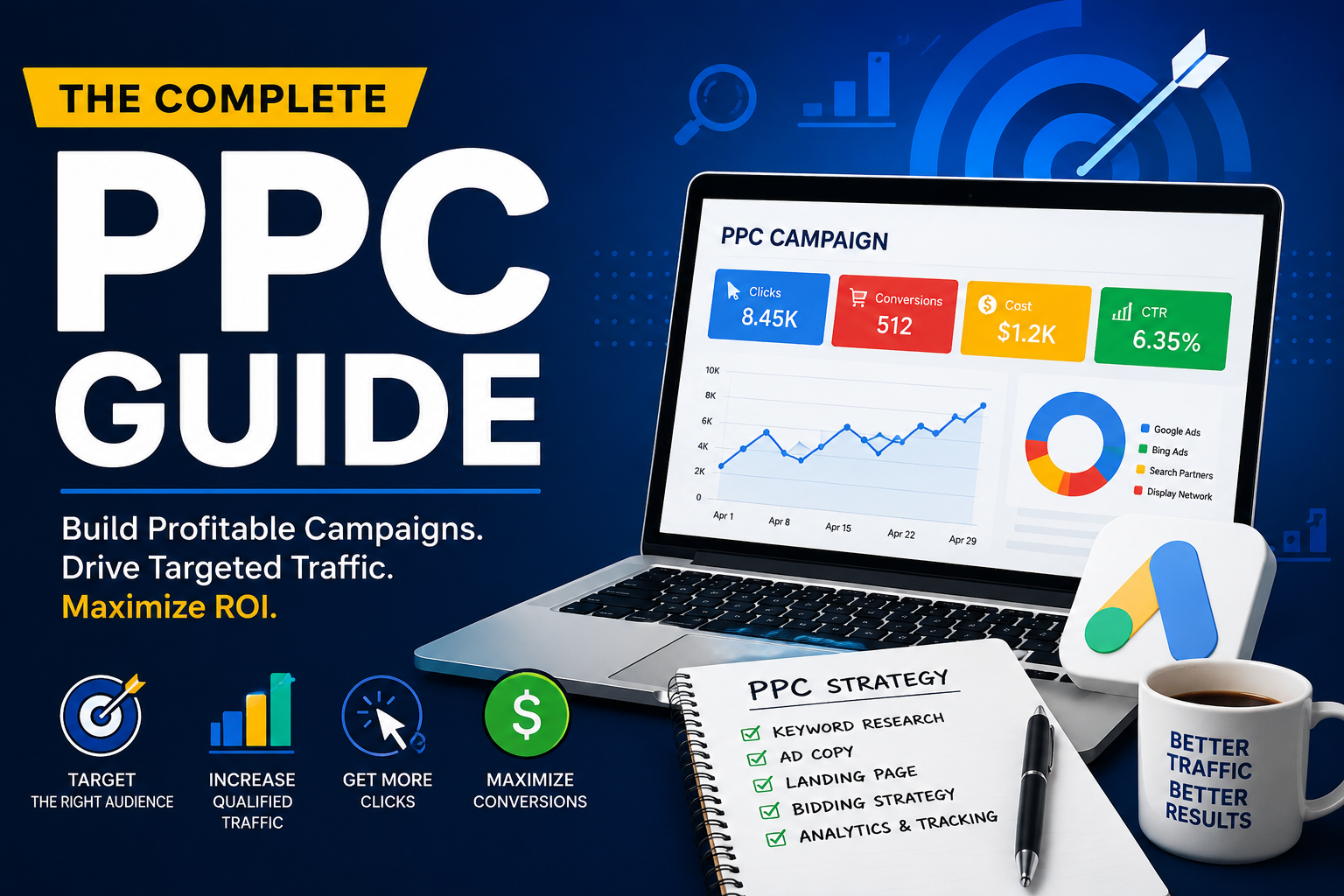
Paid advertising can be one of the fastest ways to put a business in front of people who are actively searching for its products or services. But simply launching ads and increasing your PPC Guide does not guarantee results. A successful campaign requires the right keywords, targeting, bidding strategy, compelling ad copy, conversion tracking, and continuous optimization.
This PPC Guide explains how paid search works, how to create effective campaigns, and what businesses should focus on in 2026.
What Is PPC Advertising?
PPC, or pay-per-click advertising, is a digital advertising model where advertisers generally pay when someone clicks an advertisement. Search advertising is particularly valuable because it can reach people at the moment they are looking for a solution.
Google Ads, for example, allows businesses to create Search campaigns designed to generate sales, leads, or website traffic. Advertisers can choose keywords, locations, audiences, budgets, and bidding strategies to control how campaigns reach potential customers.
For businesses targeting customers across major American cities, regions, or nationwide markets, paid search can provide highly targeted traffic without waiting months for organic rankings.
PPC Guide: How to Build a Successful Campaign
Search behavior continues to evolve, but high-intent searches remain valuable. Someone searching for “emergency plumber near me,” “best accounting software,” or “commercial roofing company” may already be close to making a purchasing decision.
That makes PPC advertising different from many traditional marketing channels. Instead of placing a message in front of a broad audience and hoping someone becomes interested, businesses can connect their offers with relevant searches.
Microsoft Advertising also provides another opportunity for advertisers. Microsoft states that more than 48 million people in the United States do not use Google for search, making alternative search networks worth considering for some campaigns.
How to Build a Successful PPC Campaign
1. Define a Clear Campaign Goal
Start by deciding what success means.
Your objective could be:
- Generating qualified leads
- Increasing online sales
- Getting phone calls
- Booking appointments
- Increasing website traffic
- Promoting a specific product or service
Your goal should determine your campaign structure, bidding strategy, landing page, and conversion tracking.
2. Perform Smart Keyword Research
Keyword research is the foundation of effective PPC campaigns.
Focus on search terms that demonstrate commercial intent. Instead of targeting only broad keywords, identify phrases that indicate a person is researching, comparing, or preparing to buy.
For example, a home services company could target terms such as:
- “HVAC repair near me”
- “air conditioner replacement”
- “emergency HVAC service”
- “AC installation company”
Google Ads provides different keyword match options, including broad match, phrase match, exact match, and negative keywords. These settings help advertisers control which searches can trigger their ads.
3. Organize Relevant Ad Groups
Avoid putting unrelated keywords into one campaign or ad group.
Create tightly themed groups around specific products, services, or search intents. Your advertisement should closely match the keyword and the page users reach after clicking.
This improves relevance and creates a smoother customer journey.
4. Write Ads That Match Search Intent
Your ad needs to answer the searcher’s question quickly.
Strong search ads usually communicate:
- The product or service
- A meaningful benefit
- A reason to choose the business
- A clear call to action
For example, instead of simply writing “Professional Roofing Services,” a stronger message could communicate fast estimates, experienced technicians, financing options, or same-day service when those claims are accurate.
Google recommends creating multiple ads within an ad group so the platform can evaluate different combinations and performance.
Landing Pages Can Make or Break Results
Getting clicks is only half the job.
If your landing page is slow, confusing, difficult to navigate, or unrelated to the advertisement, visitors may leave without converting.
A high-performing landing page should:
- Match the advertisement
- Explain the offer clearly
- Load quickly on mobile devices
- Include a noticeable call to action
- Build trust with reviews, credentials, or guarantees where appropriate
- Make contacting or purchasing easy
For example, an advertisement promoting emergency plumbing should ideally send visitors to a dedicated emergency plumbing page rather than a generic homepage.
PPC Budget and Bidding Strategy
Your PPC Guide should be connected to your business economics.
Do not optimize only for cheap clicks. A campaign generating inexpensive traffic but no customers is not successful.
Instead, monitor metrics such as:
- Cost per click (CPC)
- Click-through rate (CTR)
- Conversion rate
- Cost per conversion
- Return on ad spend (ROAS)
- Revenue generated
- Qualified lead volume
Modern advertising platforms increasingly use automated bidding and machine learning. However, automation works best when conversion tracking and campaign goals are properly configured.
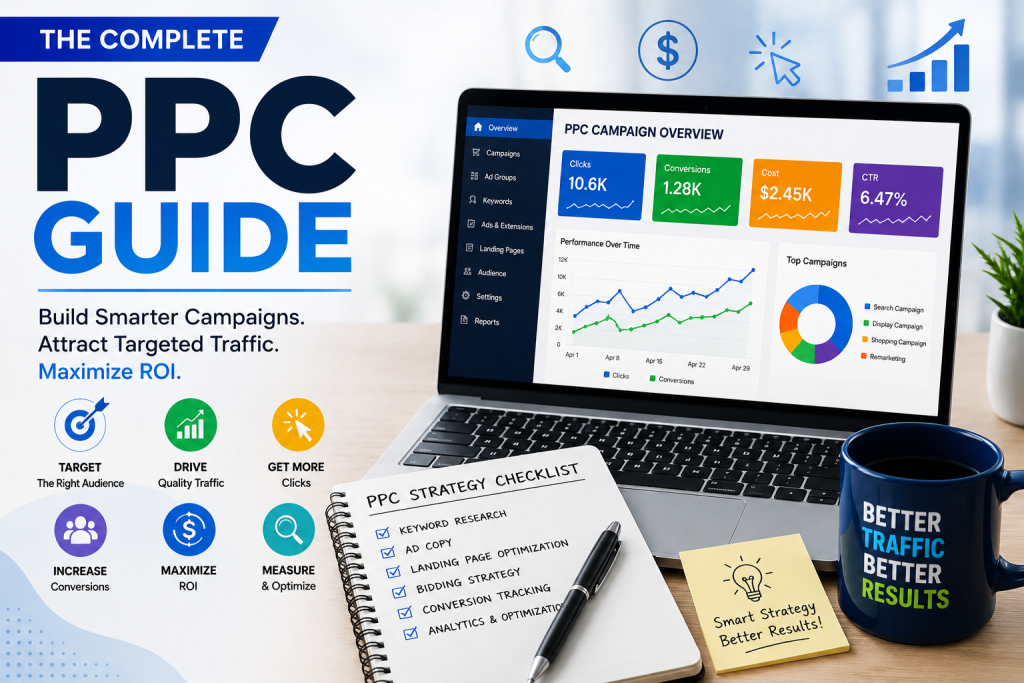
Conversion Tracking Is Essential
Without reliable tracking, you cannot accurately determine which campaigns, keywords, advertisements, and landing pages are generating business results.
Track meaningful actions such as purchases, qualified form submissions, phone calls, appointment bookings, and other valuable customer actions.
Avoid treating every website visit as a conversion. The goal is to measure actions that contribute directly to revenue or business growth.
Common PPC Mistakes to Avoid
Even experienced advertisers can waste money through poor campaign management.
Common mistakes include:
- Targeting overly broad keywords
- Ignoring negative keywords
- Sending every visitor to the homepage
- Using weak or generic ad copy
- Failing to track conversions
- Changing campaigns too frequently
- Optimizing for clicks instead of business outcomes
- Ignoring location and audience targeting
Geographic targeting is particularly important for businesses that serve specific cities, states, or service areas. Google Ads allows advertisers to select locations and exclude areas that are not relevant to their campaigns.
How to Optimize PPC Campaigns in 2026
The strongest PPC strategy is not “set it and forget it.”
Review search terms, conversion data, ad performance, landing pages, budgets, and geographic results regularly. Identify wasted spending and shift budget toward campaigns producing qualified customers.
AI and automated advertising features can help with bidding, targeting, and creative testing, but human oversight remains important. Businesses still need to define profitable goals, provide accurate conversion signals, evaluate customer quality, and make strategic decisions.
Final Thoughts
A successful PPC Guide strategy comes down to one principle: spend money where it creates measurable business value.
Start with clear goals, conduct meaningful keyword research, build tightly focused campaigns, write relevant advertisements, create strong landing pages, and track conversions accurately.
In 2026, automation and AI can make campaign management more sophisticated, but the fundamentals remain essential. Businesses that combine technology with strong strategy can build paid search campaigns that attract qualified visitors, generate leads, increase sales, and produce measurable long-term growth.