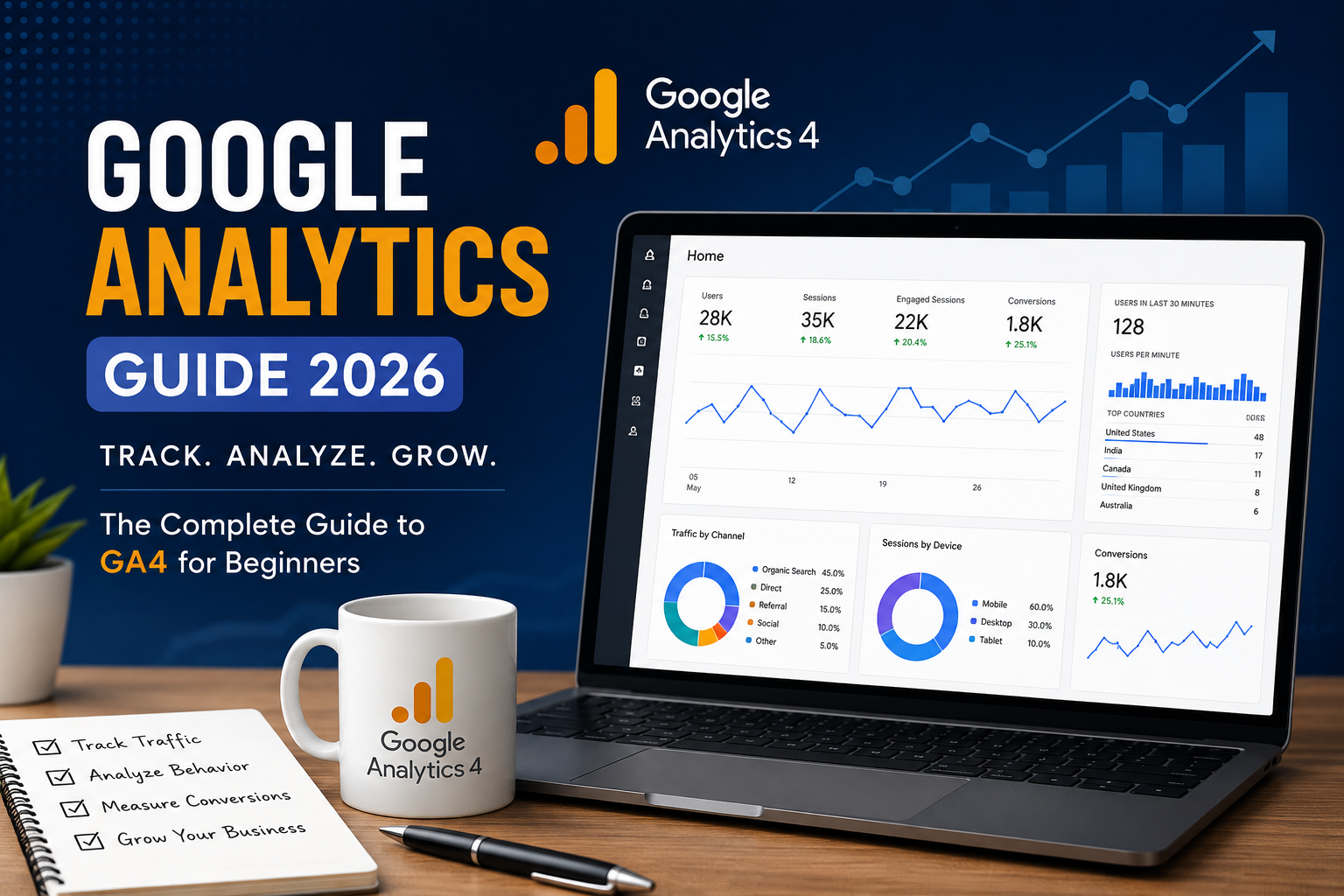
Understanding what visitors do on your website is essential for making smarter marketing decisions. A Google Analytics Guide can help beginners and business owners learn how to measure website traffic, understand user behavior, and identify which pages or campaigns generate the best results.
In 2026, website analytics is more important than ever. Search engines, social platforms, email campaigns, paid advertising, and other digital channels can send visitors to your website, but analytics helps you understand what happens after they arrive.
This guide explains the basics of Google Analytics Guide, how to set it up, and which metrics you should monitor.
What Is Google Analytics Guide ?
Google Analytics Guide is a web analytics platform that helps website owners collect and analyze information about visitors. It can show where your traffic comes from, what pages people view, how long they interact with your website, and whether they complete important actions.
The current standard is Google Analytics Guide 4 (GA4), which uses an event-based measurement model. Instead of focusing only on pageviews and sessions, GA4 can track interactions such as clicks, purchases, form submissions, video engagement, and other events.
For businesses, this data can help improve website performance and marketing strategies.
Why Google Analytics Matters in 2026
A successful website should not rely on guesswork. Analytics data can reveal which marketing channels are generating valuable visitors and which areas need improvement.
Some important benefits include:
- Measuring website traffic
- Understanding visitor behavior
- Tracking conversions and important actions
- Identifying high-performing content
- Measuring marketing campaigns
- Finding pages that need improvement
- Understanding audience engagement
- Making data-driven business decisions
For example, if thousands of visitors reach a landing page but very few complete a form, the data may indicate that the page needs better messaging, design, or calls to action.
How to Set Up Google Analytics
Setting up Google Analytics Guide 4 is relatively straightforward.
1. Create an Analytics Property
Start by signing in to your Google account and creating an Analytics property for your website. Enter your business information and select the appropriate reporting settings.
2. Add Your Website
After creating the property, add your website as a data stream. GA4 provides a measurement ID that connects your website with your analytics property.
3. Install the Tracking Code
You can install the tracking code directly on your website or use a platform such as Google Tag Manager. Many popular website platforms also provide integrations that simplify installation.
4. Verify Data Collection
After installation, visit your website and check the real-time reports. If your visit appears in the reports, the tracking setup is working.
Always verify your configuration before relying on the data for business decisions.
Important Google Analytics Metrics
One of the most important parts of learning website Google Analytics Guide is understanding the right metrics.
Users
Users represent visitors interacting with your website. This metric can help you understand the overall size of your audience.
Sessions
A session represents a period of interaction with your website. Sessions can help you evaluate how frequently visitors access your site.
Engagement Rate
Engagement rate helps measure how actively visitors interact with your website. A higher engagement rate can indicate that your content is relevant and useful.
Events
Events track specific interactions. Examples include button clicks, downloads, video plays, purchases, and form submissions.
Conversions
Conversions are important actions that support your business goals. Depending on your website, a conversion could be a purchase, lead submission, signup, phone call, or another valuable action.
Understanding Website Traffic Sources
Another major benefit of Google Analytics Guide is understanding where visitors originate.
Common traffic sources include:
- Organic search
- Direct traffic
- Referral websites
- Social media
- Email campaigns
- Paid advertising
Analyzing traffic sources helps you identify which channels deserve more attention. For example, if organic search consistently generates engaged visitors, improving your SEO strategy could produce additional long-term traffic.
Google Analytics and SEO
Google Analytics Guide can support an effective SEO strategy by showing what happens after visitors arrive from search engines.
You can analyze landing pages, engagement, conversions, and other user interactions to determine whether your organic traffic is producing meaningful results.
However, analytics and Google Search Console serve different purposes. Search Console provides valuable information about search performance, queries, impressions, clicks, and indexing, while Analytics focuses more heavily on what visitors do after reaching your website.
Using both platforms together provides a more complete view of search performance.
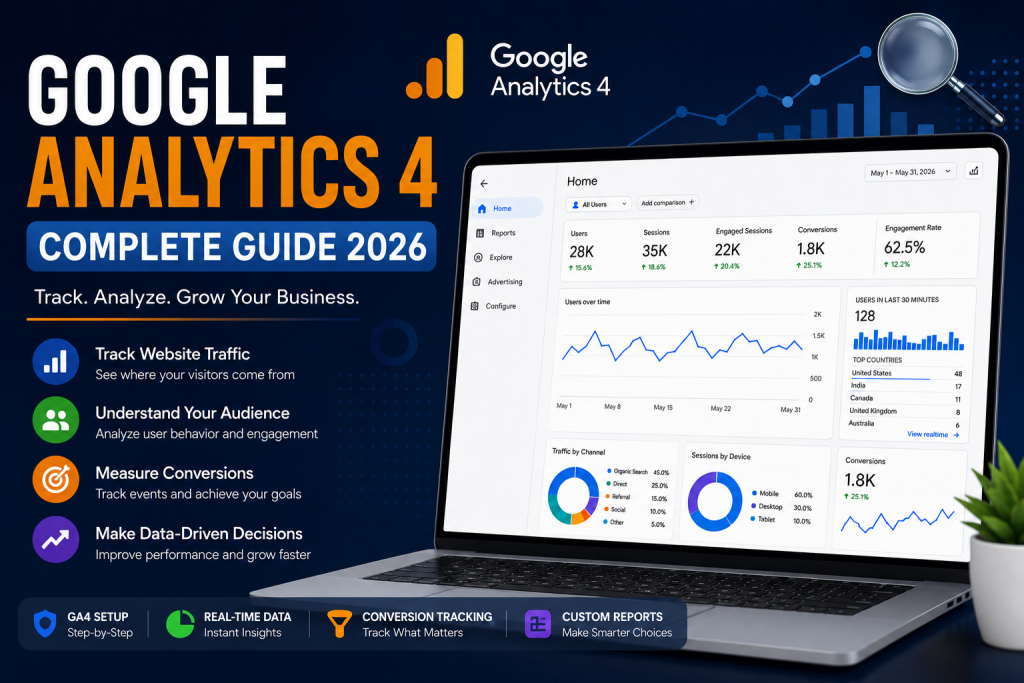
How to Use Analytics Data to Improve Your Website
Collecting data is only the first step. The real value comes from turning that information into action.
Start by identifying your most important business goals. Then determine which events and conversions represent those goals.
Next, examine your highest-traffic pages. Check whether those pages generate engagement, leads, sales, or other valuable actions.
You should also investigate pages with high traffic but weak conversion performance. Improving headlines, content quality, page speed, navigation, trust signals, and calls to action may improve results.
Common Analytics Mistakes to Avoid
Beginners often make several mistakes when working with website analytics.
One common problem is focusing on vanity metrics instead of meaningful business outcomes. A large number of visitors is useful, but traffic alone does not guarantee revenue or leads.
Another mistake is failing to configure important events and conversions. Without proper tracking, it becomes difficult to measure whether your marketing efforts are actually working.
You should also avoid making decisions based on a single metric. Look at multiple data points and consider trends over time before changing your strategy.
Final Thoughts
This Google Analytics Guide provides a practical starting point for understanding website measurement in 2026. GA4 can help you discover where visitors come from, how they interact with your content, and which actions contribute to your business goals.
The most effective approach is to focus on meaningful data rather than simply collecting numbers. Configure important events, monitor conversions, analyze traffic sources, and regularly review your highest-performing pages.
When analytics data is combined with SEO, quality content, and a strong website experience, it becomes a powerful tool for making better digital marketing decisions.