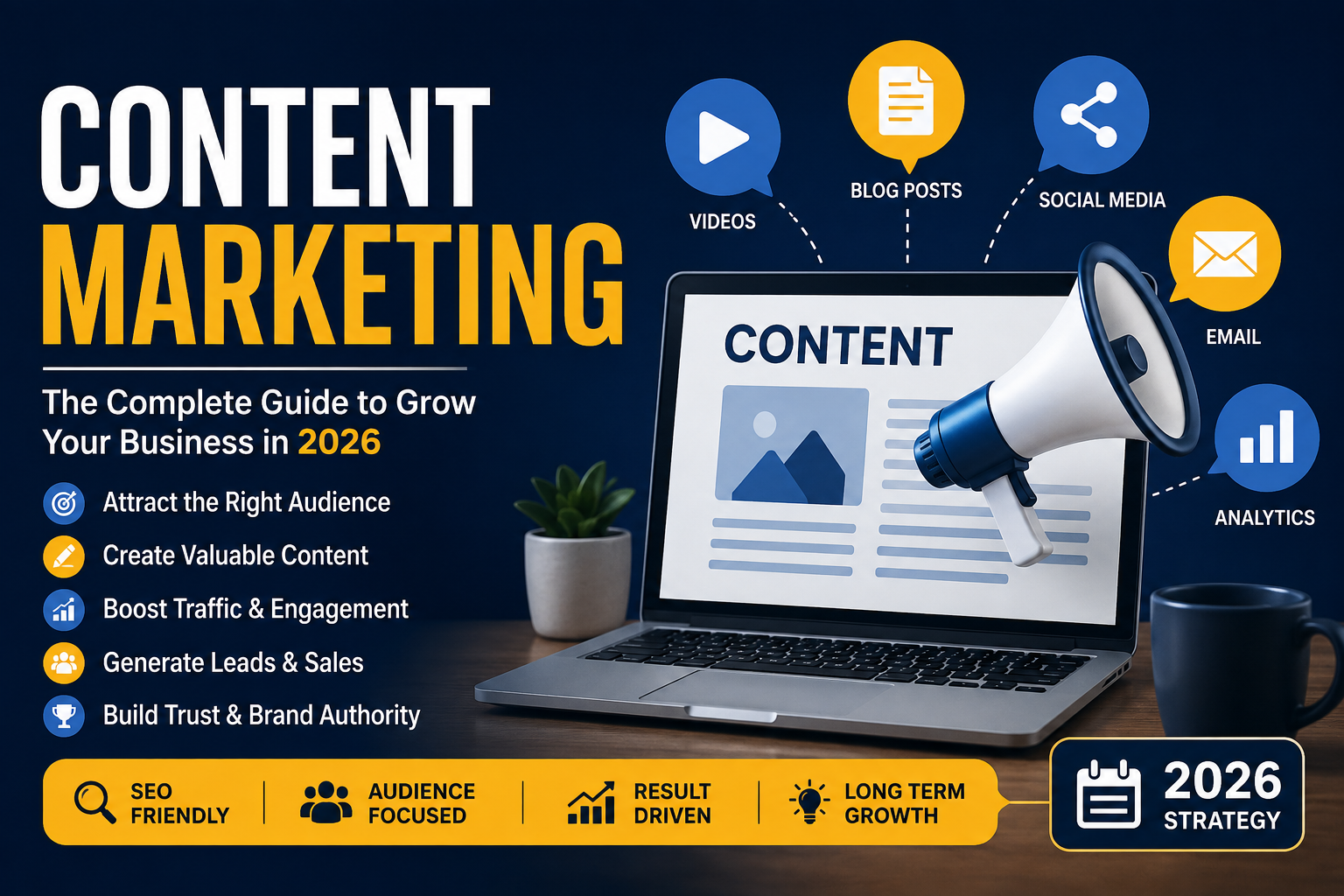
In 2026, businesses need more than advertisements to attract customers and build long-term trust. People search for information, compare solutions, read reviews, watch videos, and explore brands before making purchasing decisions. This is where Content Marketing becomes one of the most effective ways to attract, educate, and convert potential customers.
A strong strategy helps businesses create useful content that answers real questions while building credibility with their audience. Whether you run a small business, online store, SaaS company, personal brand, or professional service, the right approach can increase organic traffic, leads, and customer loyalty.
What Is Content Marketing?
Content Marketing is the process of creating and distributing valuable, relevant, and consistent content to attract a specific audience. Instead of directly pushing a product or service in every message, businesses provide information that helps people solve problems and make better decisions.
Common forms of content include:
- Blog posts and SEO articles
- Videos and tutorials
- Social media content
- Case studies
- Email newsletters
- Infographics
- Ebooks and guides
- Podcasts
- Product comparisons
The goal is simple: provide value first and build trust over time.
Why Content Marketing Matters in 2026
Search behavior continues to change. People now discover brands through traditional search engines, social platforms, video platforms, AI-powered search experiences, and online communities.
High-quality content gives your business more opportunities to appear during these discovery moments.
A well-planned strategy can help you:
- Increase organic search visibility
- Generate qualified website traffic
- Build brand awareness
- Establish industry authority
- Improve audience engagement
- Generate leads
- Support sales
- Strengthen customer relationships
Instead of depending entirely on paid advertising, businesses can build an asset library that continues attracting visitors long after content is published.
How to Create a Successful Content Marketing Strategy
A successful content marketing strategy starts with research rather than random posting. Before creating content, understand who you want to reach, what they search for, and what problems they are trying to solve.
1. Define Your Target Audience
Start by identifying your ideal customer. Consider their interests, challenges, goals, buying behavior, and common questions.
The more clearly you understand your audience, the easier it becomes to create useful content that feels relevant.
2. Research Relevant Keywords
Keyword research is an important part of an effective content strategy. Find keywords that match your products, services, and audience’s search intent.
Focus on a combination of:
- Primary keywords
- Long-tail keywords
- Question-based searches
- Commercial keywords
- Informational keywords
- Related semantic terms
Avoid forcing keywords into every paragraph. Search engines increasingly prioritize helpful, relevant, and easy-to-understand information.
3. Create Helpful, Original Content
Quality matters more than publishing hundreds of weak articles. Your content creation process should focus on solving problems better than competing pages.
For example, instead of writing a generic article about email marketing, create a practical guide with examples, actionable steps, common mistakes, and useful tips.
Original insights, firsthand experience, examples, statistics, and expert perspectives can make your content more valuable.
4. Optimize Content for SEO
SEO content should be written for humans first and search engines second.
Optimize important elements such as:
- SEO title
- Meta description
- URL slug
- Headings
- Introduction
- Image alt text
- Internal links
- External references
- Keyword placement
Use your primary keyword naturally while including relevant secondary keywords throughout the article.
Content Distribution Is Just as Important
Creating great content is only half the job. Content distribution helps your work reach more people.
After publishing an article, consider sharing it through:
- Social media
- Email marketing
- Online communities
- Business profiles
- Video content
- Newsletters
- Industry websites
You can also repurpose one strong article into multiple formats. A detailed blog post could become a short video, social media posts, an infographic, an email, and several short-form content pieces.
This approach saves time while expanding your reach.
Measure Your Content Marketing Performance
A professional content marketing plan should include measurable goals. Publishing content without tracking results makes it difficult to know what is working.
Important metrics include:
- Organic traffic
- Search rankings
- Click-through rate
- Engagement
- Time on page
- Leads generated
- Conversion rate
- Returning visitors
- Social shares
Do not focus only on traffic. A smaller amount of highly relevant traffic can be more valuable than thousands of visitors who have no interest in your products or services.
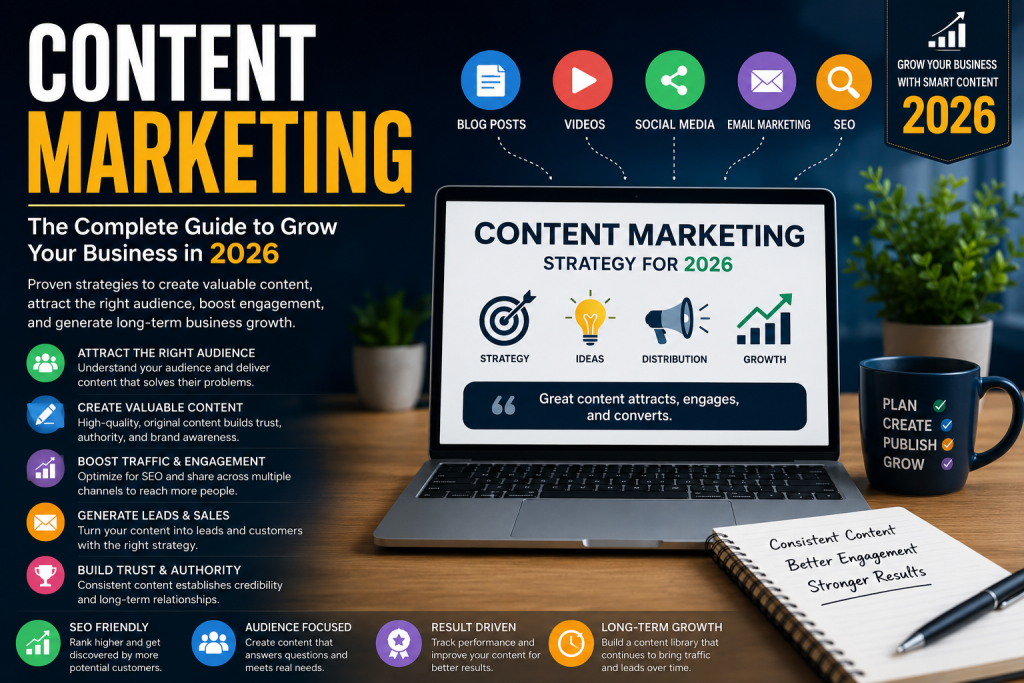
Common Content Marketing Mistakes to Avoid
Many businesses struggle because they focus on quantity instead of quality. Common mistakes include publishing without keyword research, targeting the wrong audience, copying competitors, ignoring search intent, using excessive keywords, and failing to update old content.
Another mistake is expecting immediate results. Organic growth usually requires consistency. A strong strategy becomes more powerful as your website builds authority and develops a larger library of useful resources.
Final Thoughts
Content Marketing is no longer simply about publishing blog posts. In 2026, it is a complete growth strategy that combines SEO content, content creation, audience engagement, digital marketing, and content distribution.
Businesses that consistently answer customer questions, provide genuine value, and create content around real search intent can build stronger visibility and trust.
The best approach is not to publish more content just for the sake of publishing. Instead, create useful, original, search-friendly content that helps your audience at every stage of the buying journey. With a clear strategy and consistent execution, content can become one of your most valuable long-term digital marketing assets.