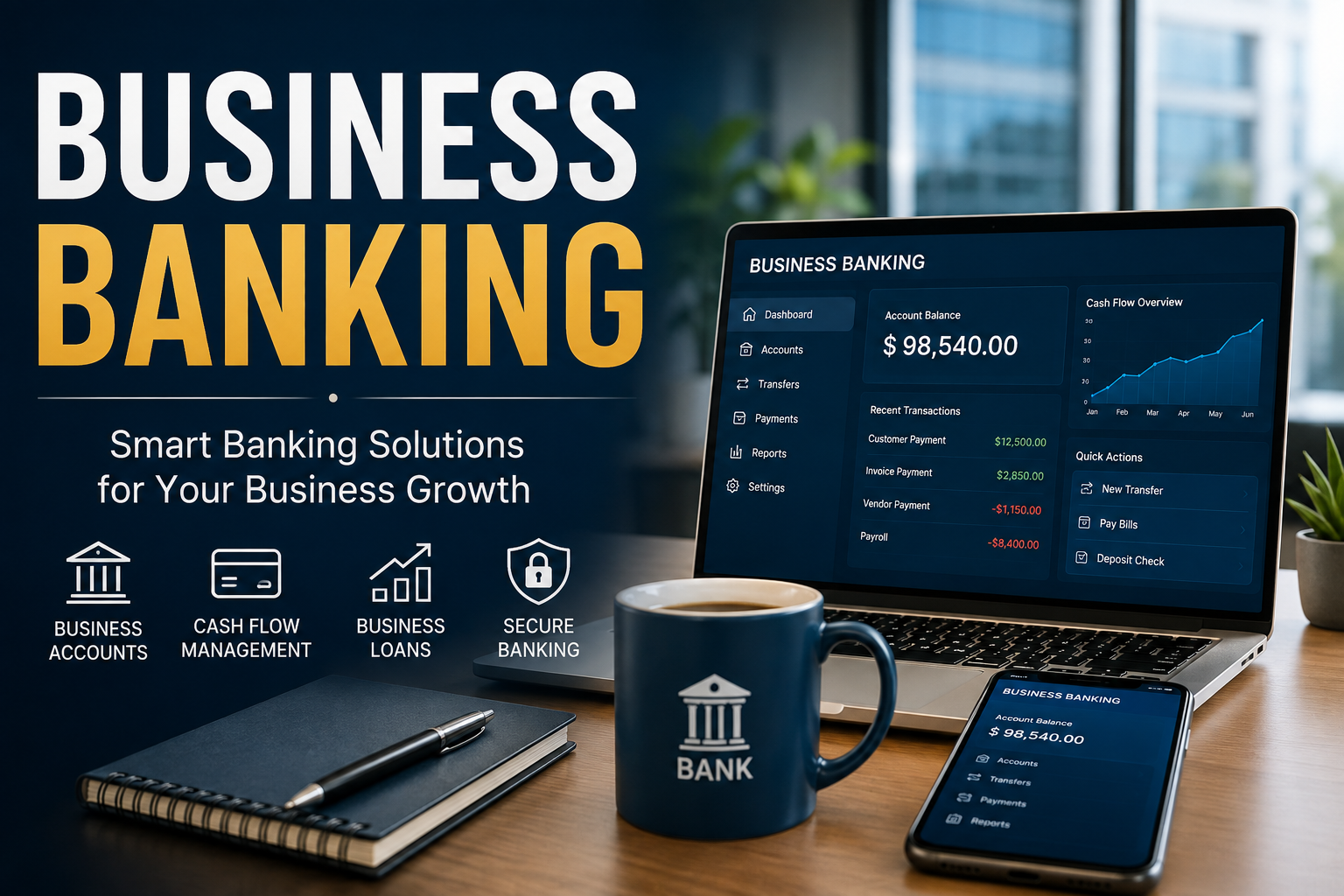
Running a business involves much more than selling products or providing services. Managing cash flow, paying expenses, receiving customer payments, and keeping financial records organized are equally important. That is where business banking becomes an essential part of building a stable and professional company.
Whether you operate a startup, online store, consulting firm, restaurant, or growing company, having the right banking setup can make everyday financial management easier. In 2026, business owners have access to traditional banks, online banking platforms, and digital financial tools designed specifically for modern businesses.
What Is Business Banking?
Business banking refers to financial services designed for companies rather than personal customers. These services can include business checking accounts, savings accounts, business debit cards, payment processing, loans, credit lines, and cash management tools.
A dedicated business bank account separates company transactions from personal finances. This separation can make bookkeeping simpler, improve financial visibility, and help business owners maintain cleaner records for tax preparation.
For many companies, opening a dedicated account is one of the first steps toward establishing a professional financial system.
Why Business Banking Matters
Keeping business and personal finances separate can provide several advantages. First, it makes it easier to monitor revenue and expenses. Instead of searching through personal transactions, business owners can view company activity in one place.
It can also simplify business accounting. When transactions are organized, tracking expenses, preparing financial reports, and working with an accountant become more straightforward.
Another advantage is professionalism. Customers, vendors, and partners may view a company as more established when payments and invoices are handled through a dedicated business account.
Types of Business Bank Accounts
Choosing the right account depends on the size and needs of your company. Common options include:
Business Checking Account
A business checking account is generally used for everyday transactions. Businesses can use it to receive payments, pay suppliers, cover operating expenses, and manage payroll.
Business Savings Account
A business savings account can help companies set aside money for taxes, emergencies, expansion, or future investments. Some accounts may offer interest on eligible balances.
Business Credit Card
A business credit card can provide a convenient way to manage company purchases while keeping expenses separate from personal spending. Depending on the provider and qualification requirements, businesses may also receive rewards or other benefits.
Business Line of Credit
A business line of credit can provide flexible access to funds when cash flow temporarily becomes tight. It may be useful for managing seasonal expenses, purchasing inventory, or handling unexpected costs.
How to Choose a Business Bank
Not every bank offers the same features, fees, or account requirements. Before opening an account, compare several important factors.
Monthly fees: Look for accounts with reasonable maintenance costs and understand whether fee waivers are available.
Minimum balance requirements: Some accounts require businesses to maintain a specific balance to avoid fees.
Transaction limits: Check whether the account limits monthly deposits, withdrawals, or other transactions.
Online banking: Reliable digital banking can save time by allowing you to manage payments, transfers, deposits, and account activity remotely.
ATM and branch access: Consider how frequently your company handles cash and whether convenient locations are important.
Customer support: Responsive support can be valuable when dealing with payment issues, account restrictions, or financial questions.
Online Business Banking in 2026
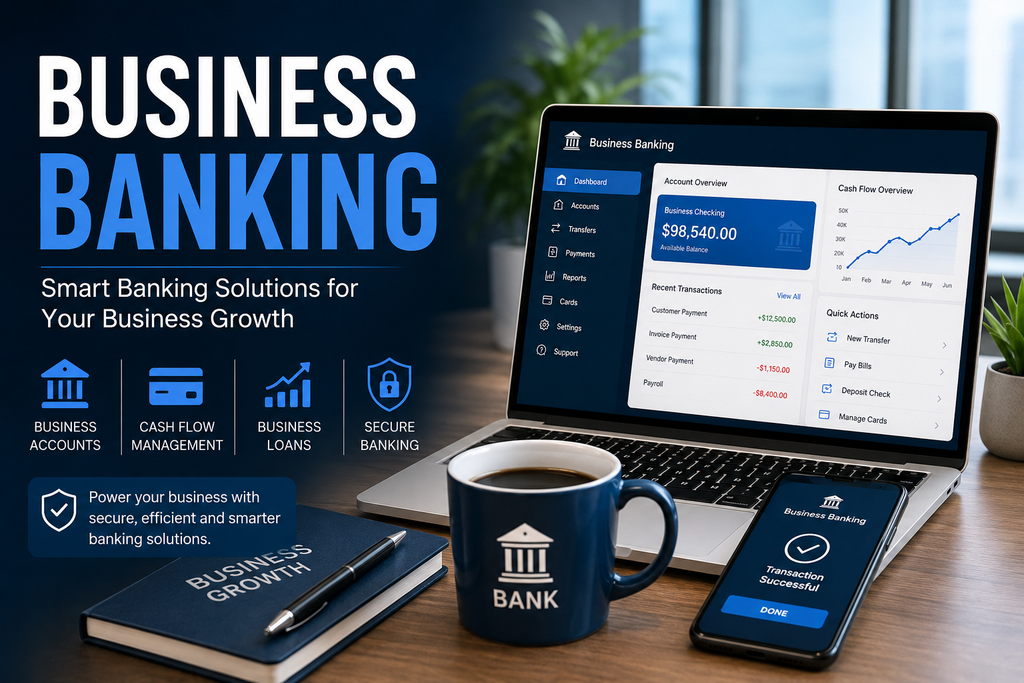
Digital banking continues to change how entrepreneurs manage company finances. Online-first financial platforms can offer mobile apps, automated transfers, digital payments, invoicing integrations, and real-time transaction notifications.
For businesses that operate remotely or sell online, these tools can be particularly convenient. However, business owners should still evaluate fees, security measures, customer support, deposit protection, and account features before choosing a provider.
Convenience should not be the only deciding factor. The best banking solution is one that fits the company’s financial activity and long-term goals.
Business Banking and Cash Flow Management
Strong cash flow management is critical for maintaining a healthy business. A company can be profitable on paper and still experience financial problems if money does not arrive when bills become due.
A good banking system can help owners monitor incoming revenue, schedule payments, maintain emergency reserves, and identify spending patterns.
Consider creating separate financial allocations for operating expenses, taxes, payroll, and savings. This approach can make available cash easier to understand and reduce the risk of spending money that is already committed to upcoming obligations.
Business Banking and Business Credit
A dedicated account can also support broader financial organization as a company grows. Business owners may eventually need financing for equipment, inventory, expansion, or working capital.
Building strong financial records can make it easier to demonstrate business activity when applying for certain financial products. However, approval for loans or credit depends on the lender’s requirements, the company’s financial position, credit history, revenue, and other factors.
Business owners should avoid taking on unnecessary debt and carefully compare interest rates, fees, repayment terms, and eligibility requirements.
Tips for Managing Business Finances
To get more value from your banking setup, follow a few simple practices:
- Keep personal and company finances separate.
- Review transactions regularly.
- Maintain an emergency cash reserve.
- Track recurring fees and subscriptions.
- Reconcile accounts with your accounting records.
- Set aside money for taxes.
- Use strong passwords and multi-factor authentication.
- Monitor accounts for unusual transactions.
- Review banking fees at least once a year.
Final Thoughts
Effective business banking is more than simply opening a company checking account. It provides the financial foundation for organizing transactions, managing cash flow, controlling expenses, and preparing for future growth.
In 2026, entrepreneurs have more banking choices than ever, from established financial institutions to digital-first platforms. The right choice depends on your company’s transaction volume, cash-flow needs, financing goals, technology preferences, and budget.
Before choosing an account, compare fees, features, accessibility, security, and support. A well-planned banking strategy can help your business maintain cleaner finances today while creating a stronger foundation for tomorrow.
Leave a Reply