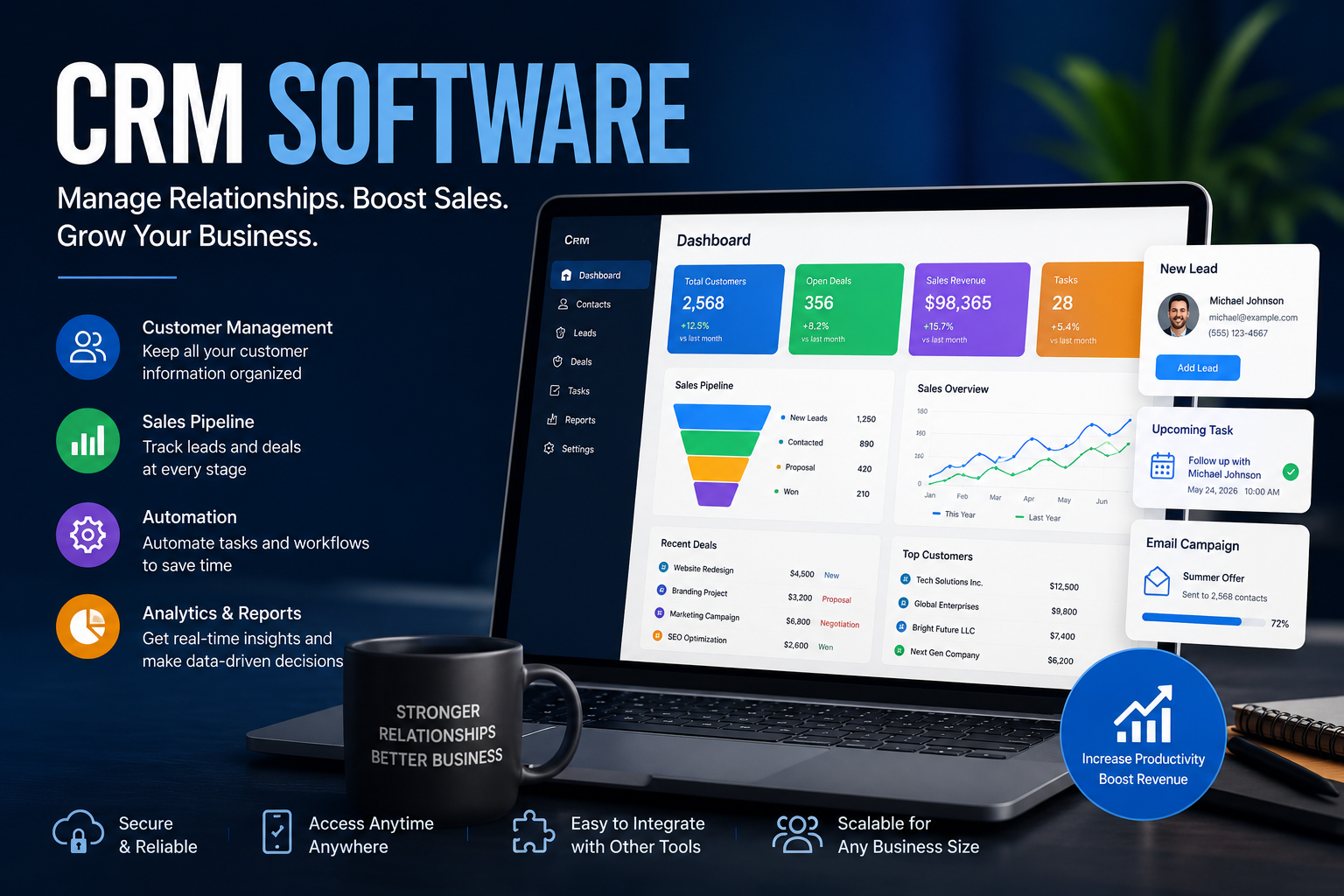
Running a growing business means managing leads, customers, sales conversations, follow-ups, and support requests—all while trying to deliver an excellent customer experience. Without the right system, important information can become scattered across spreadsheets, emails, and different apps. CRM software brings these activities together in one organized platform.
For businesses looking to improve sales performance and build stronger customer relationships in 2026, choosing the right customer relationship management system can make a significant difference.
What Is CRM Software?
CRM software is a technology platform that helps businesses organize and manage interactions with current and potential customers. It stores customer information, tracks communication, manages leads, and provides sales teams with a clearer view of the customer journey.
Instead of searching through multiple spreadsheets or email threads, teams can use a centralized customer database to find contact details, previous conversations, purchase history, notes, and upcoming follow-ups.
Modern CRM platforms can also include automation, analytics, marketing tools, customer support features, and artificial intelligence.
Why CRM Software Matters in 2026
Customer expectations continue to rise. People want businesses to respond quickly, remember previous interactions, and provide personalized experiences.
A reliable customer relationship management platform can help companies:
- Organize customer data in one place
- Track leads throughout the sales pipeline
- Automate repetitive tasks
- Improve follow-up processes
- Monitor sales performance
- Strengthen customer relationships
- Create more personalized marketing campaigns
- Improve collaboration between departments
For small businesses, these capabilities can help create professional and consistent customer experiences without requiring a large administrative team.
Key Features to Look For
Not every CRM platform offers the same capabilities. Before choosing a solution, businesses should evaluate the features that match their goals.
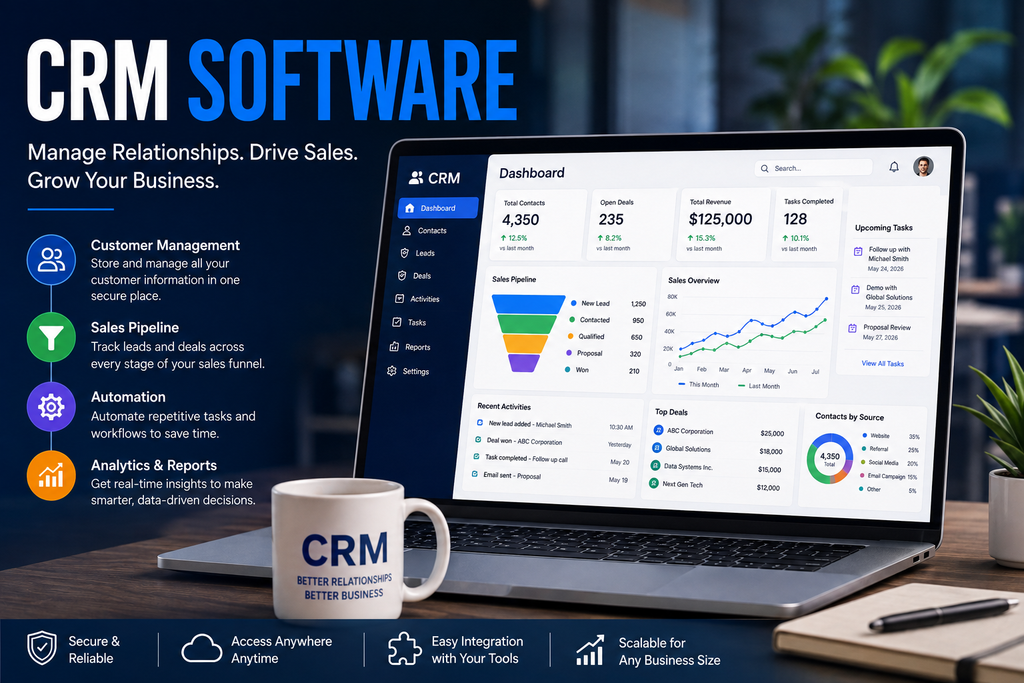
1. Contact Management
A strong customer database should make it easy to store and access customer names, contact information, communication history, notes, and other relevant details.
2. Lead Management
Lead management helps sales teams capture prospects, qualify opportunities, assign leads, and track them through different stages of the sales funnel.
3. Sales Pipeline Management
Visual sales pipelines make it easier to understand where each opportunity stands. Teams can identify stalled deals, prioritize promising prospects, and estimate potential revenue.
4. Automation
CRM automation can handle repetitive activities such as follow-up reminders, email sequences, lead assignments, notifications, and data updates. This allows employees to spend more time on high-value customer interactions.
5. Reporting and Analytics
Business leaders need reliable data to understand what is working. CRM analytics can provide information about conversion rates, sales performance, customer acquisition, revenue forecasts, and team productivity.
6. Integration
The best solution should work smoothly with the tools a company already uses. Integrations with email, calendars, accounting platforms, marketing systems, customer support tools, and communication apps can reduce duplicate data entry.
Benefits for Small and Growing Businesses
One of the biggest advantages of CRM software is improved organization. When customer information is centralized, employees can access the same information instead of maintaining separate records.
A CRM system can also improve sales productivity. Automated reminders and workflow management reduce the chance of missing important follow-ups.
Another major benefit is better customer retention. When businesses understand customer history and preferences, they can provide more relevant communication and support.
For growing companies, scalability is equally important. A solution that works for a small sales team should ideally continue supporting the business as its customer base and workforce expand.
CRM Software and Artificial Intelligence
Artificial intelligence is becoming an increasingly important part of customer relationship management. Modern platforms can use AI to summarize conversations, identify promising leads, suggest follow-up actions, generate customer insights, and assist with sales forecasting.
AI can also help sales representatives reduce the amount of time spent on administrative work. Instead of manually reviewing every interaction, teams may receive automated summaries and recommendations.
However, businesses should evaluate AI features carefully. Data privacy, accuracy, transparency, and integration capabilities should remain important considerations when selecting a platform.
How to Choose the Right CRM
Choosing the right system starts with identifying the business’s actual requirements.
Consider these questions:
- How many employees will use the platform?
- How many customer records need to be managed?
- Does the business need sales automation?
- Are marketing and customer support features important?
- Which existing applications need integration?
- What reporting capabilities are required?
- Is mobile access necessary?
- How much can the business reasonably spend?
Small companies may prefer a simple platform with essential sales and contact-management features, while larger organizations may need advanced automation, analytics, customization, and multi-team workflows.
CRM Software Best Practices
Simply purchasing a CRM platform does not guarantee better results. Teams need a clear implementation strategy.
Start by cleaning existing customer data before importing it. Define sales stages, establish data-entry standards, and train employees on how the system should be used.
Businesses should also regularly review their workflows. Remove unnecessary fields, update automation rules, and monitor reports to ensure the platform continues supporting business objectives.
Most importantly, employees should understand why the system matters. When teams consistently update customer records, the organization gains a more accurate picture of its sales and customer relationships.
Final Thoughts
CRM software has evolved from a simple contact database into a powerful business management solution. In 2026, companies can use customer relationship management tools to organize data, automate workflows, improve sales visibility, and create better customer experiences.
The best platform is not necessarily the one with the longest feature list. It is the solution that fits the company’s size, workflow, budget, technology stack, and long-term goals.
By choosing carefully and implementing the system properly, businesses can turn customer data into actionable insights and build stronger relationships that support sustainable growth.
Leave a Reply