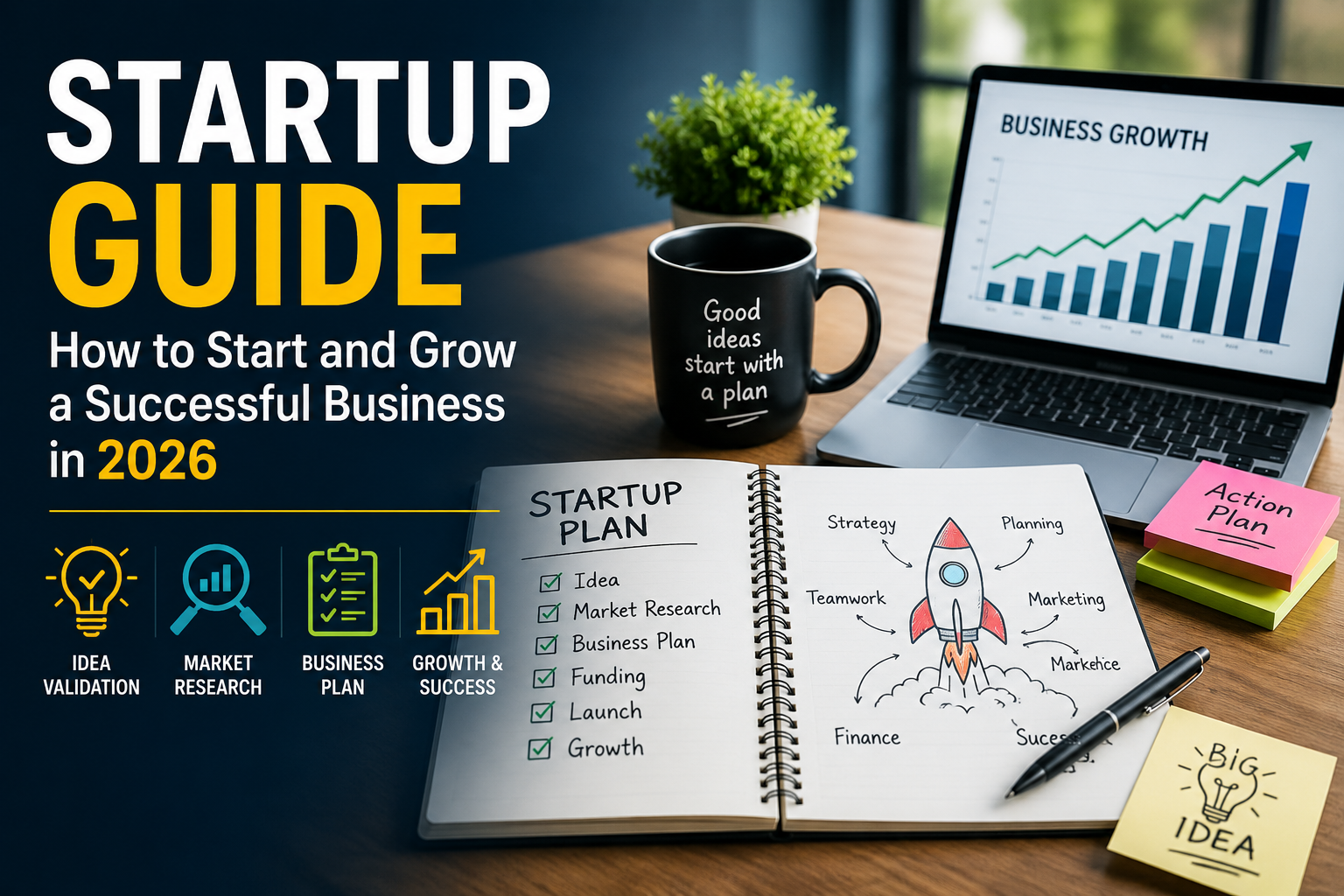
Starting a business can be exciting, but turning an idea into a profitable company requires planning, research, and consistent execution. Whether you want to build an online business, launch a local company, or develop a technology startup, having a clear strategy can help you avoid expensive mistakes.
This Startup Guide explains the essential steps to turn a business idea into a real company in 2026. From market research and business planning to funding, marketing, and growth, you’ll learn what it takes to build a strong foundation.
Startup Guide: How to Start a Business in 2026
A startup is a newly established business designed to solve a specific problem, serve a target market, or introduce a new product or service. Unlike traditional small businesses, many startups focus on rapid growth, innovation, technology, and scalable business models.
However, you do not need a complicated technology product to become an entrepreneur. A consulting company, e-commerce store, digital agency, software business, or specialized service can also start with a simple idea and grow over time.
The most important factor is identifying a genuine customer problem and creating a valuable solution.
1. Start With a Strong Business Idea
Every successful company begins with an idea, but not every idea becomes a successful business. Before investing money, determine whether people actually need your product or service.
Ask yourself:
- What problem does my business solve?
- Who is most likely to buy from me?
- What makes my solution different?
- How much are customers willing to pay?
- Who are my competitors?
- Can this business become profitable?
A strong business idea should solve a clear problem rather than simply follow a trend.
2. Conduct Market Research
Market research is one of the most important parts of starting a business. It helps you understand your potential customers, competitors, industry trends, and pricing opportunities.
Research your target market using search engines, social media, industry publications, customer reviews, and competitor websites. Look for common complaints and unanswered customer needs.
You can also interview potential customers or create surveys. Real feedback can reveal whether your idea solves a problem people are willing to pay to fix.
Good market research can help you refine your product before spending heavily on development or advertising.
3. Create a Business Plan
A business plan provides a roadmap for your company. It does not need to be a 50-page document. A concise plan can be enough when you are starting.
Your business plan should include:
- Business concept
- Target customers
- Products or services
- Competitive analysis
- Pricing strategy
- Marketing strategy
- Startup costs
- Revenue projections
- Business goals
Your financial plan is especially important. Calculate how much money you need to launch, your expected monthly expenses, and how many sales you need to become profitable.
4. Choose the Right Business Structure
Choosing a legal business structure is another important step. Depending on your circumstances, you may consider structures such as a sole proprietorship, partnership, limited liability company, or corporation.
The right choice can affect taxes, liability, paperwork, and how your business operates.
Because regulations vary by location and business type, consider speaking with a qualified accountant or attorney before making a final decision.
5. Calculate Your Startup Costs
Understanding startup costs can prevent cash-flow problems later.
Common expenses may include:
- Business registration
- Website and domain
- Software subscriptions
- Equipment
- Inventory
- Professional services
- Branding
- Advertising
- Employee or contractor costs
Start with essential expenses and avoid unnecessary spending. Many entrepreneurs make the mistake of investing heavily in branding, office space, or equipment before proving that customers want their product.
A lean startup approach can help you test your concept while controlling costs.
6. Build a Minimum Viable Product
You do not always need a perfect product before launching.
A minimum viable product (MVP) allows you to introduce a basic version of your product or service and collect feedback from real customers. This approach can reduce development costs and help you discover what customers actually value.
For example, an online software company could launch with its most important features instead of building dozens of functions immediately.
Use customer feedback to improve the product gradually.
7. Develop a Strong Marketing Strategy
A great product will not automatically attract customers. Your marketing strategy should explain how people will discover, trust, and purchase from your company.
Important digital marketing channels include:
- Search engine optimization
- Content marketing
- Email marketing
- Social media marketing
- Paid advertising
- Influencer partnerships
- Referral marketing
SEO can be particularly valuable for long-term growth because helpful content can continue attracting organic search traffic.
Create content that answers customer questions, compares solutions, explains your products, and demonstrates your expertise.
8. Focus on Customer Experience
Customer experience can become one of your strongest competitive advantages.
Respond to questions quickly, make purchasing simple, provide clear information, and solve problems professionally. Happy customers are more likely to return and recommend your business to others.
In 2026, businesses should also pay attention to automation and artificial intelligence. AI-powered tools can assist with customer support, content creation, data analysis, scheduling, and repetitive administrative tasks.
Use technology to improve efficiency while maintaining a human connection with customers.
9. Track Business Performance
Once your company launches, measure what is working.
Important startup metrics may include:
- Revenue
- Profit margin
- Customer acquisition cost
- Conversion rate
- Customer retention
- Website traffic
- Average order value
- Monthly recurring revenue
Tracking these numbers can help you make smarter decisions instead of relying entirely on assumptions.
10. Create a Sustainable Growth Strategy
Growth should be intentional. Increasing sales without controlling expenses, customer service, or operations can create new problems.
Once you find a business model that works, consider expanding through new products, additional marketing channels, partnerships, automation, or new customer segments.
The goal is not simply to grow quickly. The goal is to build a company that can remain profitable and adaptable over the long term.
Final Thoughts
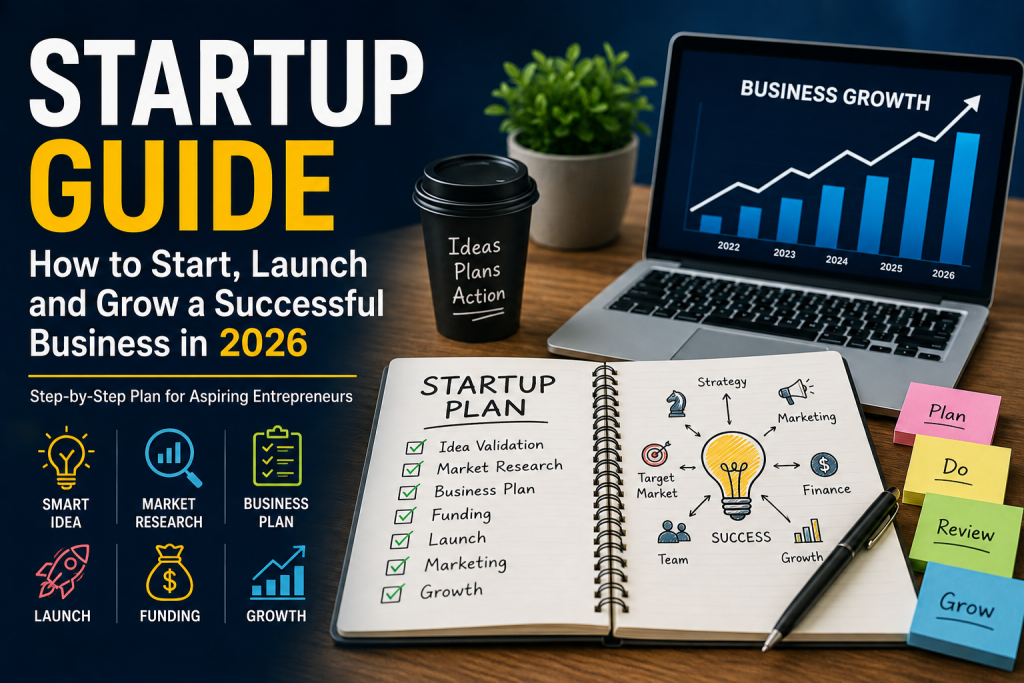
Launching a business requires more than a great idea. You need market research, financial planning, a clear value proposition, effective marketing, and the willingness to learn from customers.
This Startup Guide provides a practical starting point for entrepreneurs who want to build a business in 2026. Start small, validate your idea, control your costs, understand your customers, and improve your strategy as you gain real-world data.
The strongest businesses are rarely built overnight. They are developed through consistent execution, smart decisions, and continuous improvement.
Leave a Reply