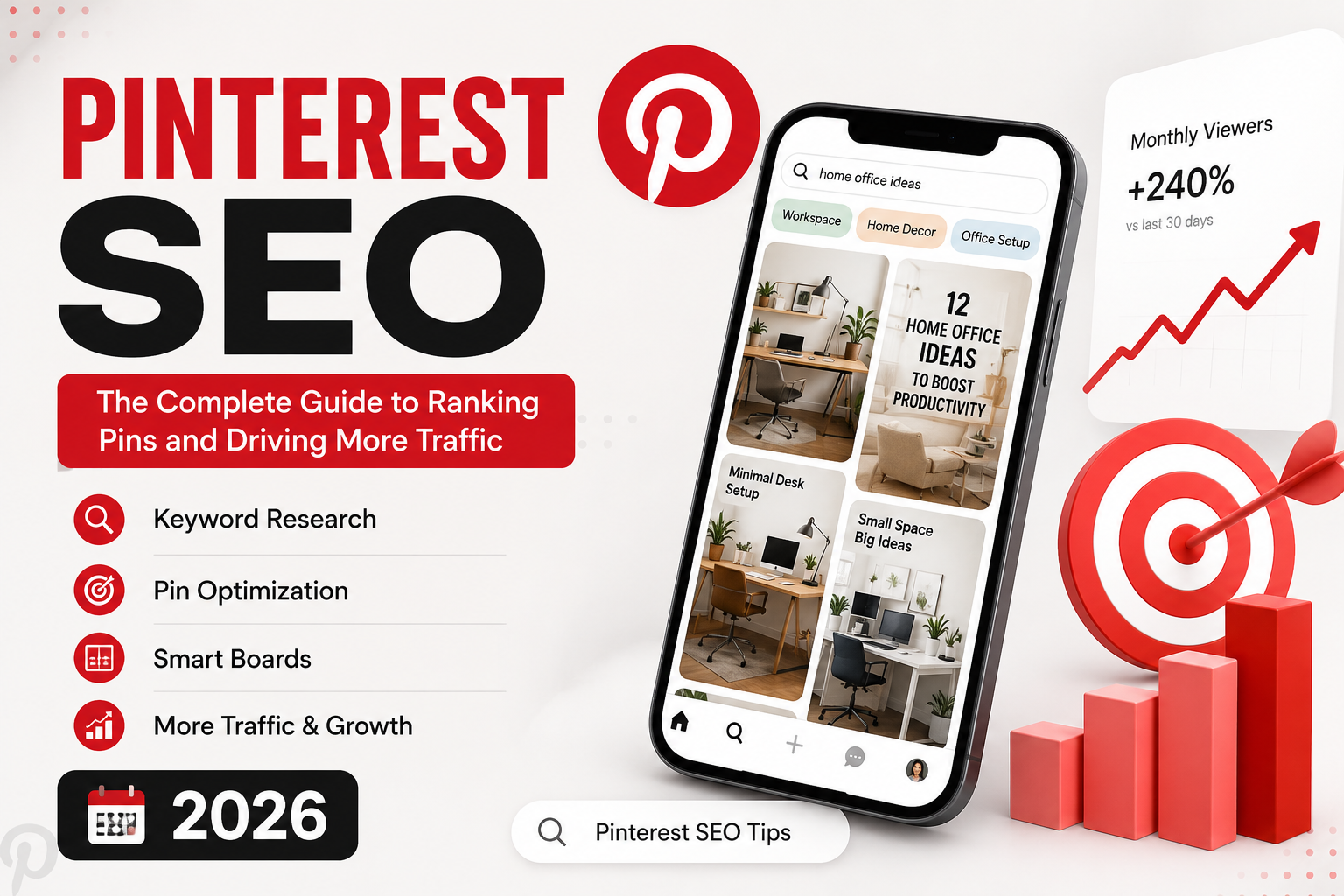
Pinterest is no longer just a platform for saving recipes, fashion ideas, and home inspiration. It has become a powerful visual search engine where people actively discover ideas, products, brands, and solutions. For businesses, bloggers, creators, and online stores, learning Pinterest SEO can turn Pinterest searches into consistent website traffic, leads, and sales.
Unlike traditional social media platforms where content can disappear quickly, Pinterest content can remain discoverable long after publication. Pinterest itself describes the platform as a place where people search, save, and shop ideas, making search visibility especially valuable for marketers.
What Is Pinterest SEO?
Pinterest SEO is the process of optimizing your Pinterest profile, boards, Pins, images, titles, descriptions, and links so your content has a better chance of appearing in relevant Pinterest searches.
The goal is simple: match your content with what people are searching for.
Pinterest uses both keyword and visual search to help people discover content. Related Pins can also expose users to content similar to what they are already viewing.
That means your strategy should focus on two things:
- Creating content people actually want
- Clearly communicating what your content is about
Why Pinterest SEO Matters in 2026
Pinterest SEO remains particularly valuable for pinterest businesses because users often arrive with an intention to discover, plan, compare, or purchase. Pinterest reports that it reaches 631 million monthly active users globally, while its audience includes substantial numbers of adults across different age groups.
Search behavior is another major advantage. Pinterest says people use the platform like a search engine, starting with broad ideas and narrowing their searches toward specific plans or products.
For marketers, this creates an opportunity to attract people before they make a purchasing decision.
1. Start With Pinterest Keyword Research
Strong keyword research should be the foundation of your strategy.
Think about the exact phrases your ideal audience might type into Pinterest SEO. Instead of targeting only broad terms, build a combination of:
- Primary keywords
- Long-tail keywords
- Related search terms
- Product-specific keywords
- Problem-based keywords
- Seasonal keywords
For example, a home decor brand might target phrases such as:
Primary keyword: home decor ideas
Secondary keywords: living room decor, small apartment decor, modern home ideas, bedroom decorating ideas, budget-friendly decor
Long-tail keywords can be especially useful because they describe a more specific search intent.
2. Optimize Your Pinterest Profile
Your profile should immediately tell Pinterest and potential visitors what your business or content is about.
Use relevant keywords naturally in your:
- Profile name
- Bio
- Board names
- Board descriptions
- Website information
Avoid stuffing keywords into every sentence. Instead, create a clear profile that explains what people can expect from your content.
A profile focused on digital marketing, for example, could naturally mention SEO tips, social media marketing, content marketing, and online business strategies.
3. Create Search-Friendly Boards
Boards aren’t simply folders for your Pins. They can also appear in search results.
Pinterest boards recommends giving boards clear, descriptive titles because people can discover boards through search.
Instead of creating a board called “My Ideas,” use a descriptive title such as:
SEO Tips for Small Businesses
Then write a useful board description containing closely related terms.
Create separate boards around specific topics rather than putting every Pin into one general board.
4. Optimize Pin Titles and Descriptions
Pinterest search optimization your Pin title is one of the most important places to communicate relevance.
Make the title descriptive, compelling, and easy to understand.
For example:
Weak:
Amazing Tips You Need to Know
Better:
10 Pinterest SEO Tips to Increase Your Website Traffic
Your description should provide additional context instead of simply repeating the title.
Include relevant secondary keywords naturally and explain what the user will discover after clicking.
Pinterest specifically recommends using relevant keywords in Pin titles and descriptions to help contextualize content.
5. Design Eye-Catching Pinterest Pins
Keywords alone won’t make a weak Pin successful.
Pinterest is a visual discovery platform, so your creative needs to immediately communicate value. Pinterest recommends using eye-catching images, videos, text overlays, and other creative elements to make Pins stand out.
A strong Pin should generally have:
- A clear headline
- Easy-to-read typography
- Strong visual hierarchy
- A relevant image
- A specific benefit
- Consistent branding
- A clear reason to click
Don’t overload your graphic with paragraphs of text. Make the main promise understandable within seconds.
6. Use Relevant Topics and Keywords
When Pinterest gives you the option to add topics, use them.
Topics help provide additional context about your content and can help Pinterest understand which audiences may find your Pin relevant. Pinterest recommends adding topics whenever the option is available.
Think beyond your primary keyword. Include closely related concepts that accurately describe your content.
For example, a Pin about healthy breakfast recipes could relate to:
- Easy breakfast recipes
- Healthy meal ideas
- Quick breakfast
- Meal prep
- Family recipes
Relevance is more important than simply adding as many keywords as possible.
7. Link Pins to Valuable Landing Pages
Pinterest can generate traffic, but your website needs to deliver the value promised by the Pin.
Every relevant Pin should point to a useful destination, such as:
- Blog articles
- Product pages
- Service pages
- Landing pages
- Tutorials
- Lead magnets
- Online stores
Pinterest recommends adding URLs to Pins so they can drive visitors back to your website.
Make sure the destination page matches the Pin. If your Pin promises “10 Small Bedroom Decorating Ideas,” the link should take users directly to that content rather than an unrelated homepage.
8. Publish Consistently
Consistency matters more than publishing a huge number of Pins for a few days and then disappearing.
Pinterest recommends creating new original Pins regularly, with its business guidance suggesting at least one new original Pin per week as a steady publishing approach.
Build a realistic content calendar around your available resources.
You can create multiple pieces of content around one topic by changing:
- Headlines
- Images
- Layouts
- Angles
- Keywords
- Calls to action
However, always prioritize genuinely useful and original content.
9. Use Pinterest Trends for Content Ideas
Pinterest Trends can help you discover topics people are increasingly interested in.
Pinterest Predicts 2026 identifies emerging trends using billions of search and engagement data points, combined with predictive analytics and expert analysis.
You can use trend insights to develop timely content around:
- Seasonal searches
- Emerging aesthetics
- Shopping trends
- Lifestyle topics
- Popular styles
- New consumer interests
The key is to connect trends with your niche rather than chasing every popular topic.
10. Measure Your Results
Don’t judge your strategy only by followers.
Track metrics that connect Pinterest activity with business outcomes, including:
- Impressions
- Saves
- Pin clicks
- Outbound clicks
- Engagement
- Website traffic
- Leads
- Sales
Pinterest Business provides analytics and audience insights to help businesses understand content performance and audience behavior.
Use these insights to identify which topics, designs, keywords, and content formats generate the strongest results.
Common Pinterest SEO Mistakes to Avoid
Several mistakes can limit your visibility.
Avoid:
- Keyword stuffing
- Generic board names
- Weak Pin titles
- Poor-quality graphics
- Irrelevant hashtags or keywords
- Sending users to unrelated pages
- Publishing duplicate content without meaningful variation
- Ignoring analytics
- Inconsistent publishing
- Focusing only on followers
The best strategy is not about manipulating the platform. It is about making your content easier to understand and more useful to the people searching for it.
Final Thoughts
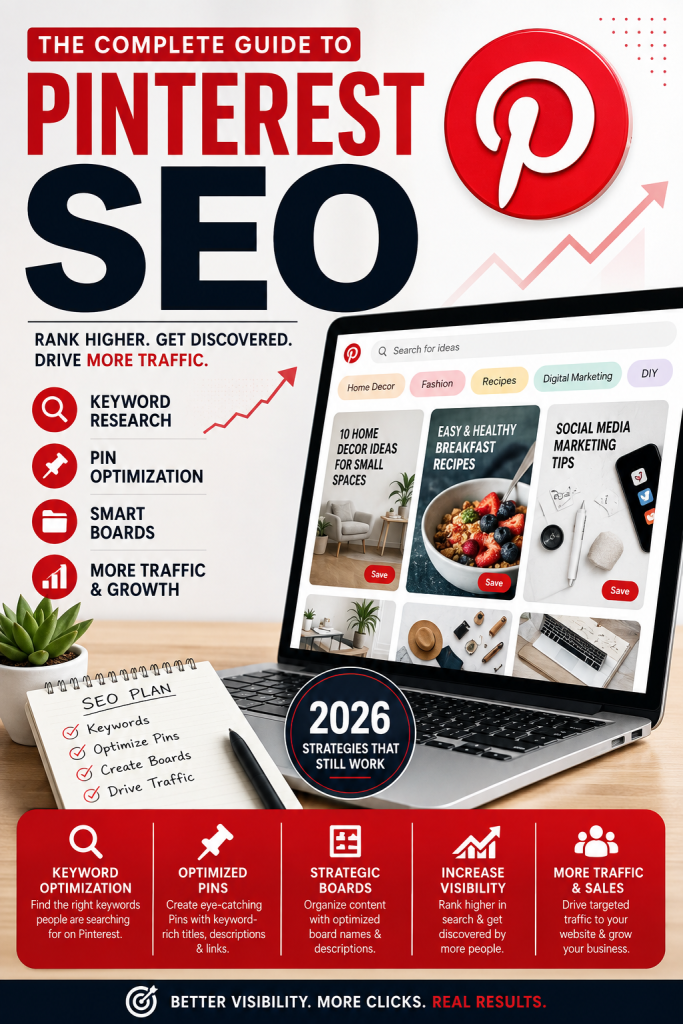
A successful Pinterest SEO strategy combines keyword research, optimized boards, compelling Pin titles, useful descriptions, strong visuals, relevant topics, consistent publishing, and valuable website content.
The biggest opportunity in 2026 is to think of Pinterest less like a traditional social network and more like a visual search and discovery engine. When you understand what people search for and create content that genuinely answers those searches, your Pins can continue attracting attention, clicks, and customers long after they are published.
Start with a focused niche, build keyword-rich but natural boards, create highly useful Pins, connect them to relevant pages, and continuously improve your strategy using Pinterest analytics. With consistency and strong search intent, Pinterest can become a reliable source of organic traffic and business growth.
Leave a Reply