Creating a great video is only half the battle. If people cannot find it, even excellent content can struggle to generate views, subscribers, and leads. That is where YouTube SEO becomes important.
In 2026, successful creators need more than keywords. YouTube SEO considers relevance, engagement, quality, viewer behavior, and personalization when determining which videos appear in search and recommendations.
This guide explains how to optimize your videos, titles, descriptions, thumbnails, and overall channel strategy so your content has a better opportunity to reach the right viewers.
What Is YouTube SEO?
YouTube SEO is the process of optimizing videos and channels so they can be discovered more easily through YouTube search and recommendations.
The goal is not simply to add as many keywords as possible. Instead, you should clearly communicate what your video is about while creating content that viewers actually want to watch.
YouTube says its search system primarily considers relevance, engagement, and quality. Relevance can include how closely the title, description, tags, and video content match a search query.
That means your optimization strategy should combine keyword research with useful, engaging content.
1. Start With YouTube Keyword Research
Before recording a video, identify what your potential viewers are searching for.
Instead of choosing a broad topic such as “social media,” consider specific search phrases like:
- social media marketing for beginners
- how to grow a YouTube channel
- best video editing apps
- how to create YouTube thumbnails
- YouTube marketing tips for small businesses
Long-tail keywords can help you target more specific search intent and create content around questions people actually ask.
YouTube’s own guidance recommends using its Analytics Research tools and keyword research resources to discover popular terms and related phrases.
2. Create Search-Friendly Video Titles
Your title is one of the first things viewers see. It also helps communicate the subject of your video.
A strong title should be:
- Clear and specific
- Relevant to the actual video
- Easy to understand
- Naturally connected to the target keyword
- Interesting enough to encourage clicks
For example, instead of writing:
“My New Strategy”
try:
“YouTube SEO Strategy: 7 Ways to Get More Views in 2026”
The second title immediately tells viewers what they can expect.
YouTube SEO recommends keeping titles concise, placing important words near the beginning, and making sure the title accurately represents the video.
3. Optimize Your Video Description
A well-written video description gives viewers and YouTube additional context about your content.
Place the most important information near the beginning because those opening lines are visible before viewers expand the description. YouTube SEO recommends creating unique descriptions and naturally including one or two primary terms that describe the video.
For example, your description can briefly explain:
- What the video teaches
- Who should watch it
- The main topics covered
- Useful resources
- Related videos or playlists
- A simple call to action
Avoid filling your description with repetitive keywords. Write for humans first.
4. Design Better YouTube Thumbnails
A thumbnail does not directly function like a traditional keyword field, but it can have a major impact on whether someone chooses to watch.
Your thumbnail should communicate the video’s value quickly.
Use:
- One clear visual idea
- Readable text
- Strong contrast
- Consistent branding
- A simple composition
- An image that supports the title
YouTube reports that 90% of its best-performing videos have custom thumbnails and recommends testing different thumbnail approaches to improve appeal.
The title and thumbnail should work together rather than repeat exactly the same information.
5. Improve Watch Time and Audience Retention
Getting a click is not enough. Your video must deliver on the promise made by the title and thumbnail.
Start with a strong hook. Tell viewers what they will learn or gain, then get into the valuable content quickly.
Avoid unnecessarily long introductions, excessive filler, or unrelated information.
YouTube’s current guidance groups recommendation performance around appeal, engagement, and satisfaction. Viewer response after clicking can therefore be extremely important to your channel’s growth.
Use storytelling, examples, demonstrations, visual changes, and clear explanations to keep viewers interested.
6. Use Tags Correctly
Tags are often misunderstood.
They can help identify content and may be useful for commonly misspelled words, but YouTube states that titles, thumbnails, and descriptions are more important metadata elements for discovery. Tags otherwise play a minimal role.
Therefore, don’t spend hours creating huge lists of tags. Focus your effort on the actual video, title, thumbnail, and description.
7. Organize Videos With Playlists
Playlists can help organize related videos into logical viewing journeys.
For example, a digital marketing channel could create playlists such as:
SEO Tutorials → Social Media Marketing → Content Marketing → YouTube Growth
This makes it easier for viewers to discover related content and continue watching.
YouTube also recommends linking related playlists in descriptions when appropriate.
8. Study YouTube Analytics
Optimization should not end after publishing.
Use YouTube Analytics to understand how viewers discover and interact with your content.
Pay attention to:
- Impressions
- Click-through rate
- Audience retention
- Watch time
- Traffic sources
- Search terms
- Returning viewers
The “How viewers find your” report can reveal the search terms bringing people to your videos.
If a video receives impressions but few clicks, reconsider the title and thumbnail. If viewers leave early, improve your opening and content structure.
9. Build Content Around Search Intent
One of the biggest mistakes creators make is focusing exclusively on keywords.
A better approach is to understand search intent.
Someone searching “how to edit YouTube videos” probably wants a tutorial. Someone searching “best microphones for YouTube” may want product comparisons. Someone searching for a specific creator may want a particular video or channel.
Create content that directly satisfies the reason behind the search.
When viewers find exactly what they expected, your content has a stronger opportunity to generate meaningful engagement.
Final Thoughts
Effective YouTube SEO in 2026 is not about manipulating an algorithm with excessive keywords. It is about making your content easier to understand, easier to discover, and genuinely valuable to viewers.
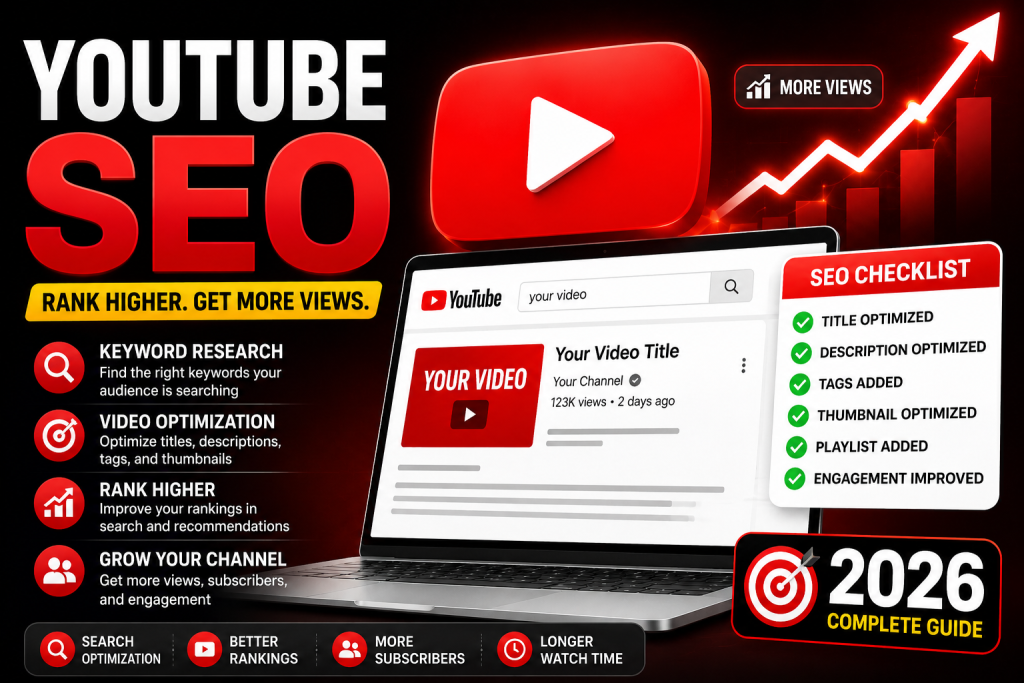
Focus on keyword research, compelling titles, useful descriptions, attractive thumbnails, strong audience retention, organized playlists, and consistent analytics review.
Most importantly, remember that search optimization and viewer satisfaction should work together. When your video clearly answers a question and keeps viewers engaged, you are building a stronger foundation for long-term channel growth.
Leave a Reply