Technical SEO is the foundation of every successful website. Even the best content cannot achieve strong rankings if search engines struggle to crawl, index, or understand your pages. In 2026, search algorithms continue to reward websites that provide excellent user experiences, fast loading speeds, mobile-friendly layouts, and well-structured architecture.
Whether you manage a business website, blog, online store, or portfolio, optimizing the technical side of your site helps improve visibility, increase organic traffic, and create a better experience for visitors. This guide explains everything you need to know about Technical SEO using practical strategies that are easy to understand and implement.
What Is Technical SEO?
Technical SEO refers to optimizing a website’s infrastructure so search engines can efficiently crawl, index, and rank its pages. Unlike content optimization or link building, it focuses on improving the backend elements that directly affect search performance.
A technically optimized website allows search engines to understand your content while providing users with a fast, secure, and seamless browsing experience.
Why Technical SEO Matters in 2026
Search engines increasingly prioritize websites that deliver exceptional performance. A technically healthy website offers several benefits:
- Faster page loading times
- Better crawl efficiency
- Improved indexing
- Higher search rankings
- Stronger Core Web Vitals
- Better mobile usability
- Enhanced user experience
- Increased organic traffic
- Lower bounce rates
- Higher conversion potential
Without a solid technical foundation, even high-quality content may struggle to reach its full ranking potential.
Core Elements of Technical SEO
1. Website Speed Optimization
Page speed remains one of the most important ranking factors.
Improve loading speed by:
- Compressing images
- Using next-generation image formats
- Enabling browser caching
- Minifying CSS and JavaScript
- Reducing unnecessary plugins
- Choosing high-performance hosting
- Using a Content Delivery Network (CDN)
Fast websites improve both rankings and user satisfaction.
2. Mobile-Friendly Website Design
Most searches now happen on mobile devices.
A mobile-optimized website should include:
- Responsive design
- Readable typography
- Fast mobile loading
- Proper button spacing
- Mobile-friendly navigation
- No horizontal scrolling
A responsive experience ensures visitors can easily browse your website regardless of screen size.
3. Improve Crawlability
Search engines use crawlers to discover pages.
Improve crawl efficiency by:
- Creating a clean site structure
- Using internal linking
- Removing broken links
- Eliminating redirect chains
- Updating XML sitemaps
- Blocking unnecessary pages with robots.txt
Efficient crawling helps new content appear in search results faster.
4. Optimize Website Indexing
Not every page should appear in search results.
Review pages for:
- Duplicate content
- Thin pages
- Noindex directives
- Canonical tags
- Crawl errors
- Orphan pages
Keeping only valuable pages indexed improves overall website quality.
5. HTTPS Security
Website security builds trust.
Install an SSL certificate to:
- Encrypt user data
- Improve credibility
- Display the secure lock icon
- Meet modern browser requirements
Secure websites perform better both for users and search engines.
Core Web Vitals
Core Web Vitals continue to influence search performance.
Focus on improving:
Largest Contentful Paint (LCP)
Measures loading performance.
Target:
- Under 2.5 seconds
Interaction to Next Paint (INP)
Measures responsiveness.
Aim for:
- Fast interactions with minimal delay
Cumulative Layout Shift (CLS)
Measures visual stability.
Target:
- Less than 0.1
Improving these metrics creates a smoother browsing experience.
XML Sitemap Optimization
An XML sitemap helps search engines discover important pages.
Best practices include:
- Include only indexable pages
- Update automatically
- Remove redirected URLs
- Submit through Search Console
- Keep the sitemap clean
A well-maintained sitemap supports efficient crawling.
Robots.txt Best Practices
The robots.txt file controls crawler access.
Use it carefully to:
- Block duplicate folders
- Prevent crawling of admin pages
- Allow important resources
- Reference your sitemap
Avoid blocking critical pages by mistake.
Structured Data (Schema Markup)
Schema helps search engines better understand your content.
Useful schema types include:
- Article
- FAQ
- Product
- Local Business
- Organization
- Breadcrumb
- Review
- Event
Proper structured data can increase eligibility for rich search results.
URL Structure Optimization
Create clean URLs that are easy to read.
Example:
Good:
example.com/technical-seo-guide
Avoid:
example.com/page?id=2548&cat=seo
Simple URLs improve usability and crawling.
Internal Linking Strategy
Internal links help distribute authority throughout your website.
Best practices:
- Link related articles naturally
- Use descriptive anchor text
- Keep important pages close to the homepage
- Fix broken internal links
- Avoid excessive linking
Strong internal linking improves navigation and indexing.
Common Technical SEO Mistakes
Many websites lose rankings because of avoidable issues.
Common mistakes include:
- Slow loading pages
- Broken links
- Duplicate content
- Missing canonical tags
- Poor mobile experience
- Large image files
- Incorrect redirects
- Crawl errors
- Missing structured data
- Unoptimized JavaScript
- Weak internal linking
- Indexing unnecessary pages
Regular technical audits help identify and resolve these issues before they impact performance.
Recommended Technical SEO Tools
Several trusted tools make optimization easier:
- Google Search Console
- Google PageSpeed Insights
- Lighthouse
- Screaming Frog SEO Spider
- Ahrefs Site Audit
- Semrush Site Audit
- GTmetrix
- Bing Webmaster Tools
- Rich Results Test
Using multiple tools provides a complete picture of your website’s health.
Future of Technical SEO
As search engines become more advanced, websites should prioritize:
- AI-friendly website architecture
- Faster server response
- Better accessibility
- Enhanced structured data
- Improved user experience
- Efficient crawling
- Optimized JavaScript rendering
- Continuous Core Web Vitals monitoring
Future-ready websites focus on performance as much as content quality.
Final Thoughts
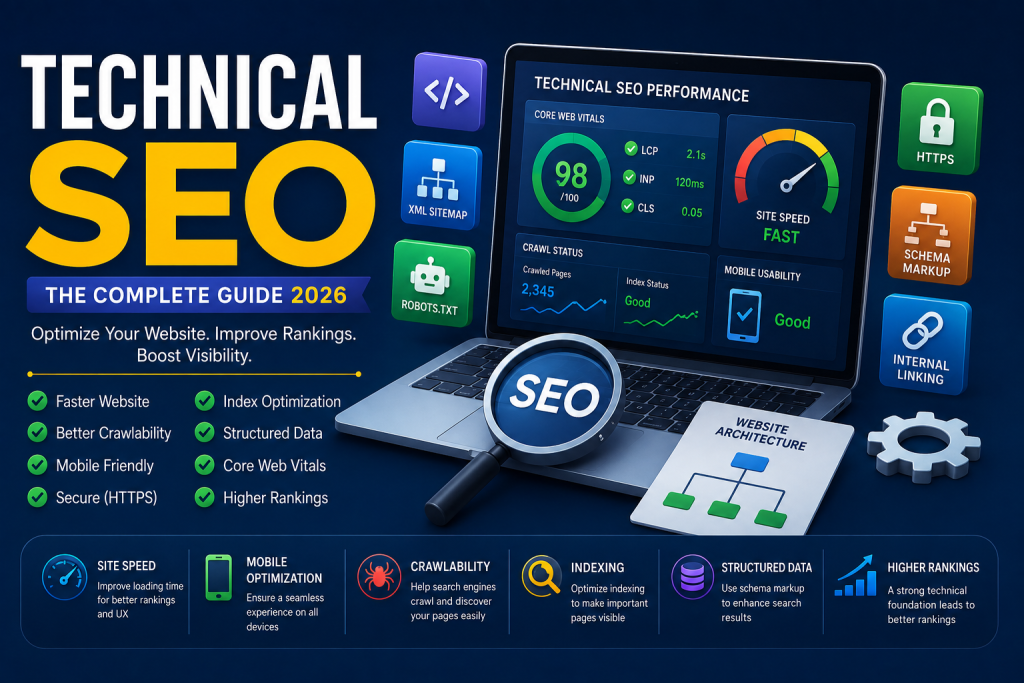
Building a successful website starts with a strong technical foundation. By improving speed, mobile usability, crawlability, indexing, structured data, security, and Core Web Vitals, you make it easier for search engines to understand your content and for visitors to enjoy a seamless experience.
Instead of chasing quick ranking tricks, invest in long-term improvements that strengthen your site’s health. A technically optimized website is more likely to earn sustainable organic visibility, adapt to future algorithm changes, and support every other SEO effort—from content creation to link building. Consistent audits and ongoing maintenance will help keep your website competitive well beyond 2026.
Leave a Reply