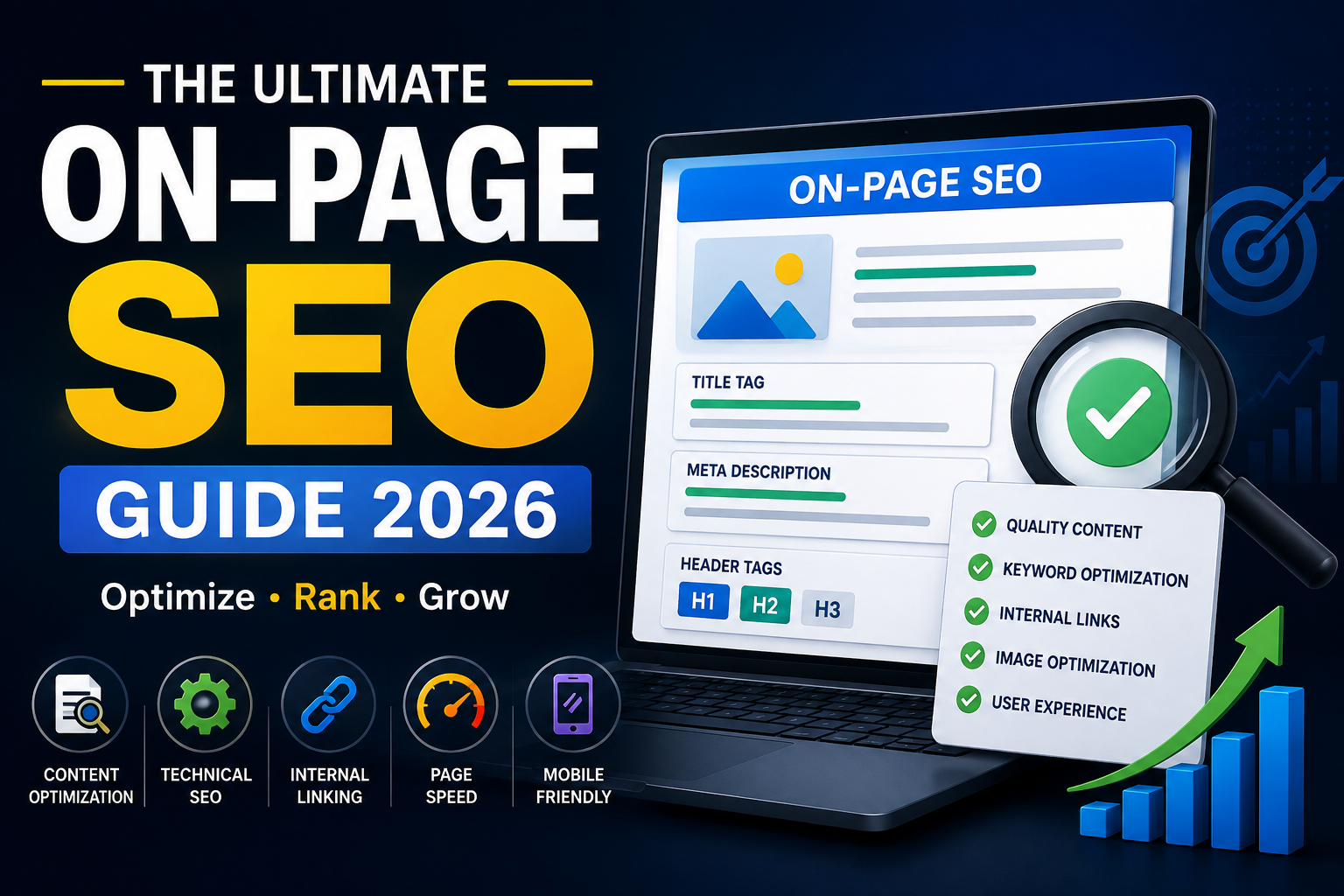
Search engine optimization continues to evolve every year, but one thing remains constant: websites with strong On-Page SEO consistently outperform competitors. If your goal is to improve visibility, increase organic traffic, and create content that ranks for valuable keywords, optimizing every page correctly is essential.
This guide explains the latest strategies for 2026, including content optimization, keyword placement, technical improvements, and user experience best practices that help search engines understand and rank your pages.
What Is On-Page SEO?
On-Page SEO refers to the process of optimizing individual web pages so they rank higher in search engine results while providing a better experience for visitors. Unlike off-page strategies such as backlinks, on-page optimization focuses entirely on elements you control.
These include:
- High-quality content
- Proper keyword placement
- Meta title optimization
- Meta descriptions
- Header tags
- Internal linking
- URL structure
- Image optimization
- Page speed
- Mobile responsiveness
When these elements work together, search engines can better understand your content and determine when it should appear in relevant search results.
Why On-Page SEO Matters in 2026
Search engines have become much smarter. They now evaluate search intent, page quality, user experience, loading speed, and helpful content rather than simply counting keywords.
Effective On-Page SEO helps your website:
- Improve Google rankings
- Increase organic traffic
- Reduce bounce rates
- Enhance user experience
- Build credibility and authority
- Generate more leads and conversions
A well-optimized page serves both search engines and real people, making it more likely to earn long-term rankings.
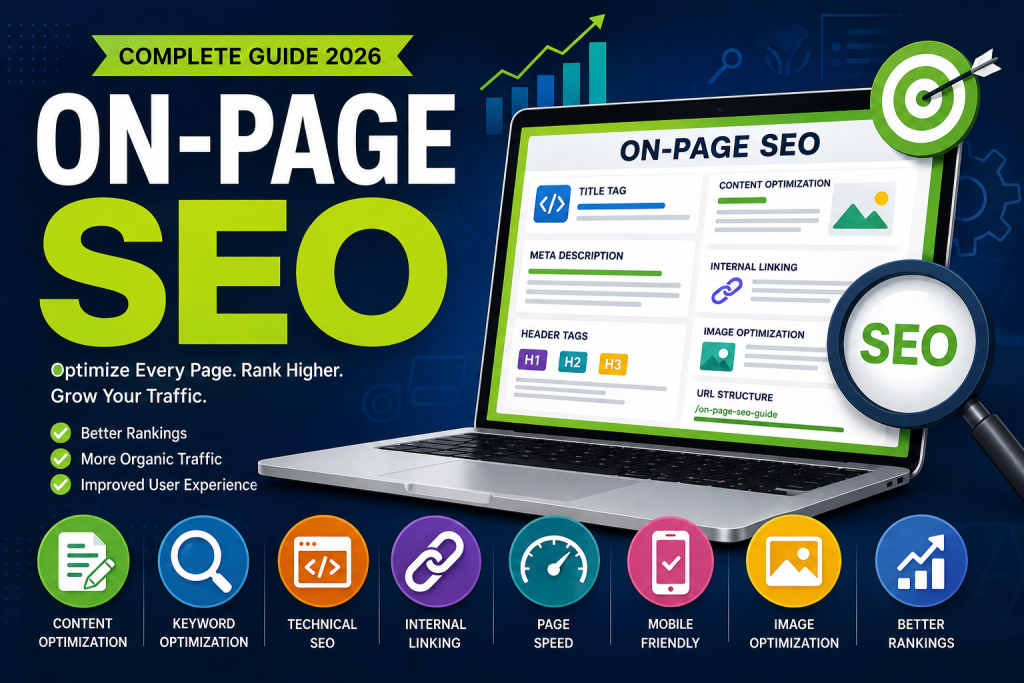
Start with Keyword Research
Every successful SEO campaign begins with proper keyword research.
Choose a primary keyword with reasonable search volume and manageable competition. Then identify secondary keywords and related search phrases that naturally support your topic.
Helpful keyword research tools include:
- Google Keyword Planner
- Ahrefs
- Semrush
- Ubersuggest
- Google Search Console
Always focus on matching search intent instead of selecting keywords based only on search volume.
Create High-Quality Content
Content remains the foundation of On-Page SEO.
Instead of writing for algorithms, create valuable content that answers readers’ questions completely.
High-performing content should:
- Solve real problems
- Be easy to read
- Include original insights
- Use clear headings
- Include examples
- Stay up to date
- Cover the topic comprehensively
Helpful content naturally performs better because visitors stay longer and engage more with your pages.
Optimize Your Title Tag and Meta Description
Your title tag is often the first thing users see in search results.
Best practices include:
- Keep titles between 50–60 characters.
- Place the primary keyword near the beginning.
- Make the title compelling enough to earn clicks.
Your meta description should:
- Stay between 140–160 characters.
- Summarize the page clearly.
- Include the primary keyword naturally.
- Encourage users to visit the page.
A strong title and meta description improve click-through rates even when rankings remain the same.
Use Proper Heading Structure
Search engines use headings to understand page organization.
A good structure includes:
- One H1 heading
- Multiple H2 headings
- Supporting H3 headings where necessary
A logical heading hierarchy improves readability while strengthening On-Page SEO.
Optimize URLs
Simple URLs perform better than long, complicated ones.
Example:
Good:
yourwebsite.com/on-page-seo-guide
Avoid:
yourwebsite.com/post?id=2468&category=seo
Short, descriptive URLs improve usability and make content easier to understand.
Internal Linking Improves SEO
Internal linking helps search engines discover important pages while guiding visitors to additional helpful content.
Link naturally to:
- Related blog posts
- Category pages
- Service pages
- Cornerstone content
Strong internal linking distributes authority throughout your website and improves navigation.
Optimize Images
Large images can slow down websites.
Improve image performance by:
- Compressing images
- Using descriptive filenames
- Adding keyword-rich alt text
- Choosing modern image formats
- Enabling lazy loading
Image optimization improves page speed and accessibility while supporting search visibility.
Improve Core Web Vitals
Google continues to prioritize fast, user-friendly websites.
Focus on:
- Faster loading times
- Stable page layouts
- Responsive interactions
- Mobile optimization
Core Web Vitals directly affect user experience and can influence rankings.
Match Search Intent
One of the biggest ranking factors today is understanding what users actually want.
Before writing content, ask:
- Are they looking for information?
- Do they want to compare products?
- Are they ready to buy?
- Are they searching for a tutorial?
Content that satisfies search intent consistently outperforms pages that simply repeat keywords.
Write Naturally for Readers
Avoid keyword stuffing.
Instead:
- Use related terms
- Add semantic keywords
- Include natural language
- Answer common questions
- Improve readability
Modern search engines understand context, making natural writing more effective than excessive repetition.
Keep Content Updated
Fresh content signals relevance.
Regularly update:
- Statistics
- Examples
- Screenshots
- Recommendations
- Broken links
Refreshing existing articles often produces better results than publishing new content every week.
Common On-Page SEO Mistakes
Avoid these common issues:
- Thin or duplicate content
- Missing meta descriptions
- Broken internal links
- Slow-loading pages
- Poor mobile experience
- Overusing keywords
- Ignoring search intent
- Unoptimized images
- Weak heading structure
- Outdated information
Fixing these mistakes can significantly improve your website’s performance.
Quick On-Page SEO Checklist
Before publishing any page, verify that you have:
- Included the primary keyword naturally
- Written a compelling meta title
- Added a descriptive meta description
- Used one H1 heading
- Organized content with H2 and H3 headings
- Optimized images with alt text
- Added internal links
- Created a clean URL
- Improved page speed
- Checked mobile responsiveness
- Matched search intent
- Reviewed grammar and readability
Final Thoughts
Mastering On-Page SEO is one of the smartest long-term investments for any website. By combining quality content, strategic keyword research, technical improvements, optimized metadata, and excellent user experience, you create pages that satisfy both search engines and visitors.
SEO is not about shortcuts—it is about consistently publishing valuable, optimized content. Apply the strategies in this guide, monitor performance through analytics, and continue refining your pages over time. As search algorithms evolve in 2026 and beyond, websites that prioritize helpful content and technical excellence will remain competitive and continue attracting sustainable organic traffic.
Leave a Reply